Hi, I’m [jenny], and I’ve spent years experimenting with different ways to organize, declutter, and simplify my wardrobe.
Over time, I’ve learned that a cluttered closet isn’t just frustrating — it can make your mornings stressful, hide the clothes you actually love, and keep you from developing a personal style that feels confident and intentional.
This isn’t about throwing everything away. It’s about creating a closet that works for your lifestyle, body, and personality.
In this guide, I’ll walk you step by step through 17 types of items to get rid of, including practical “how-to” advice, what supplies you’ll need, and professional tips to make the process easier.
By the end, you’ll have a functional, organized closet that makes dressing a joy rather than a chore.
1. Clothes That Don’t Fit Anymore
One of the most common sources of closet clutter is keeping clothes that no longer fit.
We hold on to these pieces for a variety of reasons: emotional attachment, hope of fitting back in, or the memory of buying them for a special occasion.
But clothes that don’t fit take up valuable space and make it harder to see what you actually wear.
How To Declutter:
- Take out all items that feel too tight, too loose, or uncomfortable.
- Try each piece on to confirm whether it’s wearable for your current size and lifestyle.
- Be honest with yourself. Ask: Do I feel confident wearing this today?
What You’ll Need:
- A full-length mirror
- A donation box or bag
- Patience to try things on
Pro Tip: If you’re keeping something for motivation, limit yourself to one or two items max. Everything else should be donated or sold. This ensures your closet reflects your current life, not an imagined “someday.”
2. Worn-Out Basics
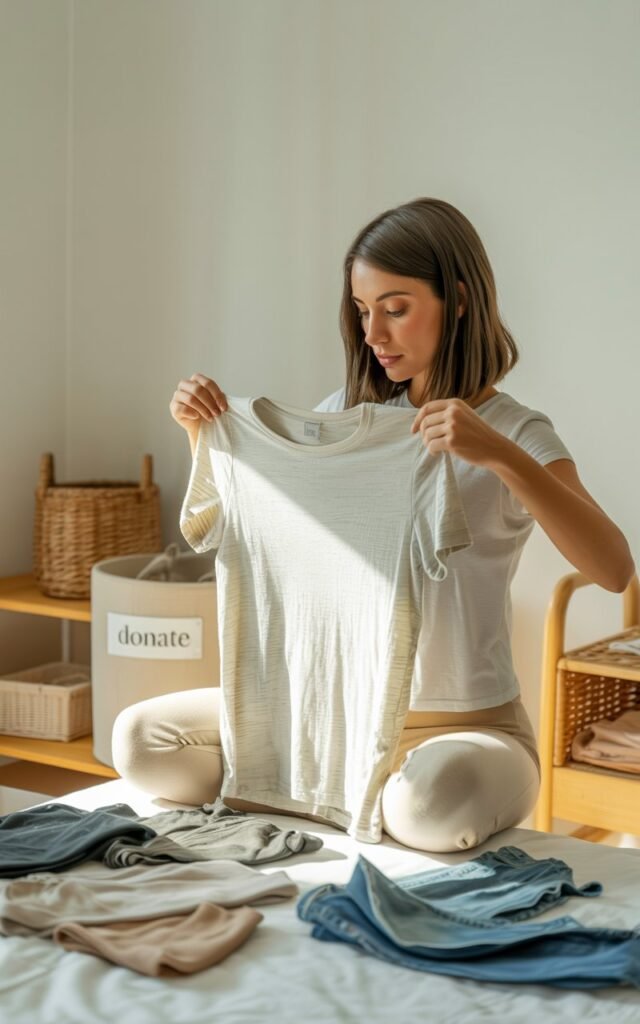
Basics are the foundation of every wardrobe — t-shirts, leggings, tank tops, simple blouses, and sweaters.
Over time, these staples can stretch out, fade, or develop holes. While it’s tempting to hold on because they’re comfortable or “still wearable,” worn-out basics can make even your best pieces look messy.
How To Declutter:
- Lay out all basic items and inspect for wear: holes, stains, fading, or pilling.
- Separate items into three piles: keep, repair, donate/recycle.
- Toss anything beyond repair to free up space and make room for high-quality replacements.
What You’ll Need:
- Lighting that lets you clearly see wear and tear
- A trash bag for non-donatable items
- A small sewing kit if you plan to repair a few key pieces
Pro Tip: Don’t underestimate the impact of refreshed basics. Replacing a few worn t-shirts or leggings instantly elevates your daily outfits without adding extra pieces.
3. Duplicates You Don’t Actually Wear
We all think we need multiple versions of a basic item — maybe five black t-shirts or three pairs of similar jeans.
But in reality, most of us wear the same two or three favorites. Duplicates that never see the light of day take up space and make your closet feel overcrowded.
How To Declutter:
- Pull out similar items and place them side by side.
- Assess each piece for fit, comfort, and style. Keep only your favorites — the ones that actually get worn.
- Donate the rest to give someone else the chance to enjoy them.
What You’ll Need:
- Closet space to lay items out for comparison
- Donation bags or a small storage box for items to give away
- Time to really evaluate each piece
Pro Tip: This is a great moment to consider quality over quantity. One well-fitting, versatile pair of black jeans is better than three pairs you rarely wear. Focus on keeping pieces that truly serve your wardrobe and lifestyle.
4. Outdated Fashion Pieces

Trends change quickly, and while keeping a few timeless pieces is smart, clothing that looks dated can make your wardrobe feel chaotic.
If you haven’t worn something in years because it feels out of style, it’s time to let it go.
Holding on to outdated fashion not only wastes space but can also make it harder to develop a wardrobe that reflects your current style.
How To Declutter:
- Pull out all items that feel tied to a past trend or season.
- Ask yourself: Would I buy this today? If the answer is no, it’s time to let it go.
- Consider donating pieces that are still in good condition.
What You’ll Need:
- A full-length mirror
- Donation boxes or bags
- A few minutes to try pieces on and reassess fit
Pro Tip: Keep a few fun or nostalgic pieces if they genuinely spark joy, but don’t let them overwhelm your everyday wardrobe. A small curated selection works better than hoarding everything “just in case.”
5. Clothes You’ve Never Worn
Many of us have items still with tags or pieces we bought on impulse that never made it out the door.
These clothes clutter your closet and create the illusion of choice when, in reality, you’re not wearing them.
How To Declutter:
- Set aside all unworn items for more than a year.
- Try them on — sometimes the fit or style may have changed, or they may simply not suit your current lifestyle.
- Decide if they’re worth keeping, donating, or selling.
What You’ll Need:
- A designated area to sort unworn items
- Donation bags or boxes
- Patience to evaluate honestly
Pro Tip: Selling online or gifting friends is a great way to ensure these items find a new home. It feels better knowing they’ll be used rather than gathering dust.
6. Shoes That Hurt Your Feet
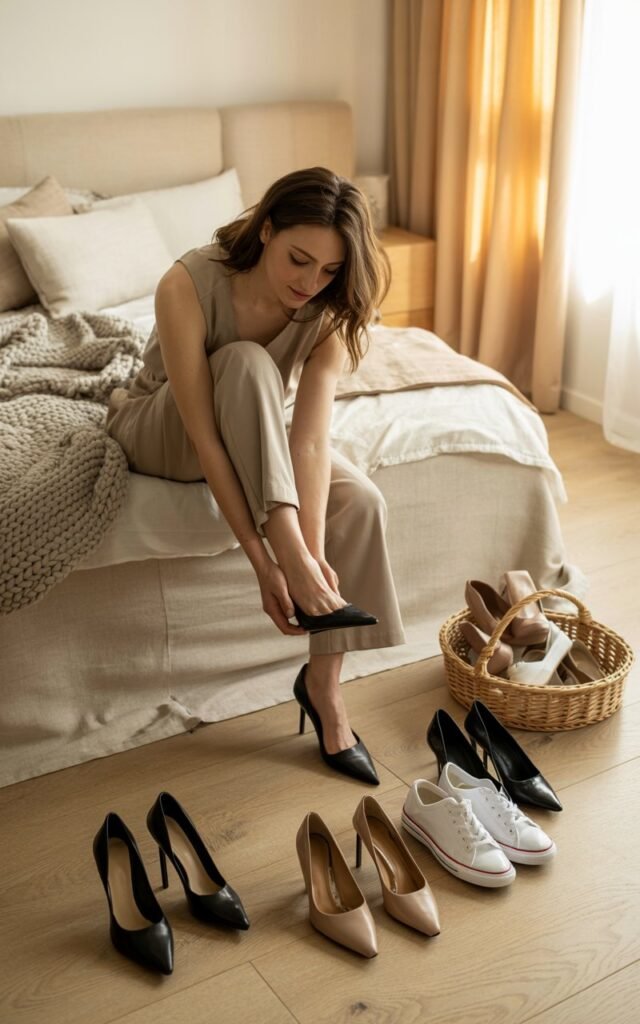
We often keep shoes because we love how they look, but uncomfortable shoes end up unused.
Shoes that hurt can also affect posture and cause discomfort throughout the day, so it’s better to declutter and invest in footwear you actually wear.
How To Declutter:
- Try on every pair and walk around for a few minutes.
- Evaluate comfort, fit, and how often you actually wear them.
- Keep only the pairs that are both stylish and wearable.
What You’ll Need:
- Open floor space for trying on shoes
- A small bench or chair to sit while testing comfort
- Donation box for gently used pairs
Pro Tip: Invest in versatile, comfortable shoes in neutral colors. They’ll get far more use than specialty shoes that only sit in your closet.
7. Damaged or Stained Clothes
Clothes with stains, holes, or broken zippers that aren’t repaired quickly can clutter your closet unnecessarily.
Keeping damaged items with the intention to fix them “someday” often leads to procrastination and wasted space.
How To Declutter:
- Sort all items that need repair.
- Decide if you will repair them immediately — set a one-week deadline.
- If repair isn’t feasible, recycle or discard the item.
What You’ll Need:
- Sewing kit for small repairs
- Trash bag for irreparable items
- Donation box for gently used pieces that are still wearable
Pro Tip: Regularly inspect your clothes for wear and damage. Handling repairs as soon as possible prevents them from piling up and taking over your closet.
8. Excess Loungewear
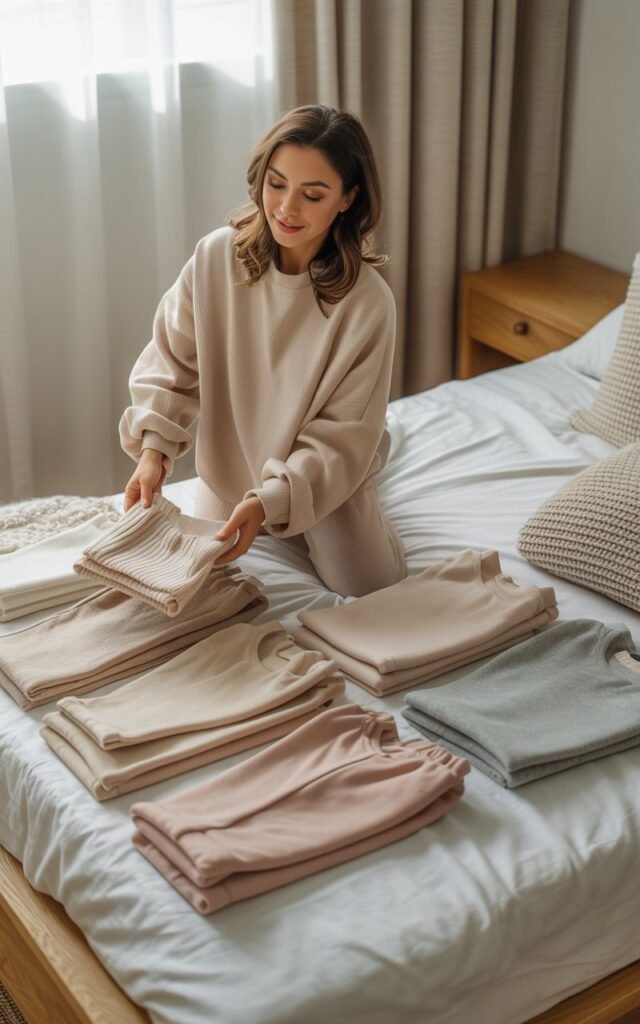
Loungewear is essential for comfort, but most people accumulate far more than they need.
Too many sweatpants, hoodies, and casual sets can take up valuable space and hide the pieces you actually wear regularly.
How To Declutter:
- Pull out all loungewear and separate them by comfort, quality, and frequency of use.
- Keep 2–3 favorite sets that are in good condition.
- Donate the rest or repurpose them as cleaning rags if they’re worn out.
What You’ll Need:
- Laundry baskets to separate worn vs. kept items
- Donation bags or boxes
- Space to fold and reorganize the remaining sets
Pro Tip: Focus on quality over quantity. Comfortable, high-quality loungewear feels better and lasts longer than a pile of worn-out sets you never reach for.
Final Thoughts
Decluttering your closet isn’t just about tidying up—it’s about creating a space that works for you and reflects your current lifestyle.
By letting go of items that don’t fit, are worn out, or no longer suit your style, you make room for the pieces that truly matter.
A well-organized closet saves time, reduces stress, and allows you to focus on outfits that make you feel confident and put-together every day. Start small if it feels overwhelming—focus on one category or drawer at a time.
Consistency is key, and even a small decluttering session can have a big impact on your daily routine.
Remember, the goal isn’t perfection. It’s a functional, stylish, and intentional wardrobe that supports your lifestyle and makes getting dressed a joy.
FAQ
Q1: How often should I declutter my closet?
It’s best to declutter at least twice a year, ideally during seasonal transitions. This helps prevent clutter from accumulating and keeps your wardrobe aligned with your current lifestyle.
Q2: Should I sell or donate my old clothes?
If your items are in excellent condition, selling them online can earn extra cash. Otherwise, donating to charity or friends ensures your clothing is used and appreciated.
Q3: How do I prevent my closet from becoming cluttered again?
Adopt the “one in, one out” rule: every time you bring in a new item, remove one old piece. Also, regularly assess your wardrobe for items you haven’t worn in a year.
Q4: How do I handle sentimental clothing?
Keep a small, curated selection of meaningful pieces in a memory box. Let go of the rest with gratitude, focusing on the items that bring you joy without overwhelming your closet.
Q5: How do I declutter without feeling guilty?
Remember, decluttering isn’t wasteful—it’s about creating a functional and enjoyable wardrobe.
Focus on the items that serve you today and let go of pieces that no longer fit your style or lifestyle.