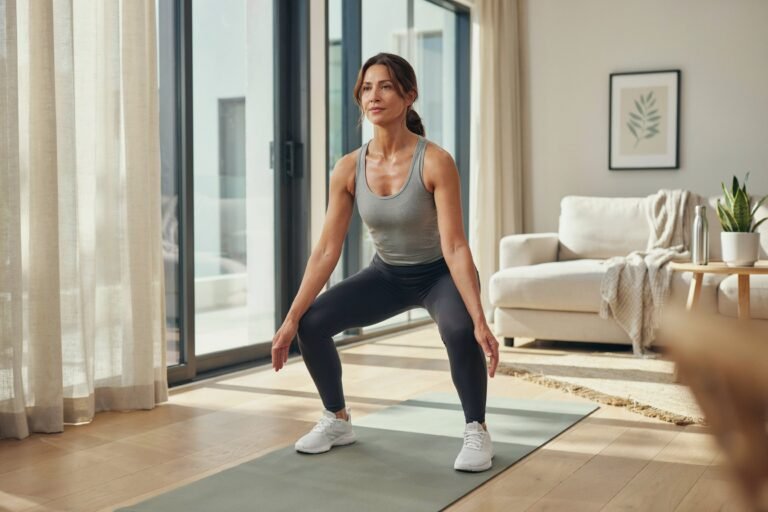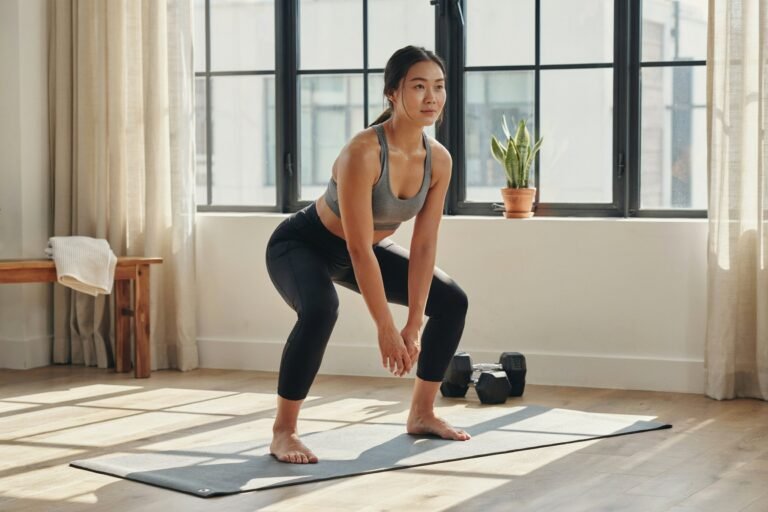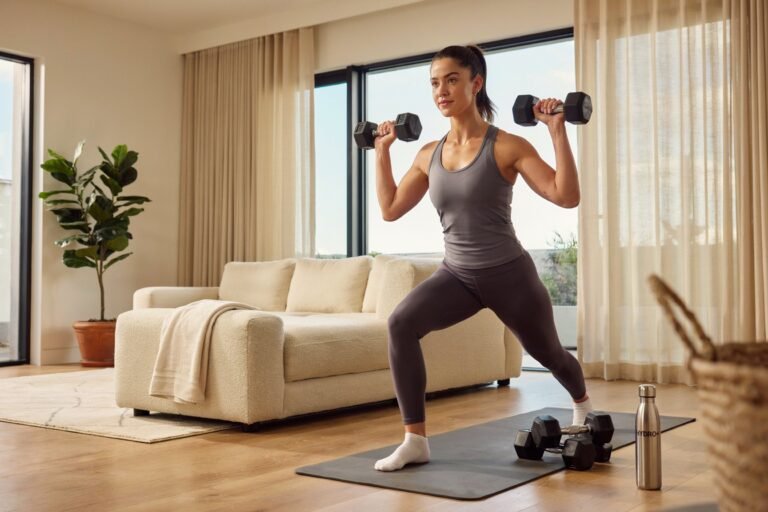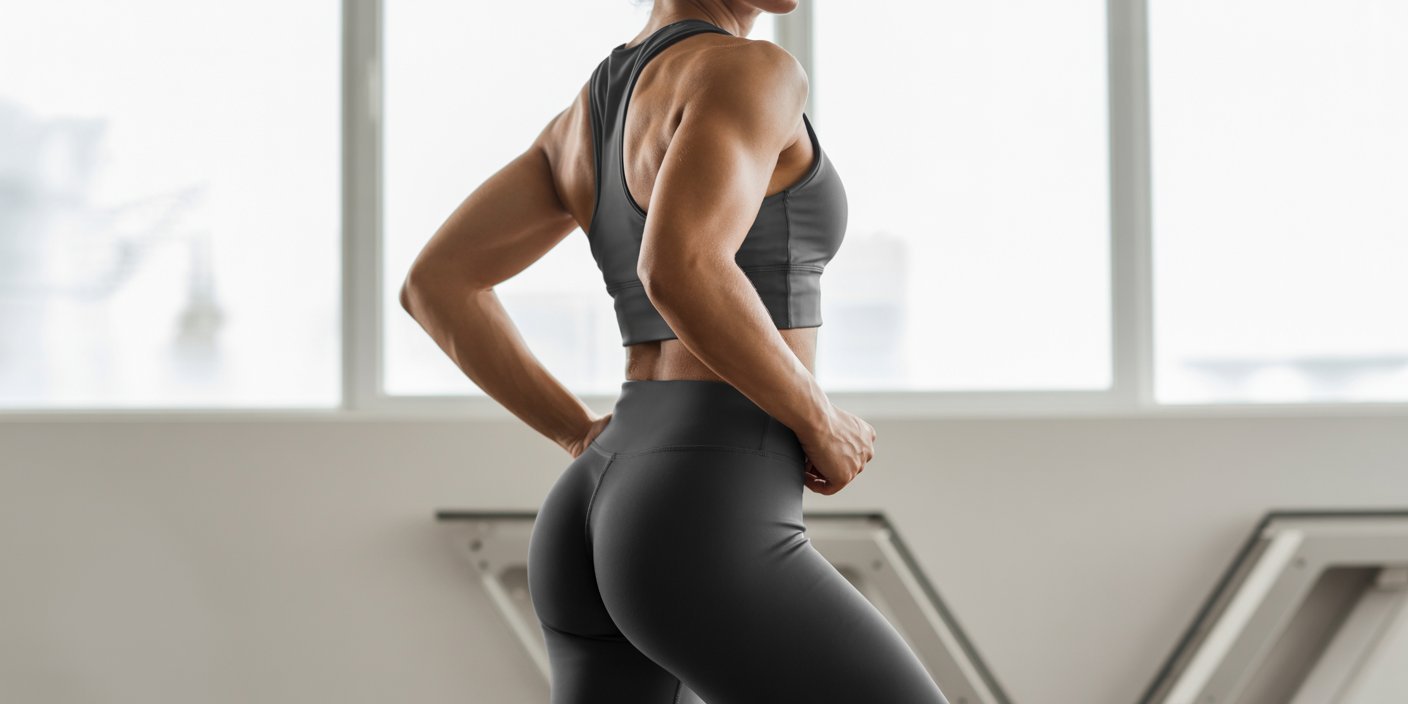

Hip dips — those natural inward curves just below your hip bones — are completely normal, but if your goal is to build a smoother, rounder hip shape, targeted strength training can help.
You don’t need a gym membership or fancy machines to get visible results. With consistency and the right movements, you can fill out your hip area, add curves, and create a more balanced lower-body shape right at home.
This workout is built around resistance-based glute exercises that target the outer hips and side glutes, the areas most responsible for shaping and rounding your silhouette.
You’ll also find form tips, beginner adjustments, and guidance on how to structure your weekly routine for growth and definition.
Disclaimer: This post contains affiliate links. If you make a purchase through these links, we may earn a small commission at no extra cost to you.
Amazon Shopping List: HIP DIPS FIX | Home Booty Workout
- Resistance Bands Set
Perfect for targeting glutes and hip muscles to help reduce hip dips.
BUY NOW ON AMAZON - Yoga Exercise Mat
Provides comfort and support during glute and lower body exercises.
BUY NOW ON AMAZON - Adjustable Dumbbells Set
Adds resistance to glute workouts for better toning and shaping.
BUY NOW ON AMAZON - Glute Kickback Machine or Attachment
Helps isolate and strengthen glute muscles effectively at home.
BUY NOW ON AMAZON - Foam Roller
Aids in recovery and reduces muscle soreness after intense booty workouts.
BUY NOW ON AMAZON
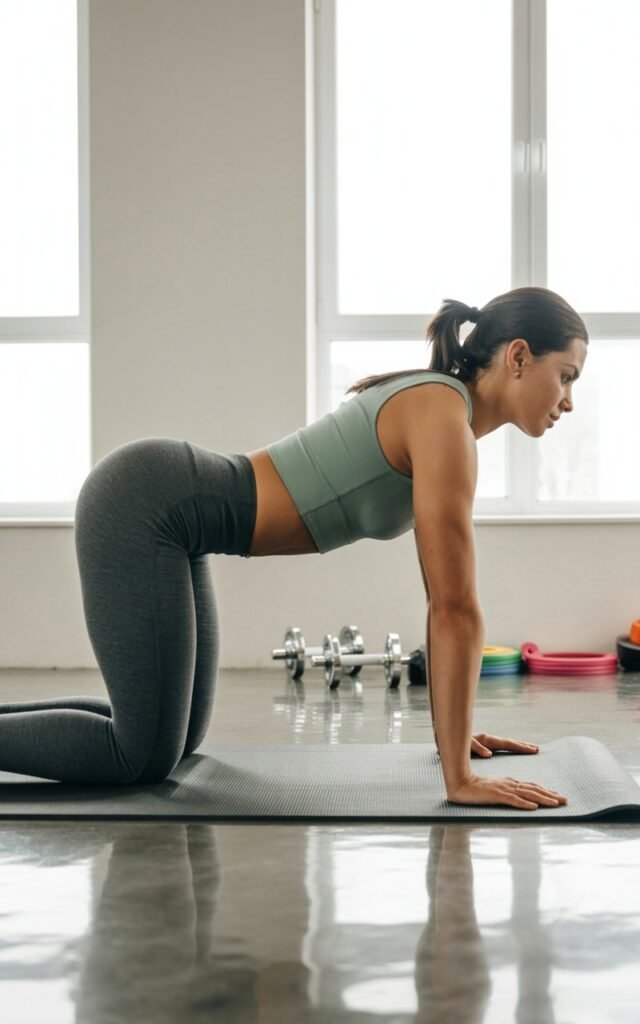
1. Glute Bridges
What It Does:
Glute bridges activate the gluteus maximus, the main muscle responsible for hip strength and shape. When performed consistently, they help lift and fill out your hips.
How To Do It:
- Lie on your back with knees bent and feet flat on the floor, hip-width apart.
- Tighten your core and press your heels into the floor as you lift your hips up until your body forms a straight line from shoulders to knees.
- Squeeze your glutes at the top, hold for 2–3 seconds, and lower slowly.
Reps & Sets: 3 sets of 15–20 reps
Pro Tip:
Add a resistance band just above your knees to increase outer glute engagement and intensity.
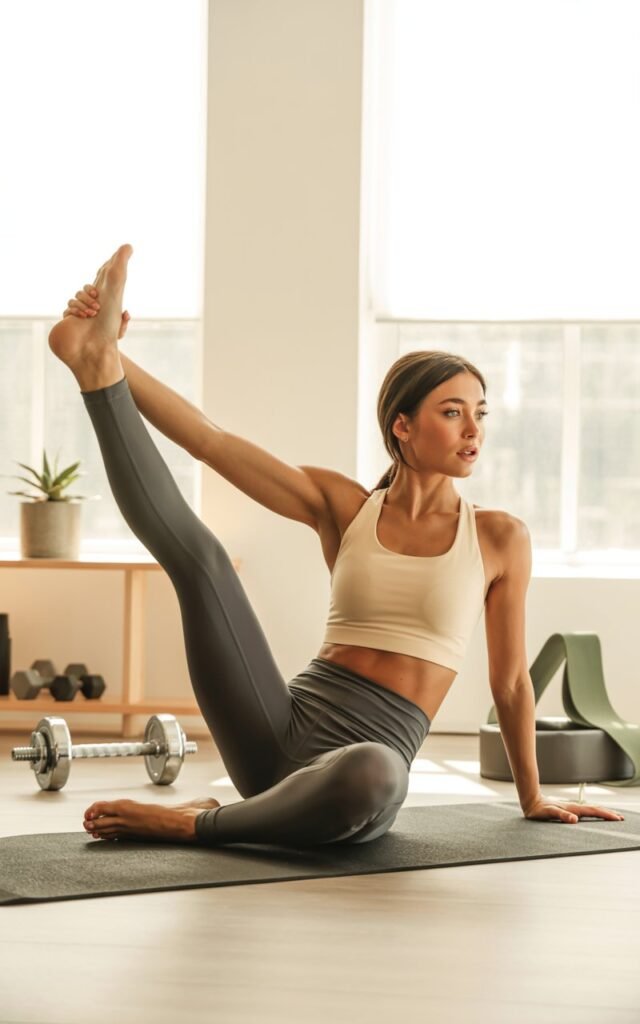
2. Side-Lying Leg Raises
What It Does:
This exercise targets the gluteus medius and outer thighs, helping to create width and definition at the sides of your hips.
How To Do It:
- Lie on your side with your bottom leg slightly bent for support.
- Keep your top leg straight and lift it upward to about a 45-degree angle.
- Lower it back down with control — don’t let it drop quickly.
Reps & Sets: 3 sets of 20 reps per side
What You’ll Need:
A resistance band for added challenge, or ankle weights if you want to progress over time.
Pro Tip:
Focus on slow, controlled movement. The slower the lift and drop, the more your side glutes will work.
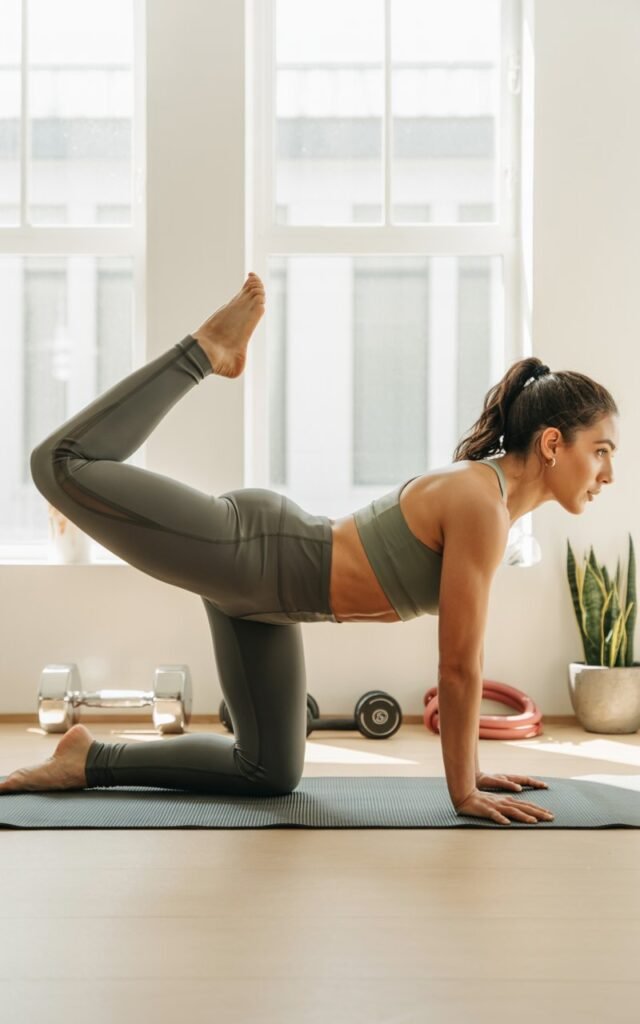
3. Donkey Kicks
What It Does:
Donkey kicks isolate the glutes and build volume in the upper and outer part of your butt, helping smooth out the dip area.
How To Do It:
- Start on all fours with your hands under your shoulders and knees under your hips.
- Lift one leg up and back, keeping your knee bent at a 90-degree angle.
- Squeeze your glutes at the top before lowering your leg back down.
Reps & Sets: 3 sets of 15 reps per side
Pro Tip:
Avoid swinging your leg — move with control and keep your core tight to maximize glute activation.
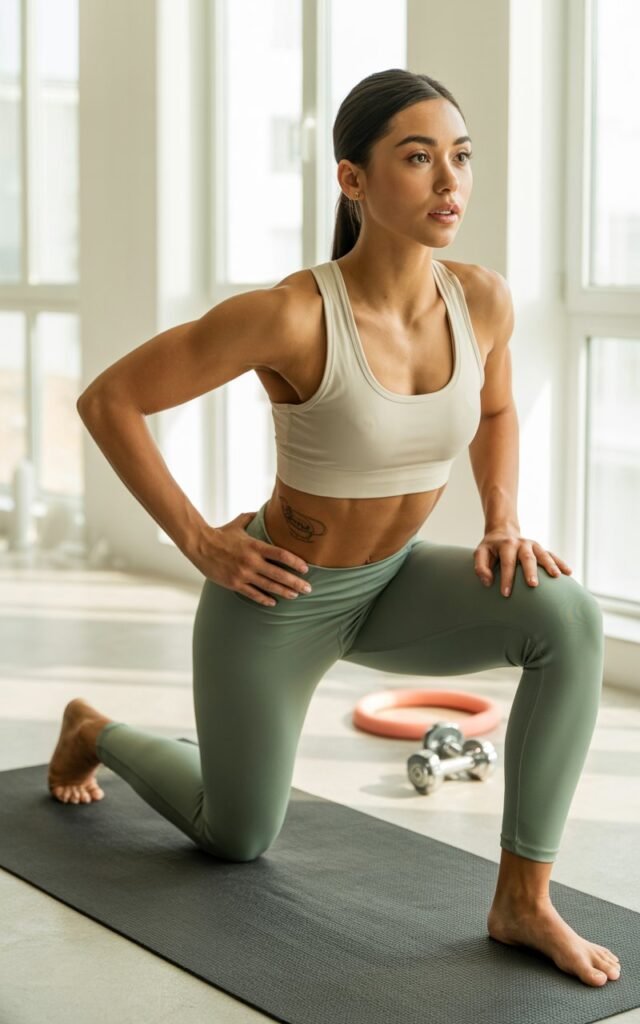
4. Fire Hydrants
What It Does:
Fire hydrants work the outer glutes and hip abductors, the key muscles that shape the sides of your hips.
How To Do It:
- Start on all fours.
- Keeping your knee bent, lift one leg out to the side until your thigh is parallel to the floor.
- Pause briefly at the top, then return to the start position.
Reps & Sets: 3 sets of 15 reps per side
What You’ll Need:
Resistance band looped just above your knees to make each rep more challenging.
Pro Tip:
Try combining this exercise with donkey kicks in a superset for maximum activation and quicker results.
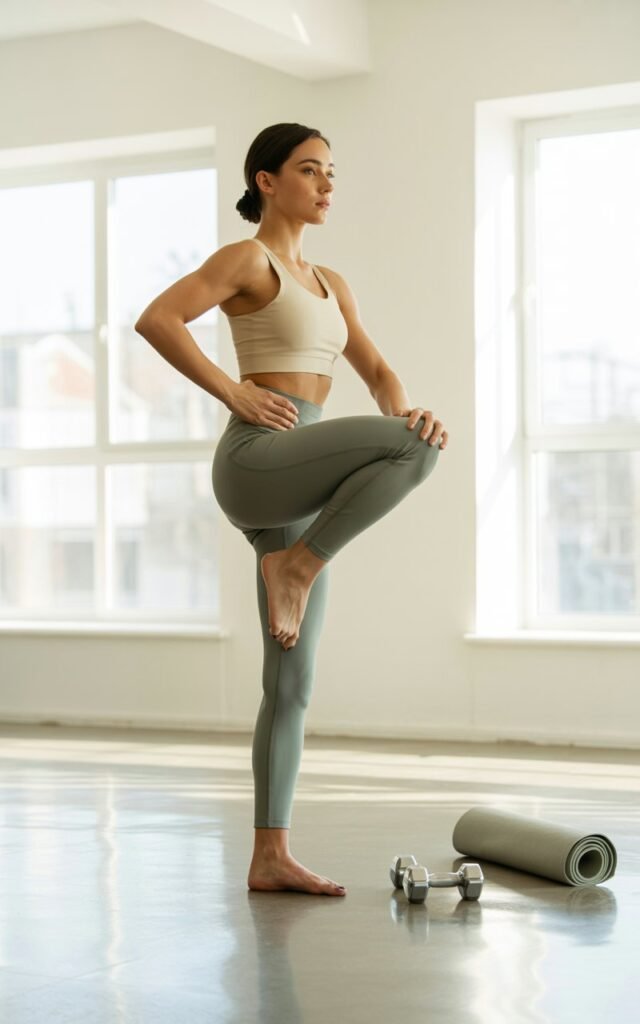
5. Standing Side Leg Lifts
What It Does:
This move strengthens and tones your side glutes, helping to widen the appearance of your hips and smooth hip dips naturally.
How To Do It:
- Stand tall, holding onto a chair or wall for balance.
- Keep one leg planted and lift the other leg out to the side without leaning your torso.
- Pause briefly, then lower your leg slowly.
Reps & Sets: 3 sets of 20 reps per side
Pro Tip:
Add ankle weights once the movement becomes too easy to keep challenging your muscles.
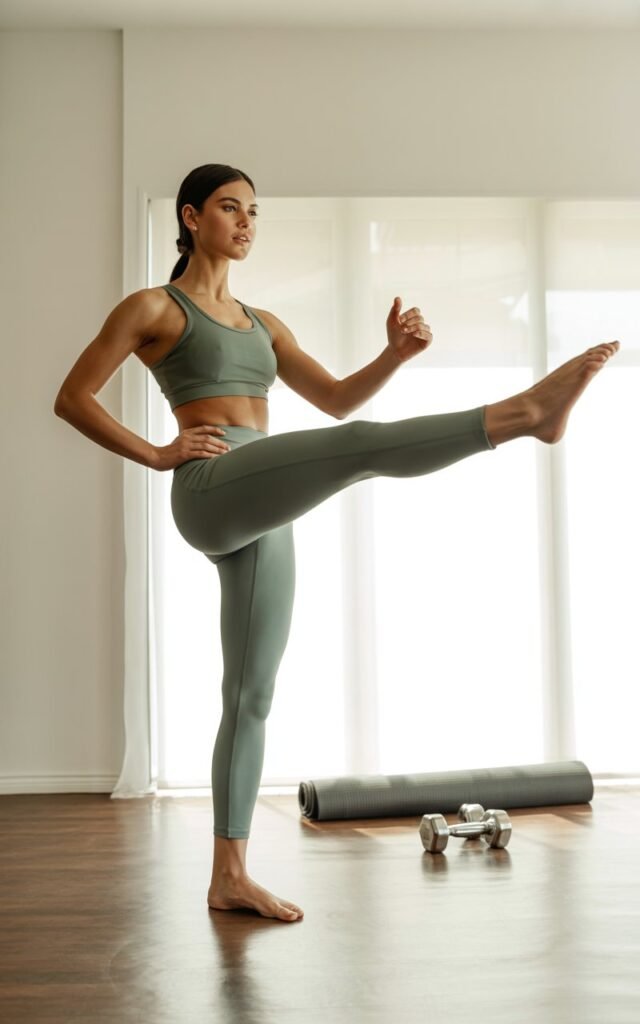
6. Curtsy Lunges
What It Does:
Curtsy lunges target your glutes, quads, and outer thighs, creating roundness and building hip width from multiple angles.
How To Do It:
- Stand with your feet hip-width apart.
- Step one leg diagonally behind you, crossing it into a “curtsy” position.
- Lower your hips until your front thigh is parallel to the floor.
- Push back up through your front heel and repeat on the other side.
Reps & Sets: 3 sets of 12–15 reps per side
What You’ll Need:
You can add light dumbbells or simply use your body weight to start.
Pro Tip:
Focus on driving through your heel and keeping your chest upright for proper form and balance.
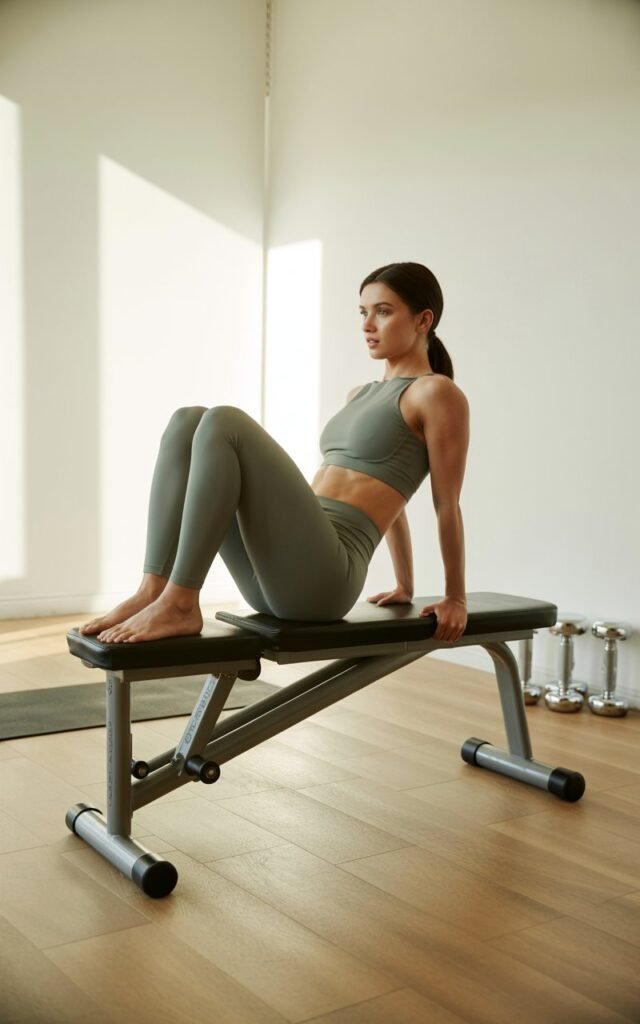
7. Hip Thrusts
What It Does:
This is one of the most effective glute exercises for building a rounder, fuller lower body. It specifically targets the upper glutes and helps create volume around the hips.
How To Do It:
- Sit on the floor with your upper back against a sturdy surface like a couch or bench.
- Roll a dumbbell or barbell over your hips for added resistance.
- Drive through your heels to lift your hips upward until your body forms a straight line.
- Squeeze your glutes hard at the top before lowering.
Reps & Sets: 3 sets of 12–15 reps
Pro Tip:
Pause at the top of each rep for 2–3 seconds — that extra hold helps build strength and muscle shape faster.
Final Thoughts
Fixing hip dips isn’t about changing your body’s natural structure — it’s about strengthening and building muscle around your hips and glutes to create a fuller, curvier appearance.
With consistency, resistance, and progressive overload, you can see noticeable results within weeks.
Remember, everyone’s body is built differently. Some people will always have slight dips — and that’s okay.
The key is to work with your shape, not against it, while building strength and confidence. Pair this workout with proper nutrition, hydration, and rest for the best results.
FAQ
Q1: How often should I do this hip dip workout?
3–4 times per week is ideal. Make sure to rest your glutes for at least 24 hours between sessions to allow muscle recovery.
Q2: Do I need equipment for this workout?
You can do it without equipment, but resistance bands or ankle weights will help you see results faster.
Q3: How long until I see results?
With consistency and a balanced diet, visible results typically appear in 4–6 weeks.
Q4: Can I completely get rid of hip dips?
You can minimize their appearance through targeted glute training, but remember that hip dips are natural bone structure — and nothing to be ashamed of.
Q5: Should I combine these with other lower-body workouts?
Yes. Combining this routine with squats, deadlifts, or step-ups can help you develop a balanced lower-body shape.