
For a long time, I avoided facial oils.
I assumed they would clog my pores, make my skin greasy, or cause breakouts.
Like many people, I believed oils were only for dry skin — and definitely not something you’d use if you were acne-prone or combination.
I was wrong.
What I eventually learned is that natural oils, when chosen correctly, can actually balance the skin, strengthen the barrier, and improve hydration in a way that traditional moisturizers sometimes can’t.
The key isn’t just using oil. It’s using the right oil for your specific skin type — and applying it properly.
Every oil has a different fatty acid profile, absorption rate, and comedogenic rating.

Some are lightweight and balancing.
Others are deeply nourishing and restorative.
Some calm inflammation, while others help regulate excess sebum.
Once I understood that not all oils behave the same way, everything changed.
In this guide, I’ll walk you through the best natural oils for every skin type — oily, dry, sensitive, combination, and mature — along with exactly how to use them so you get the benefits without the common mistakes.
Because when used strategically, natural oils aren’t heavy or pore-clogging.
They’re intelligent skincare.
How Facial Oils Actually Work on the Skin

Facial oils don’t just sit on top of your skin.
When chosen correctly, they can:
- Strengthen the skin barrier — locking in moisture and preventing irritation.
- Balance oil production — lightweight oils can signal the skin to produce less sebum.
- Deliver nutrients — vitamins, antioxidants, and fatty acids penetrate and support skin health.
- Calm inflammation — many oils reduce redness and soothe sensitive areas.
The trick is matching the oil to your skin type and using the right amount.
Too much, or the wrong type, can overwhelm your skin.
How to Layer Natural Oils in Your Skincare Routine
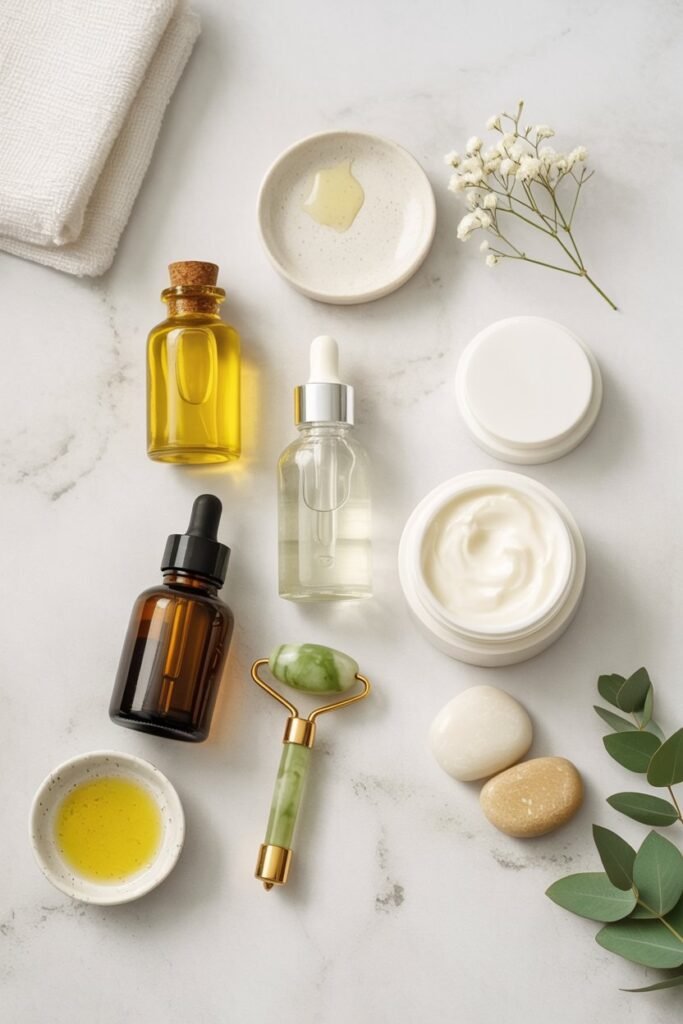
Using facial oils effectively isn’t just about picking the right type — it’s also about when and how you apply them.
Here’s what I do at home:
- Cleanse First
Always start with a gentle cleanser to remove dirt, makeup, and excess oil. This ensures your skin can absorb the nutrients from your oil. - Apply to Damp Skin
Oils lock in moisture best when your skin is slightly damp. After cleansing (or after applying a hydrating serum), gently press 2–4 drops of oil into your face. - Mix With Moisturizer (Optional)
If your skin is very dry, I sometimes mix a drop of oil into my moisturizer. This helps spread it evenly and prevents over-oiling. - Use Sparingly
A little goes a long way. Start with 1–2 drops for small areas and build up if needed. Over-applying can make skin greasy or cause breakouts. - Morning vs. Night
- Lightweight oils (jojoba, grapeseed) work well in the morning under sunscreen.
- Richer oils (argan, avocado, rosehip) are best at night when skin repairs itself.
This step ensures your skin gets the benefits of the oil without feeling heavy or clogging pores.
Best Natural Oils for Every Skin Type (With How-To Use Guide)
1. Oily & Acne-Prone Skin

When your skin produces excess sebum or is prone to breakouts, the idea of adding oil can feel counterintuitive.
But lightweight, non-comedogenic oils can actually balance oil production and soothe inflammation.
Best Oils:
- Jojoba Oil: Closely mimics natural sebum, helping skin regulate oil naturally.
- Grapeseed Oil: Lightweight, absorbs quickly, and packed with antioxidants that protect skin.
- Hemp Seed Oil: Anti-inflammatory and balancing, ideal for acne-prone areas.
How to Use:
- Start with 2–3 drops on clean skin.
- Apply after a gentle serum or mix a drop with your moisturizer.
- Use primarily at night, or in the morning under sunscreen for extra hydration without greasiness.
Pro Tip: Less is more — over-applying oil can lead to breakouts, so start small and adjust based on your skin’s response.
2. Dry Skin

Dry skin often feels tight, rough, or flaky because it lacks moisture and natural oils.
Rich, nourishing oils help lock in hydration, repair the skin barrier, and give skin a plump, healthy appearance.
Best Oils:
- Avocado Oil: Packed with fatty acids and vitamins, deeply nourishing for very dry areas.
- Argan Oil: Supports the skin barrier, improves elasticity, and hydrates without heaviness.
- Sweet Almond Oil: Soothes and softens skin while preventing water loss.
How to Use:
- Apply a few drops to slightly damp skin for maximum absorption.
- Can be used morning or night, either alone or mixed with your moisturizer.
- Focus on areas that feel driest, like cheeks or around the mouth.
Pro Tip: For extremely dry skin, layer a richer oil over a hydrating serum to lock in moisture overnight.
3. Sensitive Skin

Sensitive skin reacts easily — redness, irritation, and tightness are common.
The goal with oils is to soothe and calm without triggering flare-ups.
Best Oils:
- Calendula Oil: Anti-inflammatory and calming; reduces redness and irritation.
- Squalane Oil: Lightweight, gentle, and non-irritating; locks in hydration without feeling heavy.
- Chamomile Oil: Soothes irritation and supports skin barrier repair.
How to Use:
- Apply as the last step in your routine or mix a drop with your moisturizer.
- Use 1–2 drops at a time to avoid overwhelming the skin.
- Best used consistently to prevent flare-ups rather than as a quick fix.
Pro Tip: Patch-test new oils on a small area first to ensure your skin tolerates them well.
4. Combination Skin
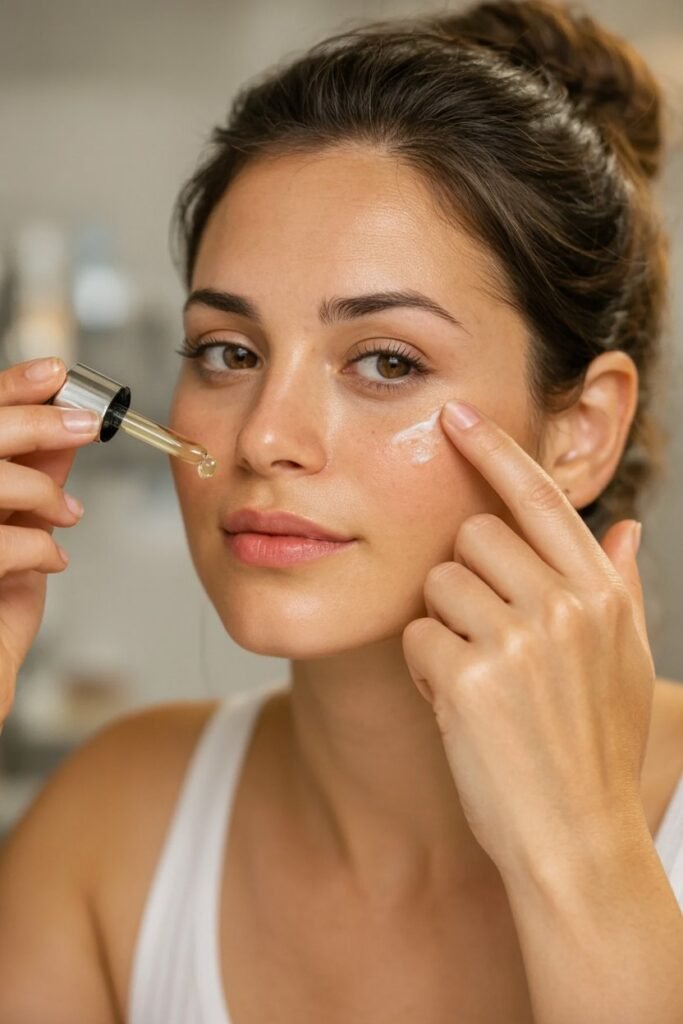
Combination skin has both oily and dry areas, which can make choosing the right oil tricky.
The key is to balance hydration without clogging pores.
Best Oils:
- Rosehip Oil: Lightweight and fast-absorbing; supports skin repair and helps fade marks.
- Marula Oil: Nourishing but non-greasy; hydrates dry patches without overloading oily zones.
- Safflower Oil: Softens dry areas while keeping oily areas calm.
How to Use:
- Apply 2–3 drops only on drier areas, or mix a few drops into your moisturizer for overall balance.
- Can be used morning or night depending on your routine.
- Focus on consistency rather than quantity — layering too much can tip oily areas out of balance.
Pro Tip: Targeted application works better than spreading oil over your entire face if you have combination skin.
5. Mature Skin

As skin ages, it loses elasticity, collagen, and moisture.
The goal here is to support firmness, smooth fine lines, and protect against free radicals.
Best Oils:
- Pomegranate Seed Oil: Rich in antioxidants and punicic acid; helps support collagen and elasticity.
- Argan Oil: Hydrates deeply, reduces the appearance of fine lines, and strengthens the barrier.
- Sea Buckthorn Oil: Loaded with vitamins A and E; protects against free radicals and promotes healthy skin renewal.
How to Use:
- Apply a few drops at night and gently press into clean skin.
- Can layer over a hydrating serum for extra plumpness.
- Use consistently to see gradual improvements in firmness and texture.
Pro Tip: Mature skin responds best to oils that are both nourishing and antioxidant-rich — think of them as multitasking support for aging skin.
6. Bonus Tips for Using Natural Oils Effectively

- Patch-Test First: Always try a new oil on a small area before full-face application.
- Start Slow: Introduce one oil at a time to understand how your skin reacts.
- Layering: Apply oils after serums but before heavier creams (unless you’re using oil as the main moisturizer).
- Less is More: 1–4 drops are usually enough; overusing can make skin greasy.
- Morning vs. Night: Lightweight oils are better in the morning; richer oils work best at night when skin repairs itself.
Conclusion: Find the Right Oil for Your Skin
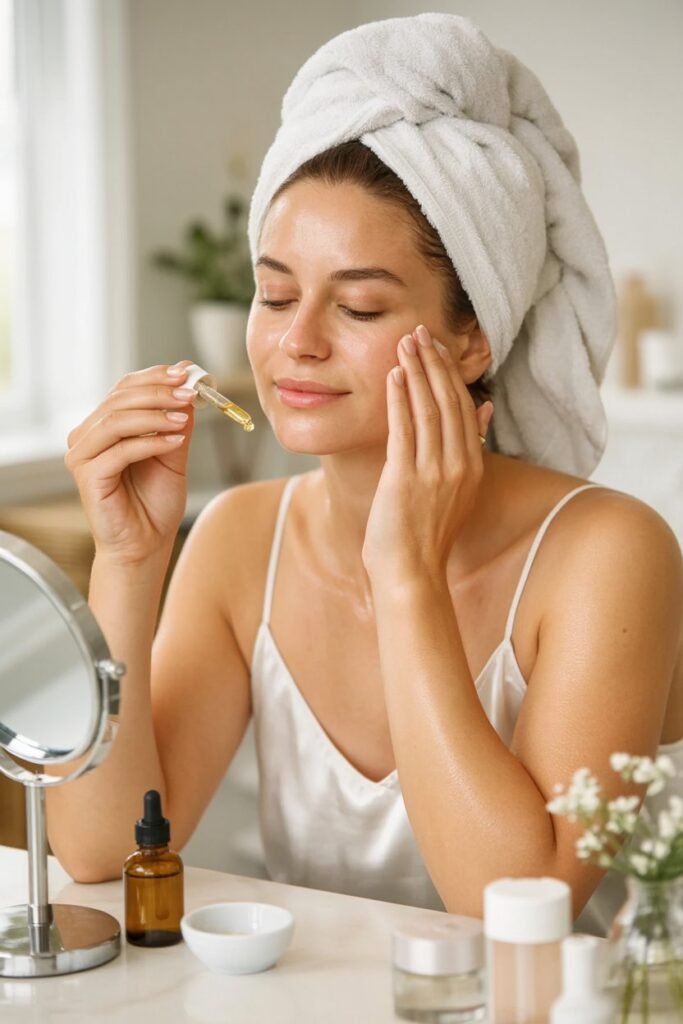
Natural oils are versatile, nourishing, and surprisingly effective when matched to your skin type.
The key is choosing the right oil, using it strategically, and layering it correctly in your routine.
Start small: pick one oil for your skin type, use it consistently, and pay attention to how your skin responds.
Over time, you’ll notice improved hydration, smoother texture, and a radiant, balanced complexion.
Your skin isn’t one-size-fits-all, and neither are oils — finding the right match is the smart, simple way to care for your skin naturally.