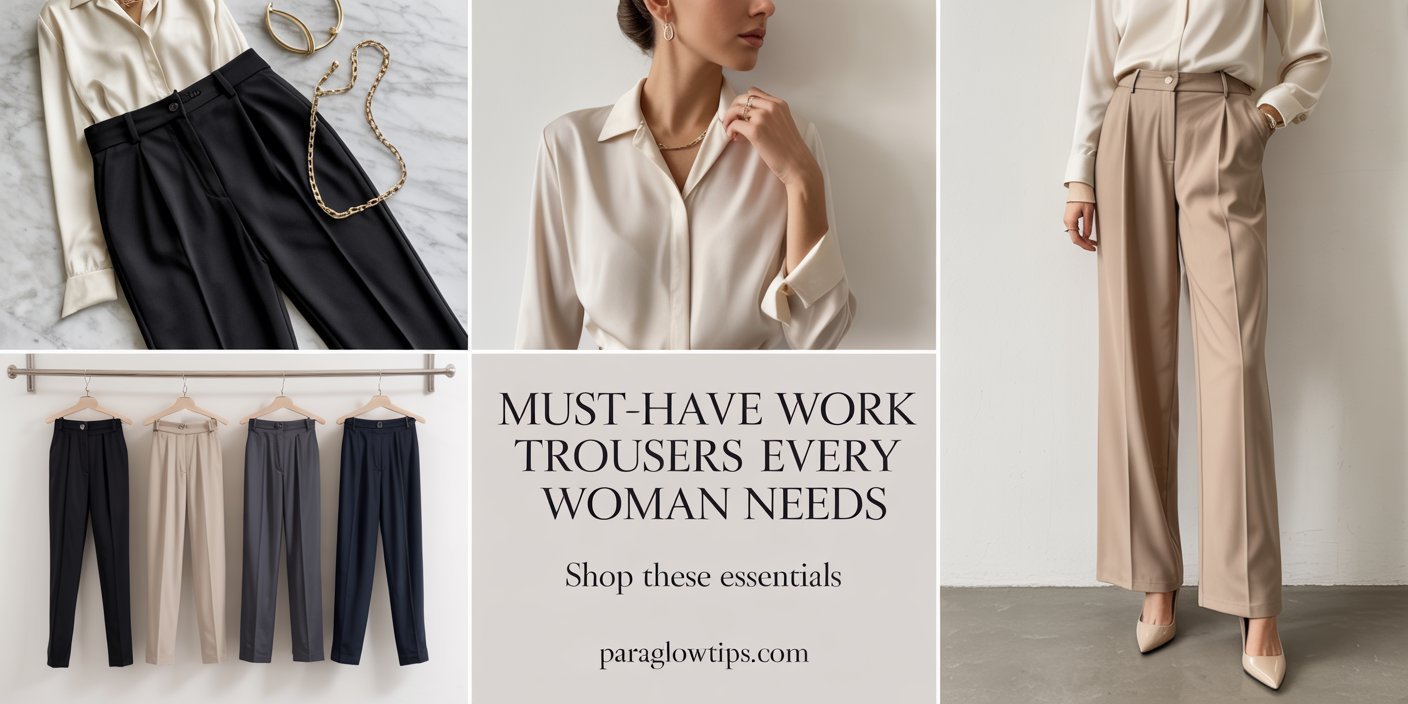

Work trousers are one of those things I used to overlook until I finally realized how much they shape the way I show up every day.
There was a time when I treated work pants like something I just needed to “get by,” and I didn’t put any real thought into fit, fabric, or style.
But as I started paying more attention to how I felt in my clothes, I noticed something—on days when I wore trousers that actually fit me well, I moved differently.
I stood straighter, walked with more confidence, and honestly felt more put together even if the rest of my outfit was simple.
Over the years, I’ve tried everything: stiff trousers that looked good but were impossible to sit in, stretchy ones that felt comfortable but lost shape after one wash, and those pairs that claim to be “work appropriate” but look tired by lunchtime.
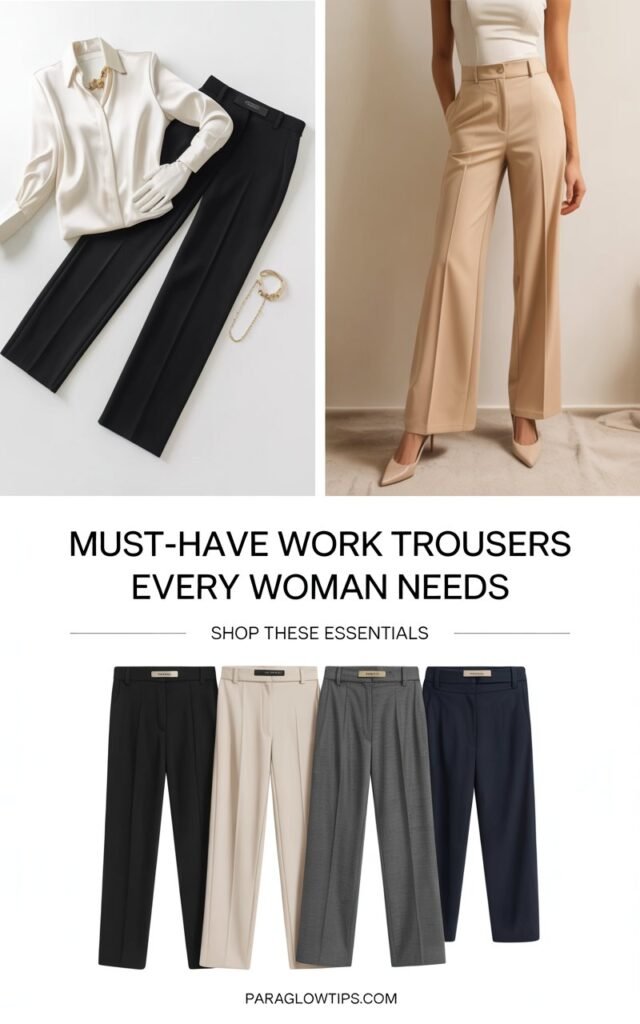
After all the trial and error, I realized there are certain types of trousers every woman should have—pieces that are reliable, flattering, and versatile enough to carry you through busy workdays without making you uncomfortable or self-conscious.
This guide breaks down the must-have work trousers that I believe every woman needs in her wardrobe.
These aren’t trendy pieces that will go out of style in six months. They’re timeless, practical, and easy to pair with the clothes you already own.
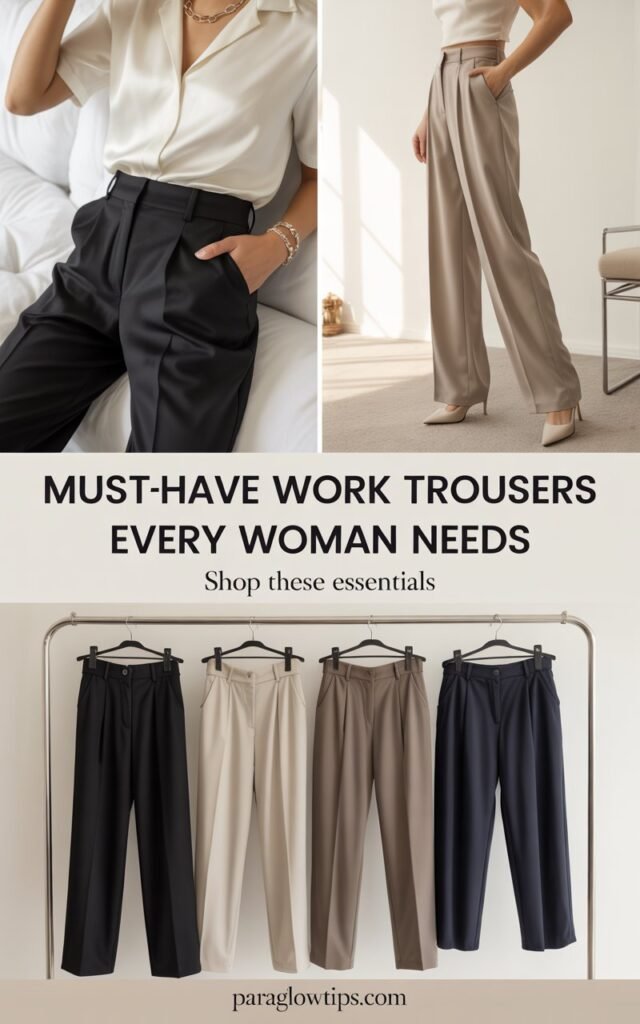
Whether you’re going for a clean office look, a more relaxed work-from-home vibe, or something polished enough for meetings, these trousers will keep you looking sharp without sacrificing comfort.
If you’ve ever opened your closet and felt like you had nothing to wear to work, this list is exactly what you need.
Let’s get into the trousers that actually make getting dressed easier—and the ones worth adding to your wardrobe right now.
Disclaimer: This post may contain affiliate links, which means I may earn a small commission at no extra cost to you. Fashion fit and comfort may vary by brand, body type, and personal style preferences.
Amazon Shopping List: Must-Have Work Trousers Every Woman Needs
- High-Waisted Straight Leg Work Trousers
- Wide-Leg Tailored Office Pants
- Slim Fit Ankle-Length Dress Pants
- Pull-On Stretch Work Trousers
- Classic Black Bootcut Office Pants
- Cropped Business Casual Trousers
- Linen Blend Work Pants for Women
How to Choose the Perfect Work Trousers
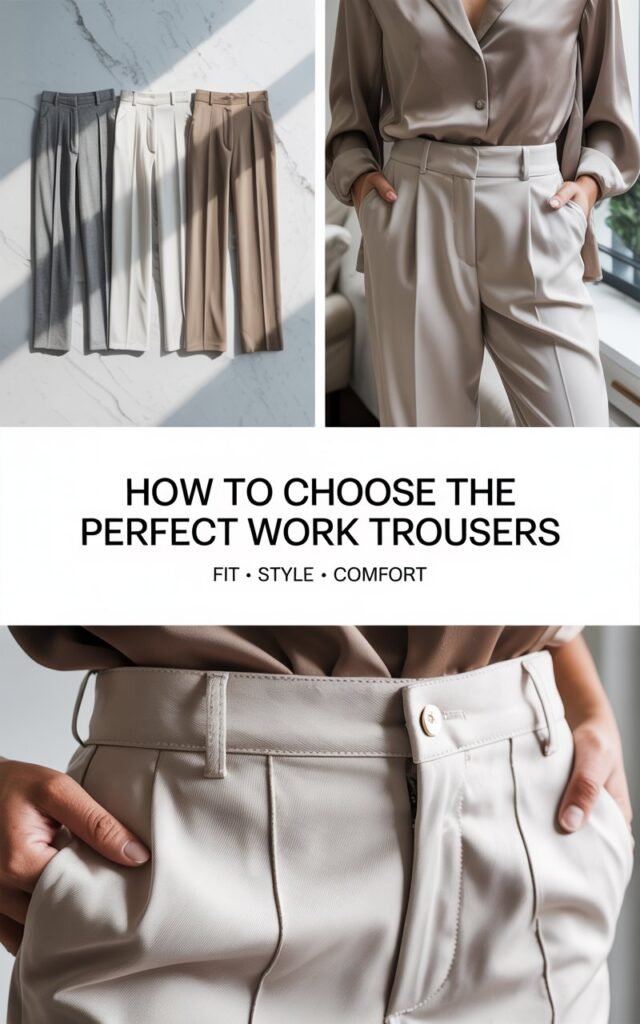
Choosing work trousers sounds simple until you’re actually shopping and everything fits weird, stretches in the wrong places, or looks nothing like the model.
Over time, I’ve learned that the right pair can literally change how you feel during the day — more confident, more put-together, and definitely more comfortable.
Here’s exactly how I choose mine and what I look for every single time:
1. Know Your Daily Routine
The best work trousers match the type of day you usually have.
If you sit a lot, you want something soft with a bit of stretch.
If you move around often, go for structured fabric that holds its shape.
2. Pick a Cut That Works With Your Body Shape
This part is personal.
Some women look amazing in straight-leg trousers; others feel their best in wide-leg or tapered cuts.
I always tell people: choose the silhouette that makes you feel balanced and confident — not what’s just trending.
3. Don’t Ignore Fabric Quality
Fabric decides everything: durability, comfort, and how professional you look.
Go for trousers made with blends that feel breathable but still polished — think viscose, polyester blends, ponte, twill, or anything with just enough elastane to keep things comfortable.
4. Prioritize the Waist Fit
A bad waist fit will ruin the entire trouser.
I always make sure the waistband sits smoothly without digging in or gaping.
High-waist trousers usually look the most flattering, especially for tucking in tops and giving that neat office look.
5. Look for Functional Features
Pockets you can actually use, a good zipper, a clean front, and hems that fall right at the ankle or just below — these small details make a huge difference in how neat and intentional your outfit looks.
6. Choose Colors You Can Wear on Repeat
Black, beige, navy, taupe, charcoal — these colors work with everything and never look outdated.
I always start with basics before adding patterns or seasonal colors.
7. Test How They Move
Sit, walk, squat slightly — if the trousers feel tight or uncomfortable during these moves, you will definitely feel that all day at work. Comfort is not optional.
Sizing Options So You Don’t Stress About Refunds
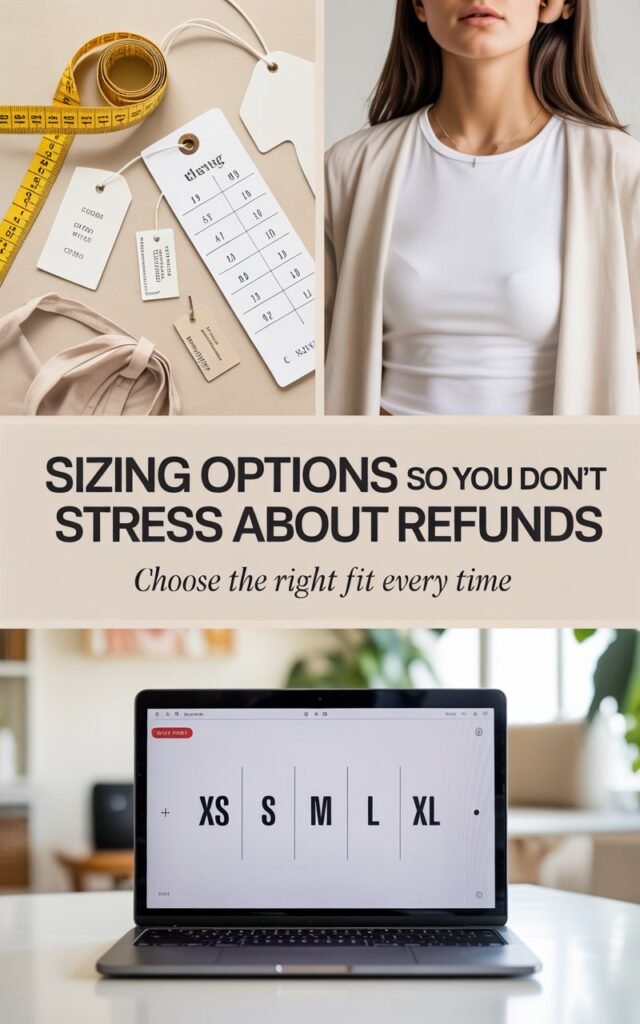
One thing I’ve learned the hard way is that work trousers can look perfect online and still fit completely wrong when they show up at your door.
To save yourself the stress of returning, refunding, and waiting all over again, it’s better to understand sizing before you even add anything to your cart.
Here’s exactly what I do now:
1. Always Check the Brand’s Size Chart — Not Your Usual Size
Different brands measure differently, so your “regular size” won’t always fit.
I always go straight to the specific size chart and compare it with my actual measurements, especially the waist, hips, and inseam.
This alone has saved me from so many wrong orders.
2. Take Fresh Measurements
Don’t rely on old numbers.
Grab a tape and measure:
- Waist at the smallest part
- Hips at the widest part
- Inseam from your inner thigh to your ankle
It takes less than a minute, and you’ll thank yourself when the trousers slide on perfectly.
3. Read the Fit Notes Carefully
Brands usually tell you if the trousers run small, large, or true to size.
When I see “runs small,” I size up immediately.
When I see “stretch fabric,” I stick to my normal measurement.
Those little notes are honestly more helpful than reviews.
4. Look for Stretch if You’re Between Sizes
If you are stuck between two sizes, choosing the fabric matters.
- Stretchy material → smaller size works
- Structured material → go one size up
This helps avoid that tight waist or stiff hip area that ruins your day at work.
5. Check the Inseam Options
A lot of trousers now come in short, regular, and long.
Picking the right inseam saves money on hemming and avoids that awkward ankle length that makes outfits look off.
I always pick the inseam closest to my true leg length so it falls clean and professional.
6. Never Skip the Review Photos
Those real-person photos tell you more about the fit than any product picture.
I always search for someone with a similar body shape to mine — if it fits them well, I already know what to expect.
7. When in Doubt, Size Up
A slightly loose trouser can be tailored to perfection.
A tight trouser? There’s almost nothing you can do with it.
Sizing up has saved me more refunds than anything else.
Variation Options to Go For

When it comes to work trousers, I’ve realized that having a few good variations makes my closet feel more useful and a lot less stressful.
Instead of sticking to one style, I look for pieces that do different things for my wardrobe.
A classic straight-leg pair is usually my starting point because it works with almost anything and never goes out of style.
From there, I add a wide-leg option for days when I want a more elevated, flowing look that still feels comfortable, especially if I’ll be moving around a lot.
I also like having a tapered or slim style in the mix. It gives a sharp, clean silhouette that pairs perfectly with blazers and fitted tops, making it an easy choice for polished office days.
Stretch trousers are another variation I always keep around because they’re forgiving, comfortable, and make long work hours feel a little easier.
When I want something that adds personality without breaking the dress code, I go for subtle patterns or textures—nothing loud, just enough to make the outfit look intentional.
Having these variations gives me flexibility.
It means I can build outfits based on my mood, the weather, or the level of formality I need, instead of wearing the same type of trousers every day and feeling stuck.
It also saves me from impulse buying because once I know what variations work for me, I stick to those and shop smarter.
How to Buy Work Trousers on a Budget
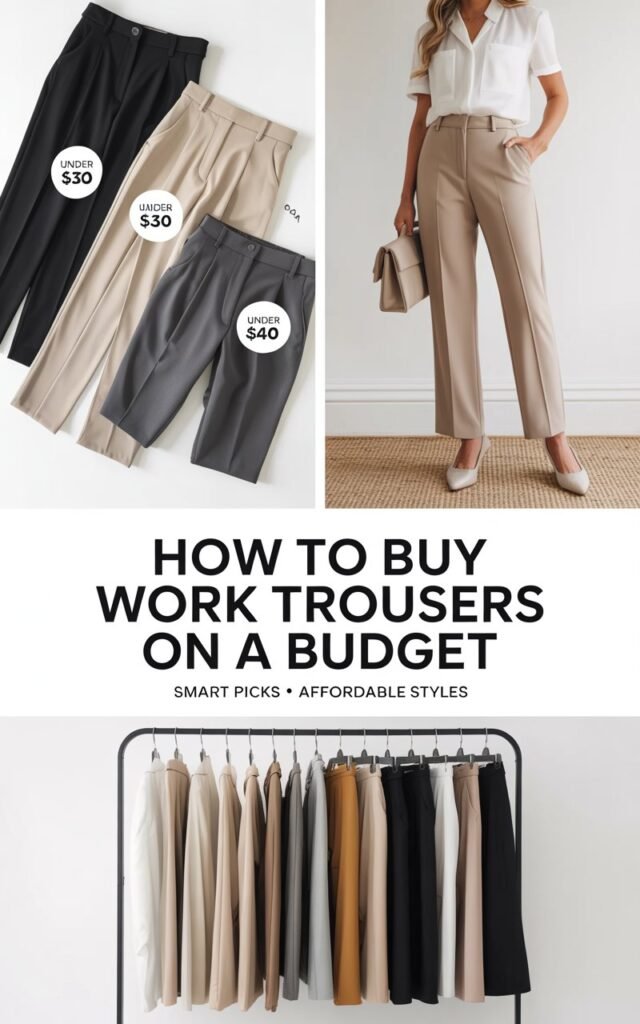
Buying good-quality work trousers doesn’t mean you have to spend a lot of money, and I learned that after wasting cash on pieces that looked great online but never lasted.
What helps me stay on budget now is being patient and intentional.
I don’t rush into buying something just because it’s trending. Instead, I take my time and watch how often the price drops.
Most brands rotate discounts without announcing it loudly, so checking back for a few days usually pays off.
Another thing that keeps my spending low is focusing on versatile trousers rather than buying too many different styles.
When you pick a pair that works with the majority of tops you already own, you start realizing how far one good purchase can go.
I also pay close attention to fabric quality, because the cheaper the material feels, the faster it wears out—and replacing trousers constantly becomes more expensive in the long run.
Sometimes spending a little more upfront saves you from buying the same thing over and over again.
Shopping during sales helps too, but I don’t just grab something because it’s marked down.
I only buy pieces I’ve genuinely been eyeing for a while so I know I’ll actually wear them.
And honestly, some of my best finds have been from outlet sections and last-season collections.
Nobody notices if a pair of trousers was from last year’s drop, especially when they fit well and look clean.
Buying on a budget is easier when you focus on value, not trends, and that mindset has helped me build a workwear wardrobe I actually love without overspending.
Work Clothes for an Apple Body Shape and Skinny-to-Fit Build
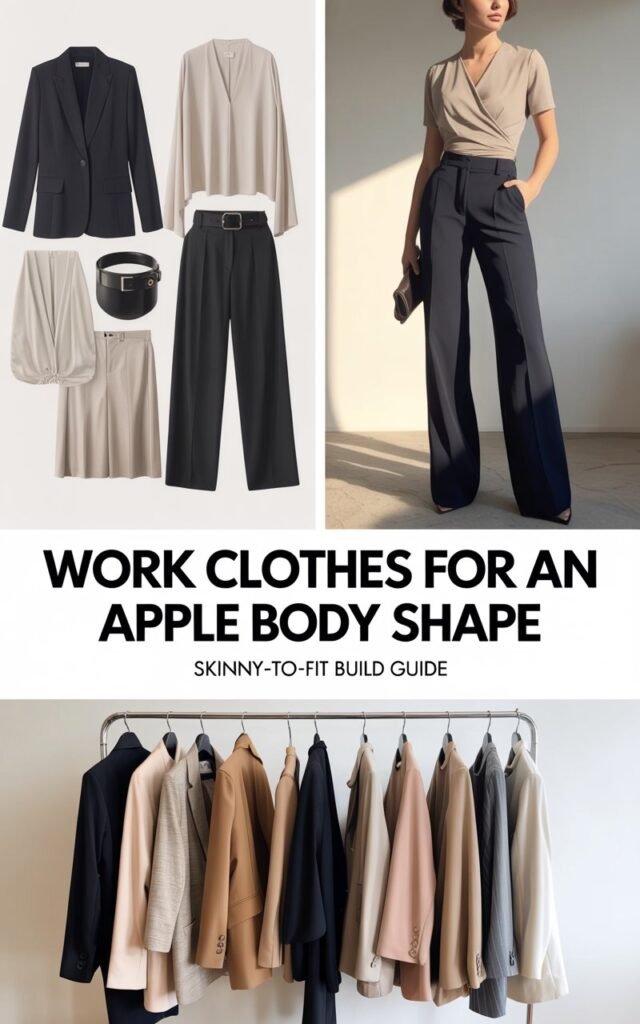
Dressing an apple body shape when you’re naturally on the slimmer side can feel tricky at first, especially if your weight sits more around your midsection while your arms and legs stay lean.
I’ve learned that the key isn’t to hide your shape, but to balance it in a way that feels comfortable and still looks sharp for work.
What helps the most is choosing clothes that give a little structure around the shoulders and create a smooth line down the torso, so the attention isn’t sitting at your midsection but spread evenly throughout your outfit.
For trousers, I’ve noticed that mid- to high-rise cuts are the most forgiving.
They hold the waist without digging in, and they help lift the look of the outfit instantly.
Slim or straight cuts work especially well for skinny legs because they don’t swallow your frame, and they add a clean silhouette that makes the proportions look intentional.
Stretch fabrics are another quiet lifesaver; they move with you, they don’t cling in uncomfortable spots, and they keep the outfit looking tailored without making you feel restricted.
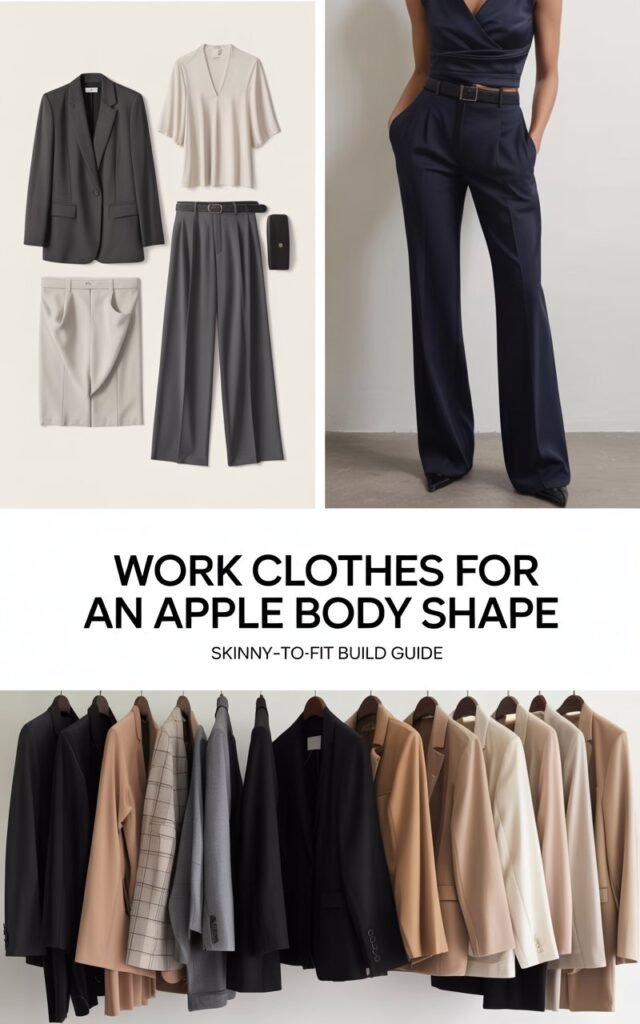
When it comes to tops, anything that drapes softly without hugging too tightly makes a big difference.
I find that subtle V-necks, wrap-style tops, and blouses with a bit of movement help elongate the torso and draw the eye upward.
It creates that natural balance that makes the outfit look polished without feeling like you’re trying too hard. Blazers also play a huge role.
A simple, slightly structured blazer instantly adds shape where you need it and pulls the whole outfit together, especially on days when you want to feel confident without overthinking anything.
Having a skinny-to-fit frame with an apple shape doesn’t limit your work wardrobe at all.
If anything, it gives you room to play with shapes and fabrics that highlight your best features while smoothing out the areas you don’t want to accentuate.
Once you find the cuts that work for you, workwear becomes a lot more fun to shop for and a lot easier to style every morning.
Final Thought
Building a work wardrobe that fits an apple body shape and a skinny-to-fit frame doesn’t have to feel overwhelming.
Once you understand your proportions and pay attention to cuts that give you balance, everything becomes easier.
You stop buying random pieces that don’t work and start building outfits that feel comfortable, look structured, and actually match the way your body moves.
The right trousers, the right tops, and a few good layers can completely shift your confidence at work.
It’s not about hiding anything; it’s about choosing pieces that highlight your strengths and make getting dressed feel simple instead of stressful.
FAQ
What type of trousers look best on an apple body shape with skinny legs?
Straight-leg, slim-fit, and high-rise trousers tend to balance the midsection while keeping the legs looking streamlined.
They create structure without feeling too tight.
Are oversized tops a good choice?
They can work, but only if they still have some shape.
Completely oversized tops can make the torso look wider, so it’s better to go with soft drapes or wrap styles instead of boxy fits.
Can blazers help define the waist?
Yes. A structured blazer instantly adds shape through the shoulders and gives the appearance of a more defined waist, making it one of the best pieces for apple-shaped workwear.
What fabrics should I look for?
Stretch fabrics, structured cotton, ponte, and woven blends work well because they add support without clinging to the midsection.
Is it better to size up or size down?
When in doubt, it’s usually safer to size up for the waist area and tailor the rest if needed.
Tailoring a slightly loose garment always looks cleaner than squeezing into something too tight.