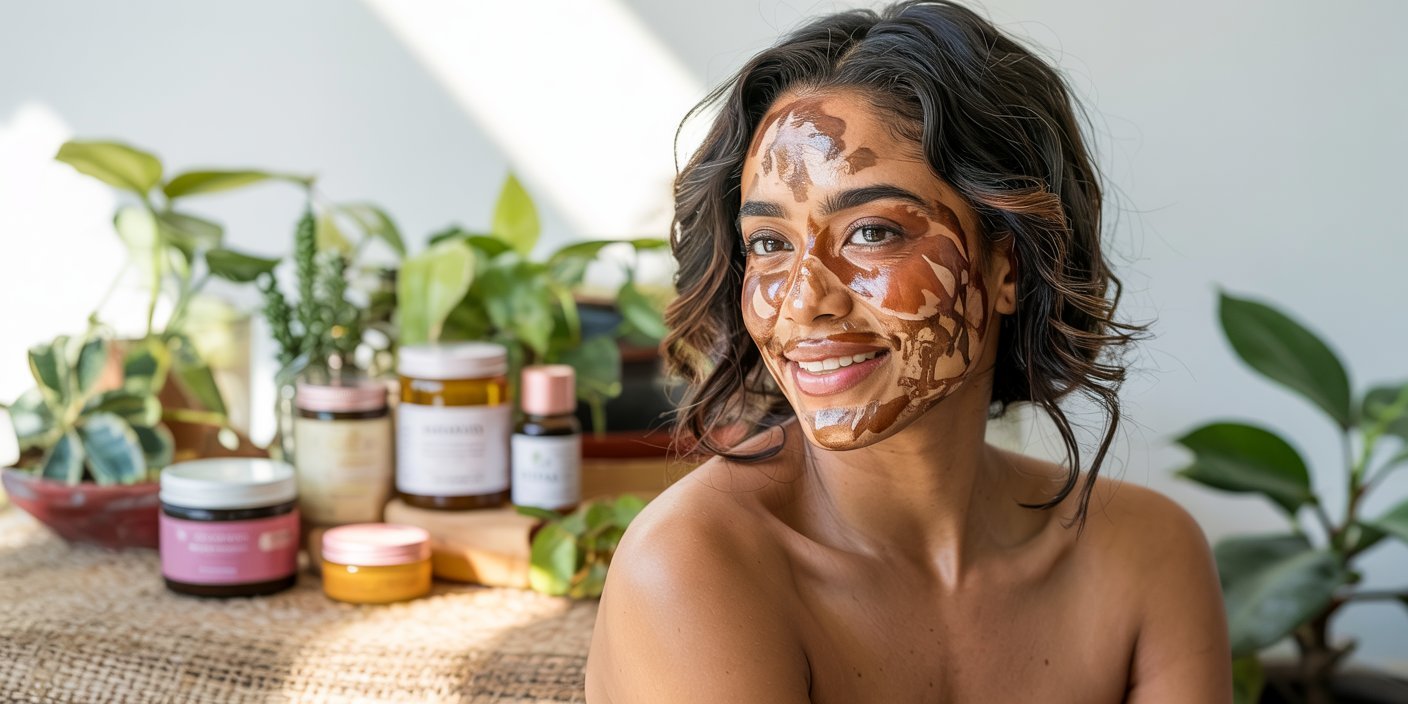

As a woman with a deeper skin tone, I’ve learned that our skin is beautiful, resilient, and unique—but it also comes with its own set of challenges.
From uneven skin tone and hyperpigmentation to dryness and sensitivity, it took me some trial and error to figure out what really works.
I discovered a routine that keeps my skin healthy, radiant, and glowing, without overcomplicating things or relying on harsh products.
The most important things I’ve realized is that deeply pigmented skin reacts differently to ingredients and environmental stressors, so what works for lighter skin doesn’t always work for us.
For example, harsh exfoliants can worsen hyperpigmentation, and some brightening products can leave our skin feeling dry or irritated.
That’s why a thoughtful, personalized approach is key.

In this post, I’m sharing the tips, tricks, and routines that have genuinely made a difference for me.
These aren’t generic suggestions—you’ll find practical advice you can actually implement in your daily life, from selecting the right cleansers and moisturizers to protecting your skin from sun damage, reducing dark spots, and keeping your complexion luminous.
Whether you’re just starting your skincare journey or looking to refine your routine, these tips are tailored specifically for women with deeper skin tones, combining personal experience with educational insight, so you can feel confident and radiant every day.
1. Start with a Gentle Cleanser That Respects Your Skin

One of the first lessons I learned on my skincare journey is that not all cleansers are safe for deeper skin tones.
Early on, I used strong foaming cleansers thinking they’d “clean better,” but I quickly noticed my skin becoming tight, dry, and prone to dark spots.
That’s because harsh cleansers strip away your skin’s natural oils, which are essential for maintaining moisture and protecting your skin barrier.
Instead, I found success with gentle, hydrating cleansers that remove dirt, sweat, and makeup without drying the skin. Ingredients like glycerin, aloe vera, and hyaluronic acid are perfect for keeping your skin soft and plump while still effectively cleansing.
Even micellar water can work for those with sensitive skin or minimal makeup days.
Pro tip: Stick to cleansing twice a day—morning and night—but avoid over-cleansing.
Too much cleansing can lead to overproduction of oil, breakouts, and dullness.
I also like using lukewarm water instead of hot water to prevent stripping natural oils.
This simple change made my skin feel healthier and less reactive.
2. Target Hyperpigmentation Without Causing Irritation
If there’s one thing many women with deeper skin tones struggle with, it’s hyperpigmentation—those dark spots that linger long after a pimple or irritation.
I spent years trying aggressive brightening products, only to realize that strong acids and harsh exfoliants can make pigmentation worse.
What helped me was a careful, consistent approach:
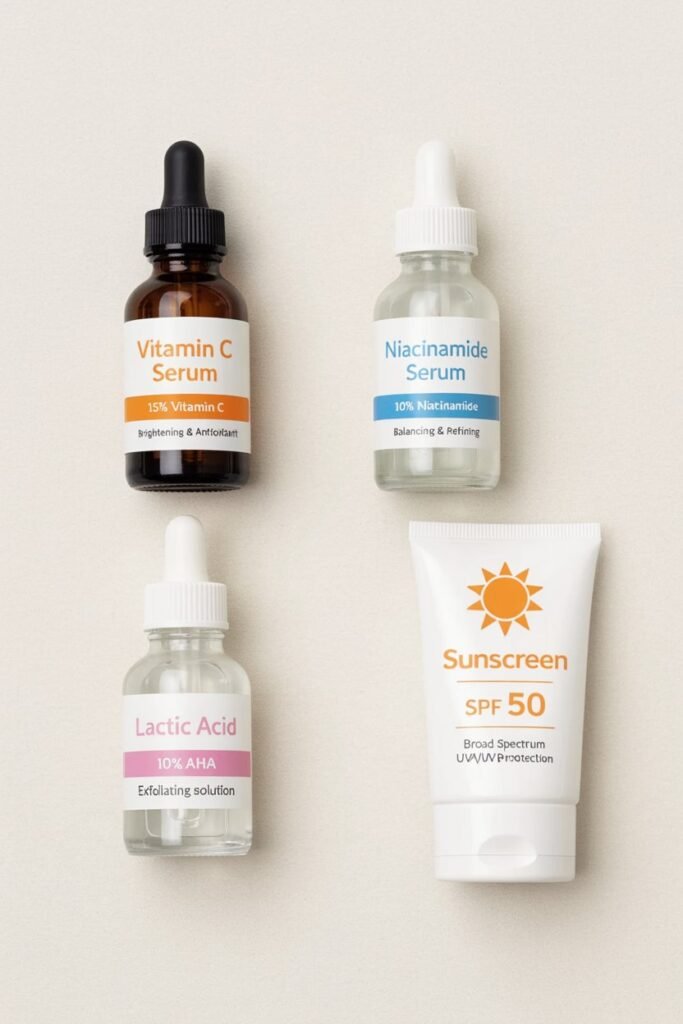
- Use gentle chemical exfoliants like lactic acid or mandelic acid instead of harsh scrubs. These remove dead skin cells without causing micro-tears. I usually exfoliate 1–2 times a week, and it made a noticeable difference over a few months.
- Vitamin C serums have been a game-changer for me. They brighten dark spots and even out my skin tone, but I always patch-test first and start with lower concentrations to avoid irritation.
- Niacinamide is another favorite ingredient. It calms inflammation, reduces redness, and helps fade hyperpigmentation gradually.
- Sun protection is non-negotiable. Even small amounts of sun exposure can darken spots. I use a broad-spectrum SPF 30+ daily, even on cloudy days, and it’s the single biggest factor in preventing new pigmentation.
Pro tip: Always introduce new products slowly.
I usually test one new serum at a time, every few nights, to see how my skin reacts.
This prevents irritation and ensures that the product actually works for my deeper skin tone.
3. Hydration Is Key – Moisturizers That Actually Work for Deeper Skin
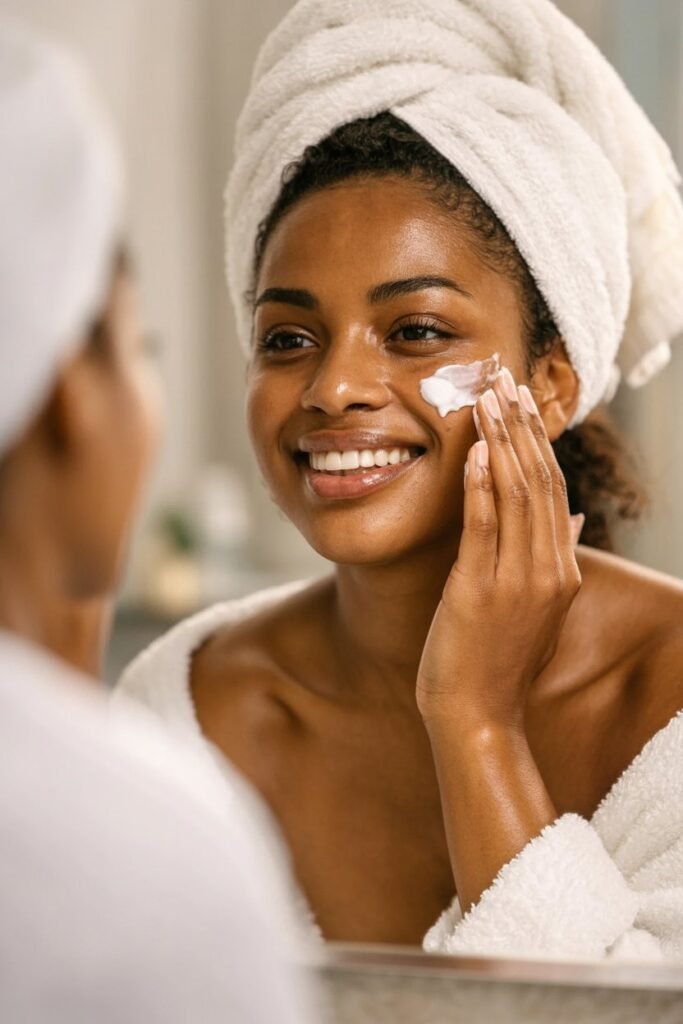
The biggest lessons I’ve learned is that hydration isn’t just for dry skin—it’s essential for deeper skin tones to maintain glow and elasticity.
Early in my routine, I used lightweight lotions thinking my skin didn’t need “heavy” moisturizers, but I noticed dullness and even more visible dark spots over time.
I switched to rich, yet non-greasy moisturizers that contain ingredients like shea butter, ceramides, and hyaluronic acid.
These help lock in moisture without feeling heavy or clogging pores.
I personally layer a lightweight serum under a richer cream, which keeps my skin soft, plump, and radiant all day.
Pro tip: Apply moisturizer while your skin is still slightly damp. This helps seal in hydration more effectively.
Also, don’t forget your neck and chest—these areas often show signs of dehydration and sun damage faster than the face.
4. Sun Protection Isn’t Optional – How to Protect Your Skin Without White Casts
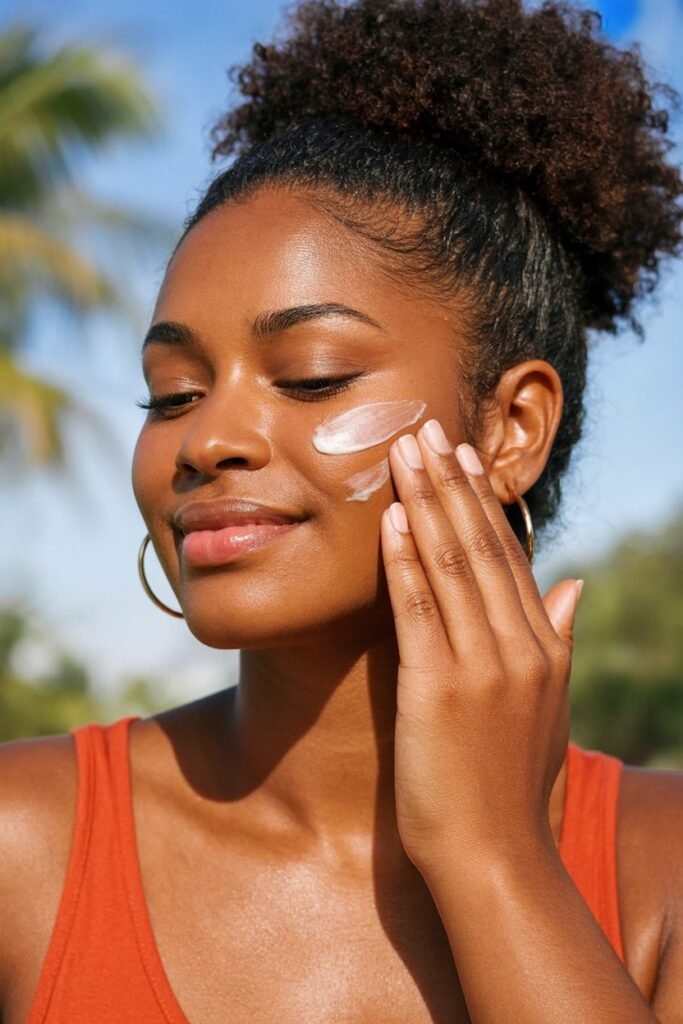
Here’s a truth I wish someone had told me sooner: deeper skin tones need sunscreen just as much as anyone else.
Many of us skip SPF because we worry about the white cast or greasy feeling, but sun damage is one of the biggest contributors to hyperpigmentation and premature aging.
I’ve found that tinted or gel-based sunscreens work beautifully—they protect my skin, blend seamlessly, and don’t leave a ghostly residue.
I make it a rule to apply SPF 30+ every morning, even if I’m indoors most of the day, because UVA rays can penetrate windows.
Pro tip: Layer your SPF over a hydrating moisturizer and under makeup.
If you’re outdoors for long periods, reapply every 2–3 hours.
I also carry a small sunscreen stick in my bag for touch-ups—it’s a game-changer for preventing dark spots from worsening.
5. Targeted Treatments for Acne and Dark Spots
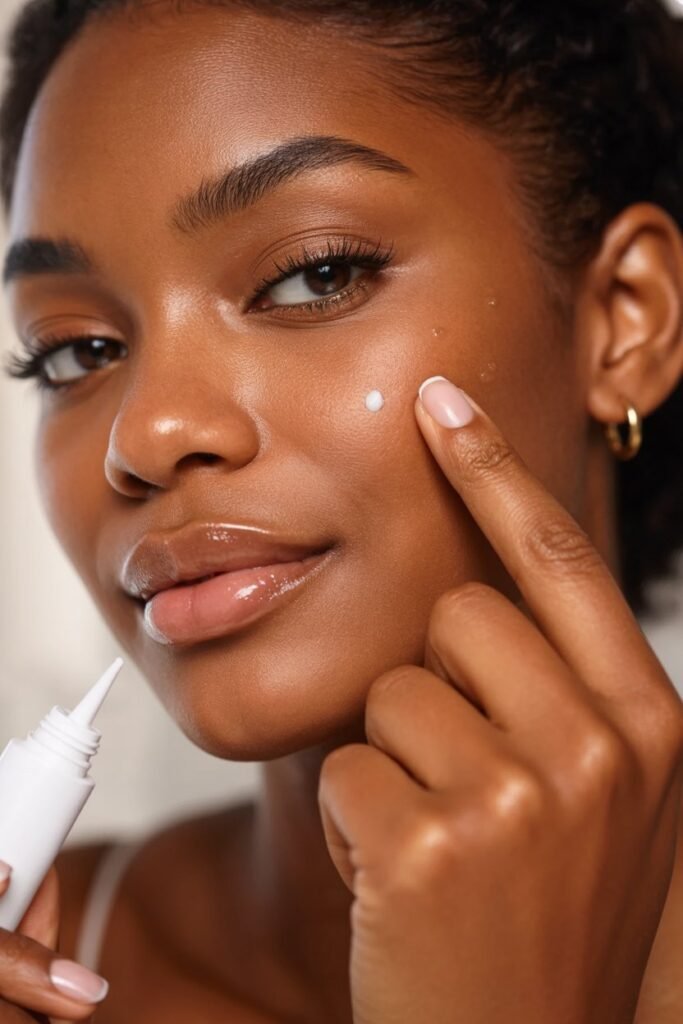
Acne and dark spots are a common struggle for women with deeper skin tones.
I’ve learned that the key isn’t just clearing the acne—it’s treating it in a way that prevents lasting pigmentation.
In my early 20s, I made the mistake of picking at pimples or using harsh spot treatments, which left stubborn dark marks that took months to fade.
What works best for me now is a gentle, layered approach:
- Salicylic acid helps unclog pores and prevent breakouts, but I use it sparingly—1–2 times per week—so it doesn’t irritate my skin.
- Niacinamide not only reduces inflammation but also gradually lightens dark spots without harsh bleaching agents.
- Azelaic acid is another lifesaver. It’s gentle, reduces redness, and helps fade post-acne marks over time.
Pro tip: Avoid overly strong hydroquinone creams unless prescribed by a dermatologist—they can be too harsh for deeper skin tones and sometimes worsen pigmentation.
Consistency and patience with gentle treatments often give better, long-term results than quick fixes.
6. Lifestyle Habits That Improve Skin from the Inside Out
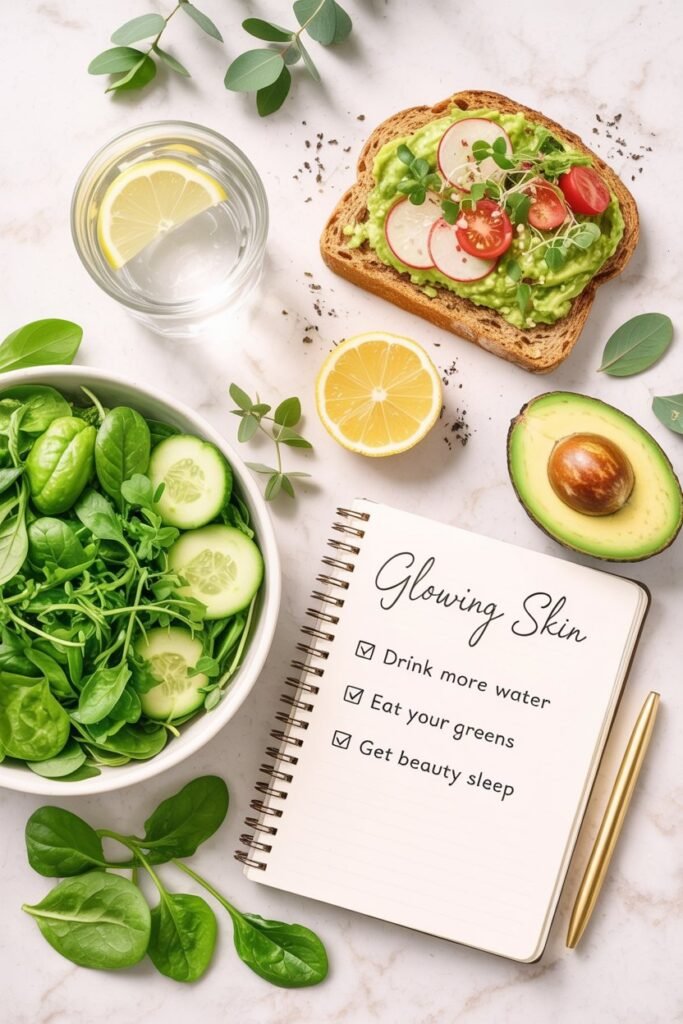
Healthy skin isn’t just about the products you apply—it’s about how you care for your body overall.
I realized that a consistent skincare routine works best when paired with lifestyle habits that support my skin from within.
Here’s what has made a noticeable difference for me:
- Hydration: Drinking enough water daily keeps my skin plump and reduces dryness. I aim for at least 8 glasses a day.
- Balanced diet: Foods rich in antioxidants, healthy fats, and vitamins—like berries, leafy greens, avocado, and salmon—support skin elasticity and radiance.
- Sleep: A consistent sleep schedule allows my skin to repair itself overnight, which helps prevent dullness and dark circles.
- Stress management: Stress can trigger breakouts and flare-ups, so I include meditation, journaling, or short walks in my routine.
Pro tip: Small, consistent changes in lifestyle often make a bigger difference than switching skincare products constantly.
Pairing these habits with your routine ensures your skin not only looks great but truly feels healthy.
7. Choosing Makeup-Friendly Skincare
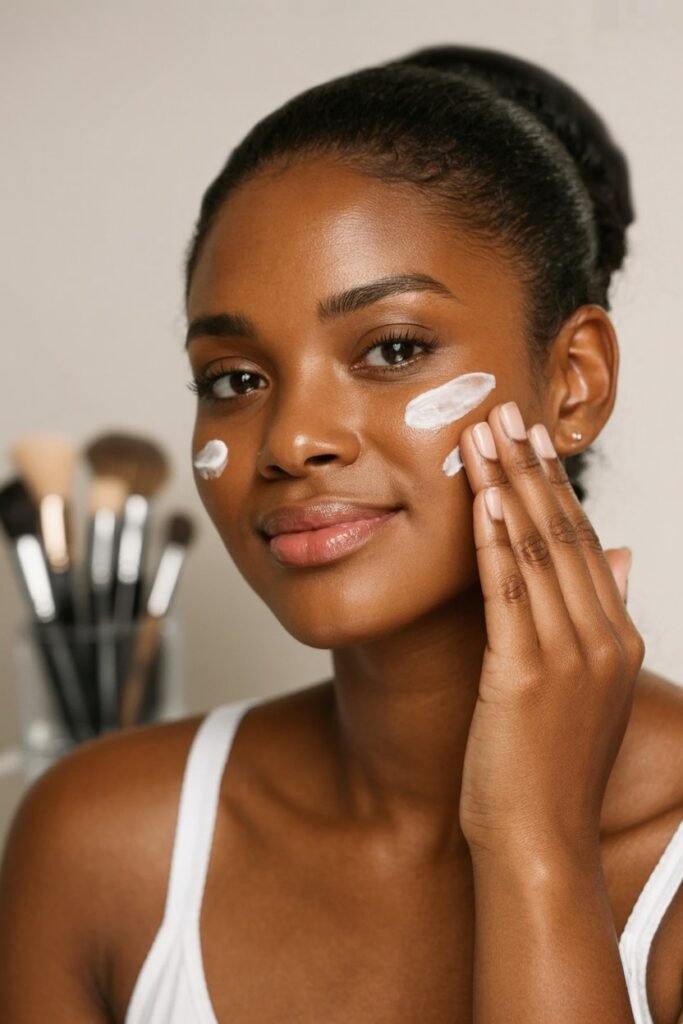
As someone who loves makeup but also wants healthy skin, I’ve learned that skincare and makeup need to work together, not against each other.
The wrong combination can cause breakouts, clogged pores, or uneven skin tone, especially for deeper skin tones.
Here’s what has helped me:
- Non-comedogenic products: Always check that moisturizers, serums, and sunscreens are labeled non-comedogenic, meaning they won’t clog pores. This prevents acne flare-ups under makeup.
- Lightweight layers: I apply lightweight serums under my moisturizer and sunscreen. Heavy creams under foundation can cause patchiness or breakouts.
- Primers with benefits: Some primers now contain hydrating or brightening ingredients. I love using a primer with subtle radiance to help my deeper skin glow without emphasizing dark spots.
- Makeup removal: Never, ever sleep in makeup. I use a gentle oil-based remover first, then cleanse. This two-step process keeps my skin clear and prevents post-acne marks.
Pro tip: Treat your makeup as part of your skincare routine.
The better your prep, the less correction you need, and your skin will thank you over time.
8. Building a Simple, Realistic Routine for Busy Days
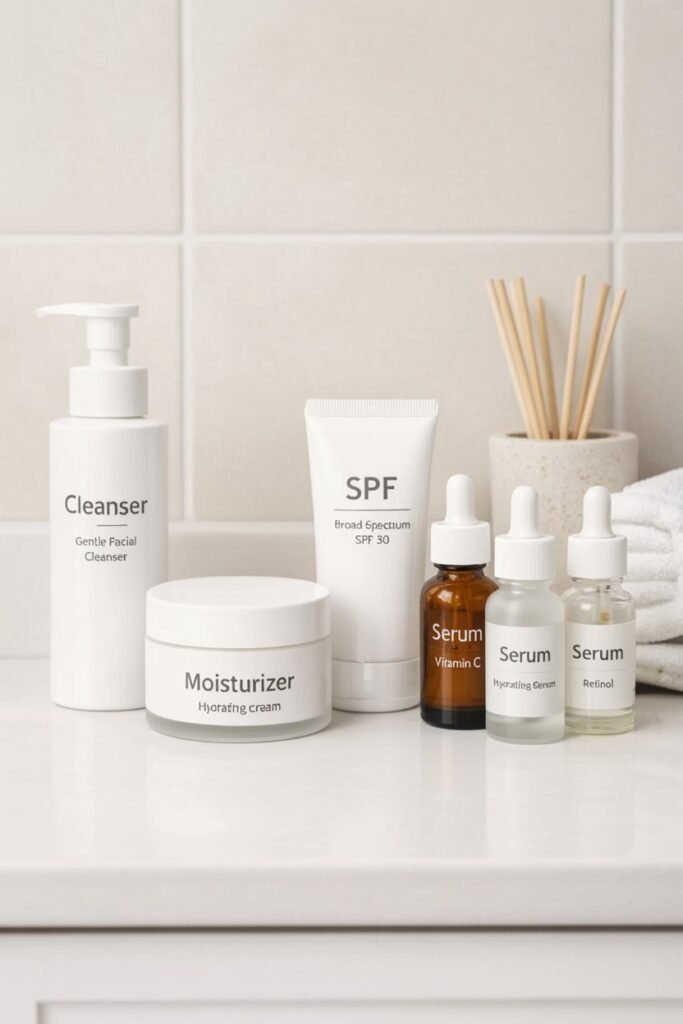
I get it—life is busy, and sometimes spending 30+ minutes on skincare isn’t realistic.
The key is simplicity and consistency.
I’ve found a routine that works even on my busiest days:
Morning:
- Gentle cleanser
- Vitamin C serum (optional on very rushed days)
- Moisturizer
- Broad-spectrum SPF 30+
Evening:
- Gentle cleanser
- Targeted treatment (niacinamide, azelaic acid, or a gentle exfoliant)
- Rich moisturizer
This routine is short, manageable, and still covers cleansing, treatment, hydration, and sun protection—the essentials for healthy, glowing skin.
Pro tip: Consistency beats complexity.
Even if you skip a product occasionally, sticking to this simple routine every day will yield better results than a complicated routine done inconsistently.
Conclusion: Embrace Your Skin and Keep It Healthy
I’ve learned that caring for deeper skin tones isn’t about chasing every new trend or product—it’s about understanding your skin, protecting it, and treating it gently.
Every tip I’ve shared here comes from personal experience: the mistakes I made, the routines I tried, and the habits that truly transformed my skin.
The key takeaways I want you to remember are simple:
- Gentle cleansing and hydration form the foundation of healthy skin.
- Treat dark spots and hyperpigmentation carefully with consistent, mild ingredients rather than harsh shortcuts.
- Sun protection is non-negotiable, even for deeper skin tones—prevention is better than correction.
- Lifestyle matters—hydration, diet, sleep, and stress management all play a major role in glowing skin.
- Consistency beats complexity—a simple, well-chosen routine will serve you better than dozens of products used sporadically.
Finally, remember that your skin is unique and beautiful.
Learning what works for you may take time, but it’s worth it.
Treat your skin with patience, respect, and care, and it will reward you with a healthy, radiant glow that feels natural and confident every day.
Personal tip: I always say that skincare is as much about self-love as it is about beauty.
Taking even 10–15 minutes a day to care for your skin is a small investment that can boost your confidence, improve your mood, and make you feel more in tune with yourself.