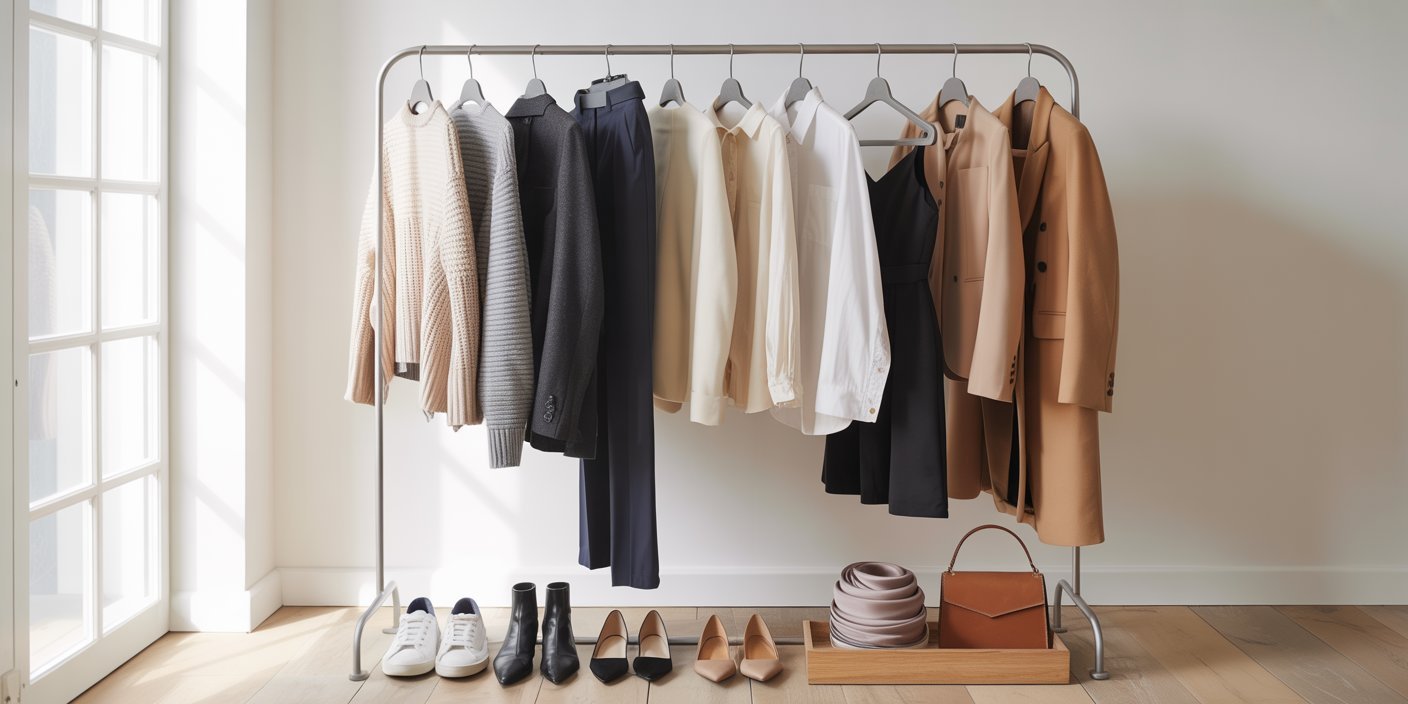

A few years ago, I stood in front of my overflowing closet, completely overwhelmed.
I had clothes spilling onto the floor, shirts that didn’t fit, pants I hadn’t worn in years, and yet, somehow, nothing to wear.
Sound familiar? I was constantly digging through piles in the morning, frustrated that it felt impossible to get dressed quickly—even on busy days when the kids had school events or my husband and I were heading out for errands.
That’s when I discovered the concept of a capsule wardrobe, and it completely changed my mornings—and my life.
For me, building a capsule wardrobe wasn’t about minimalism for the sake of it.
It was about practicality, style, and sanity. I wanted clothes that fit my everyday life as a mom, a wife, and someone who juggles work, errands, and family activities.
Over time, I learned that a capsule wardrobe is less about cutting everything down and more about curating pieces you actually love and wear.
Here’s how I built mine.
Step 1: Assess Your Lifestyle and Needs
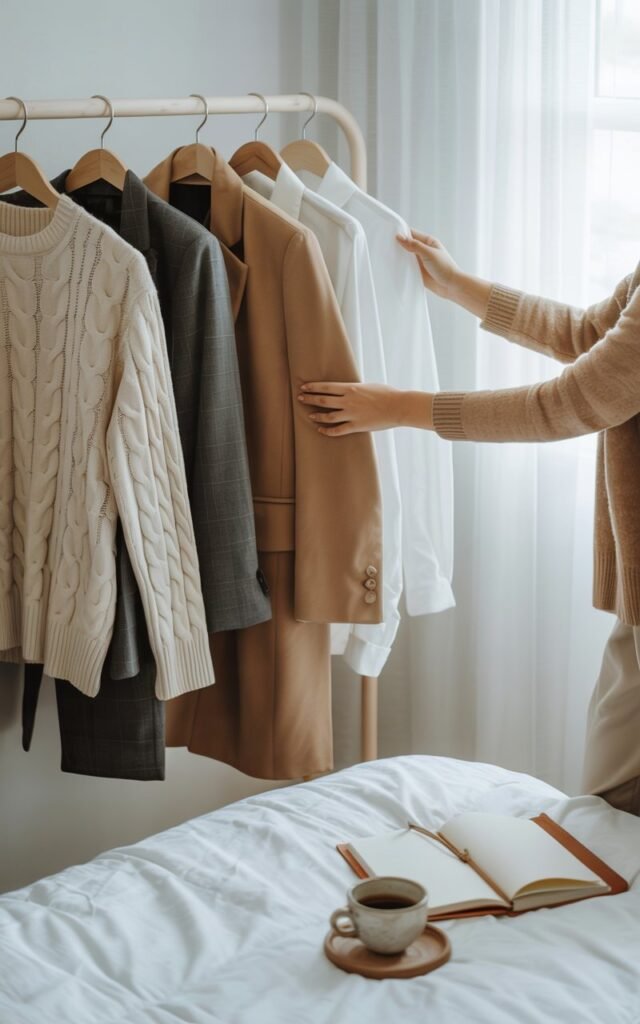
The first thing I did was look at my week and identify the types of activities I actually needed outfits for.
- School drop-offs and pickups
- Grocery runs and errands
- Work-from-home or office days
- Evenings out with family or friends
Once I listed these out, I realized I had far too many dresses for occasions I rarely attend and far too few versatile tops and pants I could mix and match daily.
Tip: Write down your weekly routine and the outfits each activity would realistically require.
This makes it easier to see what you actually need.
Step 2: Declutter What You Don’t Wear
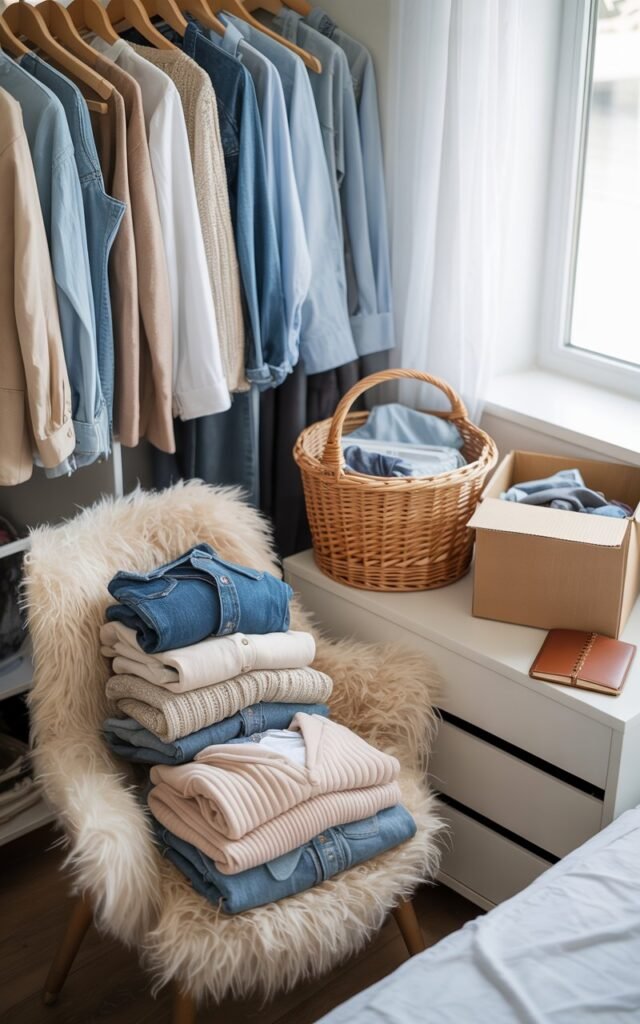
I tackled my closet one section at a time.
If I hadn’t worn something in the last year, didn’t feel confident in it, or couldn’t pair it with at least two other pieces, it had to go.
I’ll admit—it was emotional. I found shirts I loved in college, scarves I bought on a whim, and shoes that had only been worn once.
But once I let go, the space freed up and my closet finally started to feel manageable.
I donated the clothes, passed some to friends, and kept only the pieces that fit my life today.
Step 3: Choose a Color Palette
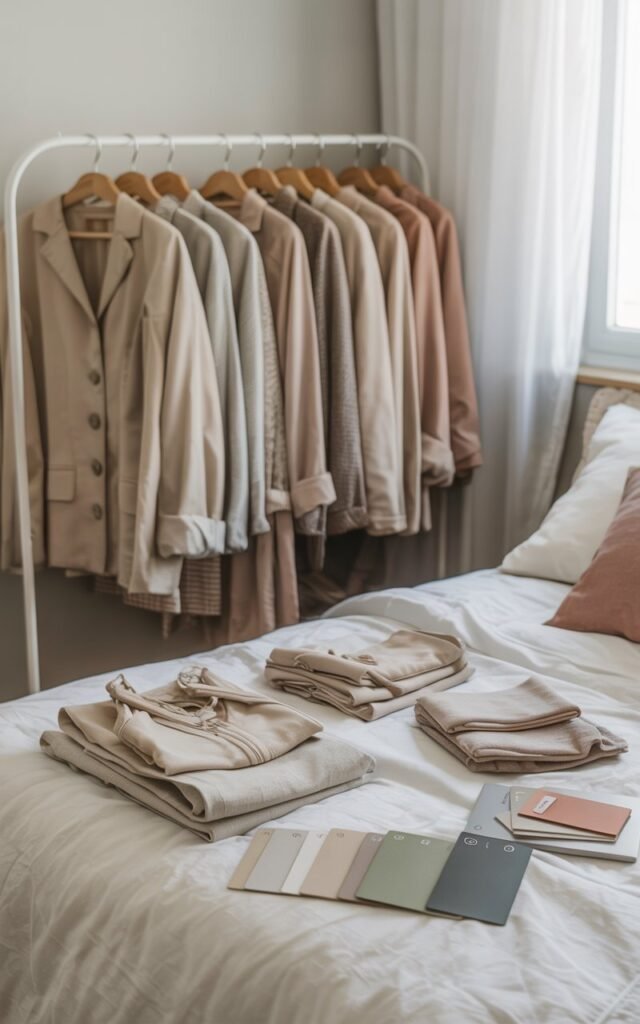
I discovered that having a simple color palette makes mixing and matching effortless. For me, I stuck with:
- Neutrals: black, white, gray, beige
- Accent colors: soft blush, navy, and olive green
Having this palette made mornings so much easier.
Every top could pair with every bottom, and even layering pieces like jackets or cardigans became effortless.
Tip: Stick to 3–5 base colors and 1–2 accent colors for versatility.
Step 4: Invest in Quality Basics
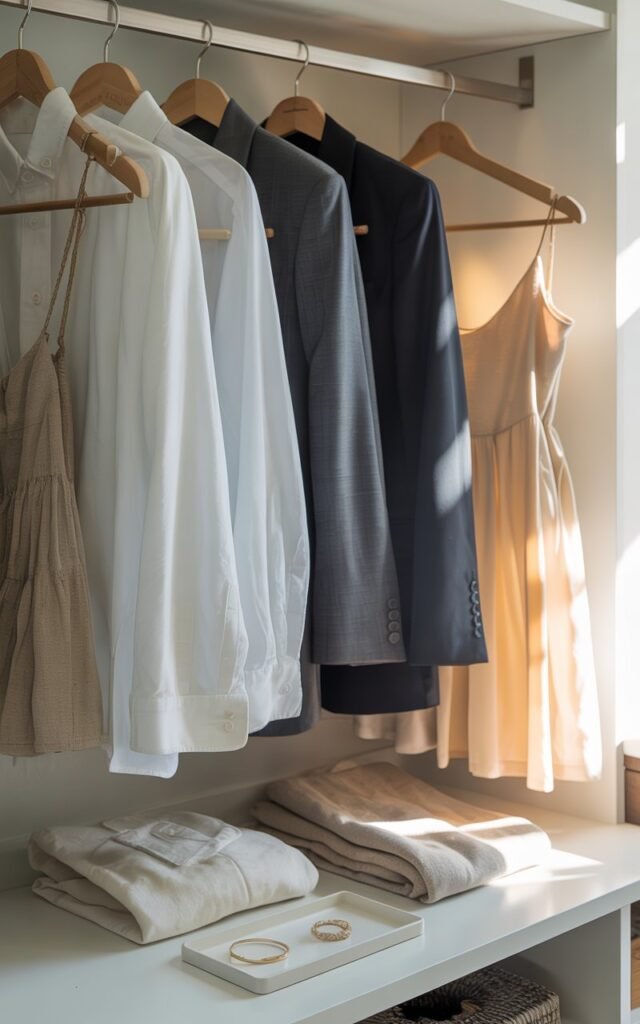
I spent more on pieces I would wear every week:
- A good pair of dark jeans
- Comfortable neutral t-shirts
- A classic blazer
- Black flats and sneakers that matched multiple outfits
I used to buy fast-fashion items that looked cute but fell apart in a few washes.
Switching to quality basics saved me money in the long run because I wasn’t constantly replacing them.
Story: I still wear a white tee I bought five years ago—paired with jeans for errands or a blazer for work—and it never goes out of style.
Step 5: Add Statement Pieces

Basics are great, but a capsule wardrobe shouldn’t feel boring. I added a few statement items:
- A floral midi dress I can wear to brunch or events
- A bright scarf for layering in colder months
- A leather jacket that instantly elevated a simple outfit
These pieces keep my wardrobe exciting and flexible, without overcrowding the closet.
Step 6: Mix, Match, and Layer
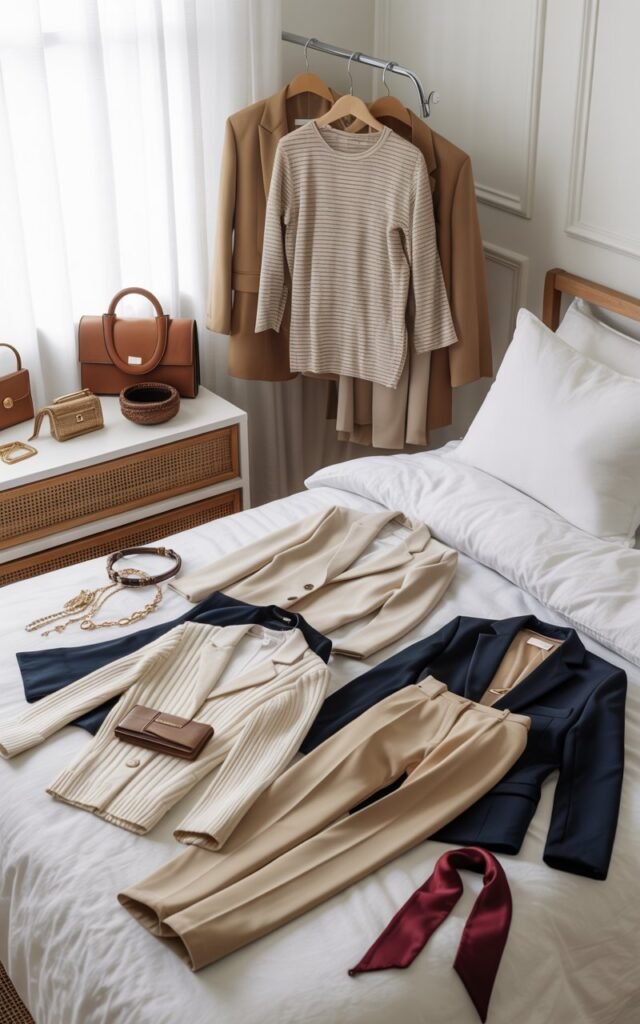
This step is where the magic happens.
I can now mix three tops, two bottoms, and a jacket in multiple ways and end up with outfits that feel new every day.
Layering with cardigans, scarves, or belts gives me endless combinations while still keeping my wardrobe compact.
Personal anecdote: Last week, I had a friend over, and she commented that I had so many “different” outfits.
She didn’t realize most of my looks came from the same 15–20 pieces. That’s the beauty of a capsule wardrobe.
Step 7: Maintain and Refresh

Once your capsule wardrobe is set, it’s not static.
I do a mini closet review every season, removing items I no longer wear and adding one or two versatile pieces if needed.
This keeps my wardrobe fresh without letting it become overwhelming again.
Tip: Seasonal rotations help maintain variety. Keep off-season clothes stored neatly to avoid clutter.
My Results
Since building my capsule wardrobe, mornings feel calmer.
I spend less time debating what to wear, more time enjoying coffee with my kids, and even the family notices I’m more organized.
I’ve learned that it’s not about having fewer clothes—it’s about having the right clothes.
A capsule wardrobe doesn’t just save time. It saves energy, reduces stress, and helps me feel confident in my everyday life.
Even with kids spilling snacks on the floor or last-minute school events popping up, I know I can put together a stylish, functional outfit in minutes.