
If you grew up hearing “Black don’t crack” or “melanin protects you from the sun”—you’re not alone. I used to believe that too.
Honestly, I didn’t start wearing sunscreen until my mid-20s, when a dermatologist pointed out that hyperpigmentation, uneven skin tone, and even premature wrinkles were sneaking up on me—not just because of age, but because of unprotected sun exposure.
Here’s the truth: no matter how much melanin you have, your skin still needs protection from harmful UVA and UVB rays.
Yes, darker skin tones may have a lower risk of sunburn compared to lighter skin, but they are not immune to sun damage.
Issues like dark spots, melasma, and early aging can all be worsened by skipping sunscreen.
The challenge? Most sunscreens—especially mineral formulas—leave an annoying, chalky white cast that makes brown and dark skin tones look gray, purple, or ashy. And no one wants that.
That’s why I put together this 2026 guide to the best “no white cast” sunscreens designed specifically for brown skin, dark skin tones, and people of color.
Whether you want a drugstore bargain, a luxury splurge, or a dermatologist-approved pick, I’ve tested and researched options that actually blend seamlessly, leaving your melanin glowing—not ghostly.
Why Regular Sunscreens Don’t Work for Dark Skin
Most traditional sunscreens were originally formulated with lighter skin tones in mind, which is why many of them don’t perform well on deeper complexions.
The main reason lies in their active ingredients—especially zinc oxide and titanium dioxide, two powerful mineral filters that sit on top of the skin to reflect UV rays.
While these ingredients are highly effective for sun protection, they are naturally white and opaque, which can leave a visible gray or purple film on brown and dark skin.
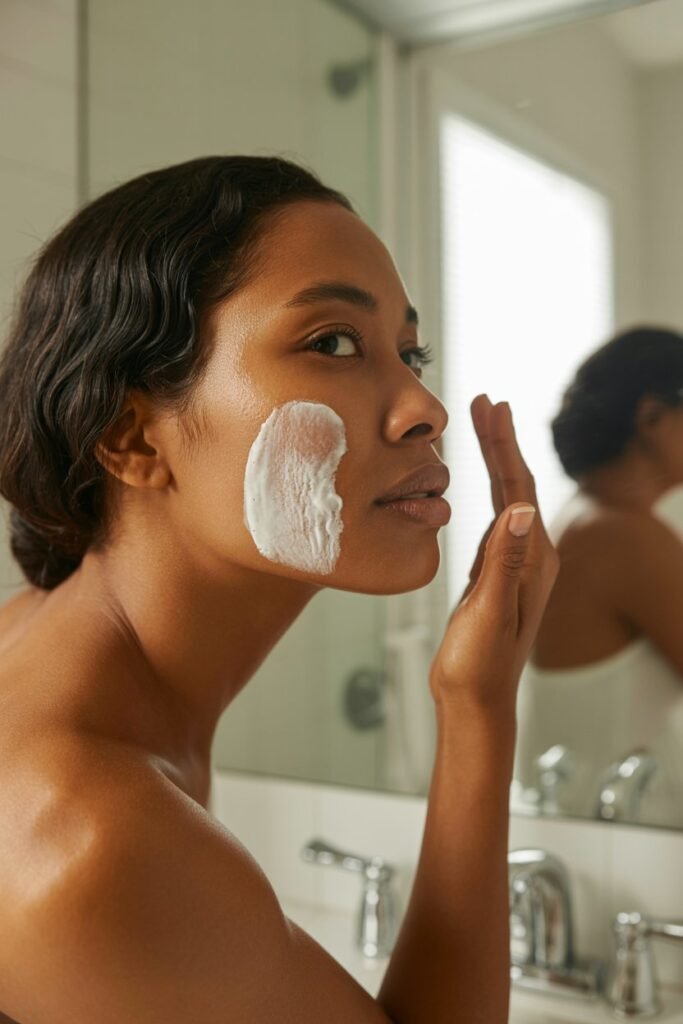
Chemical sunscreens, which absorb UV rays instead of reflecting them, can sometimes blend better—but they often contain ingredients that may cause irritation or leave a shiny, greasy finish.
For many people of color, this combination of white cast, heaviness, and poor texture has made sunscreen feel uncomfortable or even unnecessary.
Another issue is marketing and representation. For decades, sunscreen advertising focused mainly on preventing sunburn rather than protecting against long-term sun damage, hyperpigmentation, or skin cancer—concerns that affect all skin tones.
As a result, darker-skinned individuals were often left out of the conversation, reinforcing the misconception that melanin alone provides enough protection.
The truth is, while melanin offers some natural defense, it’s not enough to block UVA and UVB rays completely.
People of color are still at risk for photoaging, uneven skin tone, dark spots, and even skin cancer, especially when sunscreen isn’t used daily.
That’s why modern formulas designed specifically for darker complexions have been such a breakthrough.
They use microfine minerals, transparent filters, and skin-tone-adaptive tints to provide invisible protection without the dreaded white residue. In short, sunscreen is no longer one-size-fits-all—it’s finally inclusive.
How to Choose the Right Sunscreen for Dark Skin (2026 Checklist)
Choosing the right sunscreen for deeper skin tones isn’t just about finding a formula that doesn’t leave a white cast—it’s about comfort, finish, and protection that suits your skin type and lifestyle.
In 2026, sunscreen technology has evolved to cater to all complexions, but knowing what to look for ensures you pick one that truly works for you.
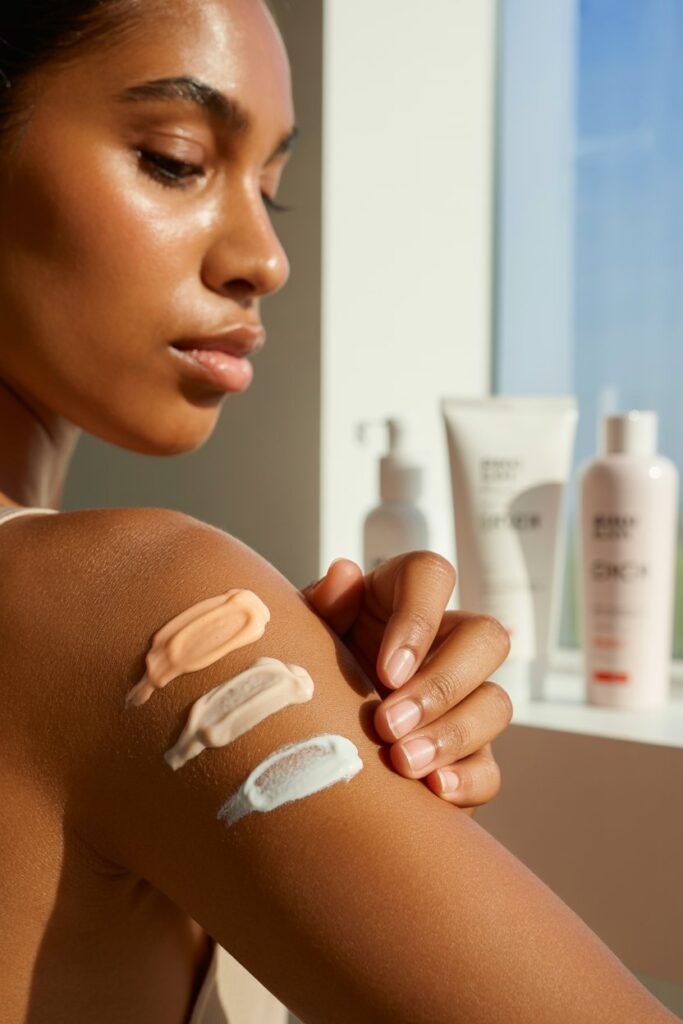
1. Look for “Invisible” or “Clear” Formulas
Modern sunscreens labeled as clear, sheer, or invisible are designed to blend seamlessly into all skin tones.
These often use micronized or transparent filters that eliminate the chalky finish typical of older mineral sunscreens.
2. Opt for Broad-Spectrum Protection
Always choose a broad-spectrum sunscreen, which protects against both UVA (aging) and UVB (burning) rays.
People of color are more prone to uneven skin tone and hyperpigmentation, so complete UV coverage is essential.
3. Check the Active Ingredients
For a truly no-white-cast experience, look for chemical filters like avobenzone, homosalate, or octocrylene, or hybrid formulas that combine chemical and microfine mineral filters.
These newer blends provide high protection without the heavy residue.
4. Prioritize Texture and Finish
For oily or combination skin, choose gel-based or matte sunscreens that control shine.
If you have dry skin, go for creamy or hydrating formulas that include ingredients like hyaluronic acid, vitamin E, or glycerin for added moisture.
5. Consider Tinted Sunscreens
Tinted sunscreens can help even out your complexion while providing extra protection from visible light, which can worsen dark spots and melasma.
Choose shades close to your skin tone to maintain a natural finish.
6. Make Sure It’s Non-Comedogenic
Dark skin can be more prone to post-inflammatory hyperpigmentation from breakouts. Select sunscreens labeled non-comedogenic to avoid clogged pores and irritation.
7. Reapply Consistently
No sunscreen works all day. Reapply every two hours—or immediately after sweating or swimming—to maintain protection and prevent uneven tanning or dark spots.
The perfect sunscreen for dark skin should disappear into your complexion, feel comfortable, and offer reliable protection without compromise.
Once you find one that checks all these boxes, wearing SPF every day becomes effortless.
The Best “No White Cast” Sunscreens for Dark Skin (2026 Edition)
The year 2026 has brought a wave of sunscreens designed specifically with deeper skin tones in mind—lightweight, invisible, and comfortable enough for daily wear.
These formulas blend seamlessly, leaving no chalky residue or gray undertone while delivering broad-spectrum protection that defends against UV rays, blue light, and pollution.
Below are some of the best-performing sunscreens trusted by dermatologists, beauty editors, and people of color alike.
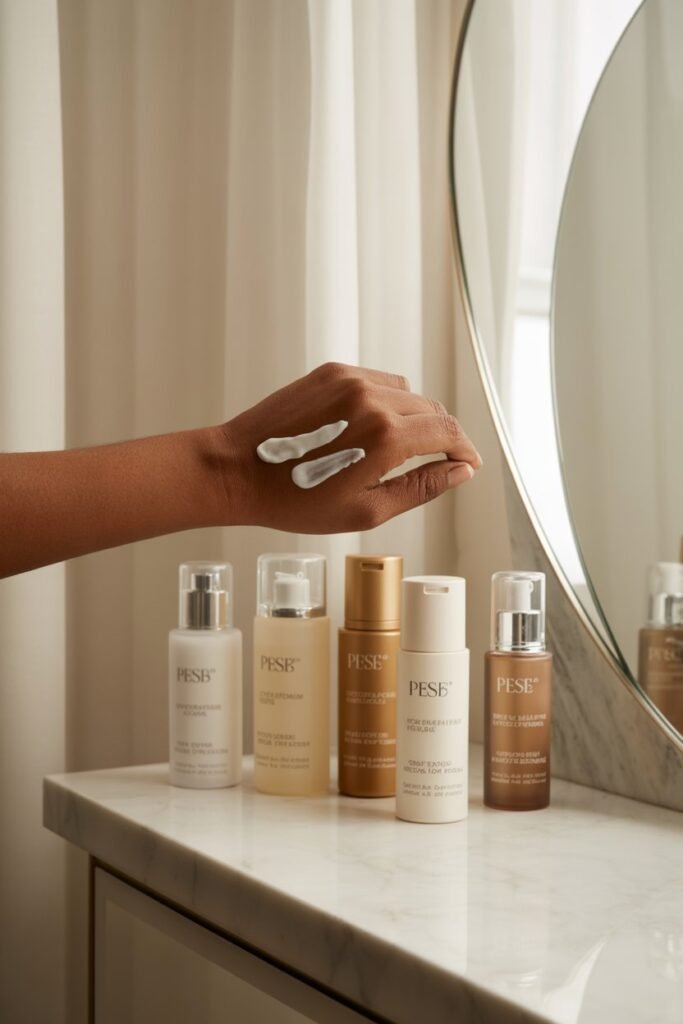
1. Black Girl Sunscreen SPF 30 / SPF 45
Still a fan favorite, Black Girl Sunscreen remains one of the top choices for darker skin tones.
Its moisturizing formula is enriched with avocado and jojoba oils, leaving a smooth, dewy finish with zero white cast. It also layers beautifully under makeup.
2. Supergoop! Unseen Sunscreen SPF 40
This completely invisible gel-based sunscreen glides onto the skin and dries down clear—making it perfect for all skin tones, especially darker complexions.
It offers a velvety matte finish that doubles as a primer, ideal for makeup lovers.
3. La Roche-Posay Anthelios UVmune 400 Invisible Fluid SPF 50+
This dermatologist-approved formula provides advanced UVA and UVB protection in an ultra-light, non-greasy texture.
It blends effortlessly without leaving any residue, even on the deepest skin tones.
4. Fenty Skin Hydra Vizor Invisible Moisturizer SPF 30
Rihanna’s Fenty Skin line continues to deliver with this hydrating sunscreen-moisturizer hybrid.
It melts into brown and dark skin without leaving a trace, while niacinamide and Kalahari melon extract help brighten and smooth the complexion.
5. EltaMD UV Clear Broad-Spectrum SPF 46 (Tinted Version)
Loved by dermatologists and people with acne-prone or sensitive skin, the tinted version of EltaMD UV Clear provides sheer, natural coverage while soothing inflammation and preventing hyperpigmentation.
6. Eucerin Sun Pigment Control Tinted SPF 50+
This formula targets dark spots while protecting against sun-induced pigmentation.
Its subtle tint blends evenly across deeper skin tones, leaving a natural, radiant finish without any residue.
7. Bolden Brightening Moisturizer SPF 30
Created by women of color for women of color, Bolden’s SPF 30 moisturizer hydrates while preventing discoloration and dullness.
It absorbs quickly and delivers a natural glow that enhances melanin-rich skin.
Each of these sunscreens represents the new generation of inclusive SPF formulas—ones that protect, enhance, and celebrate deeper complexions.
Whether you prefer a dewy glow, matte finish, or tinted coverage, these 2026 favorites prove that sun protection no longer means compromising your skin tone or finish.
Pro Tips: Wearing Sunscreen with Makeup on Dark Skin
For many people with darker skin tones, finding a sunscreen that doesn’t clash with makeup can feel like a never-ending experiment.
The struggle is real—some formulas pill under foundation, others leave an unwanted gray cast that ruins your base.
But with the right products and techniques, you can achieve smooth, even coverage while keeping your skin fully protected.
The key is in the prep. Start with a sunscreen that’s lightweight, oil-free, and completely invisible once blended in.
Gel-based or serum-like textures tend to work best for melanin-rich skin because they absorb quickly and don’t leave residue.
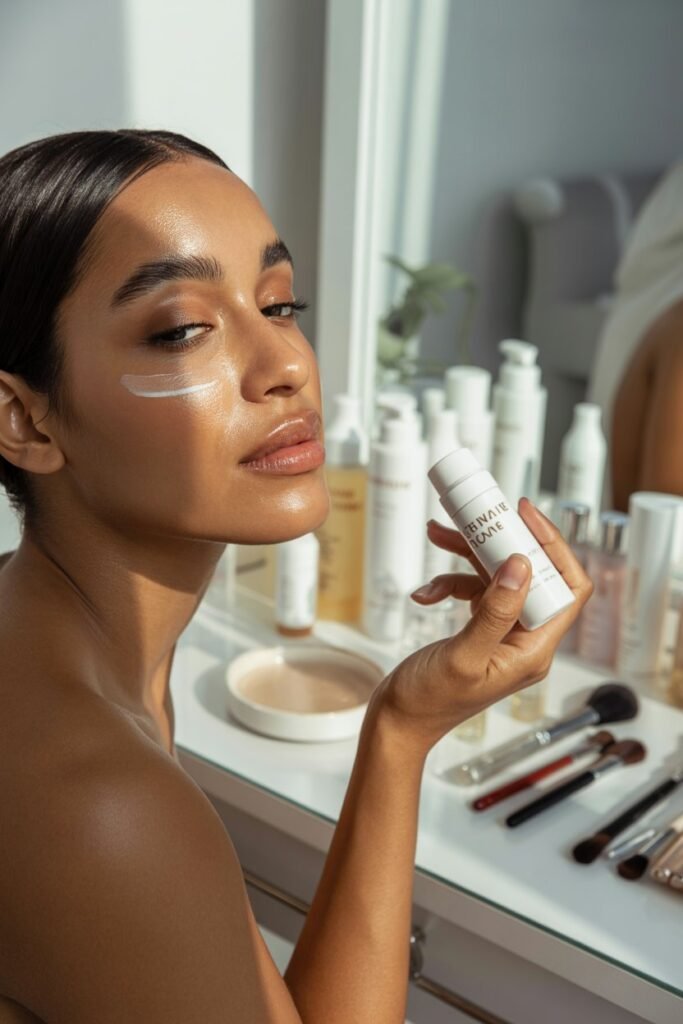
If you have oily or combination skin, go for a matte finish formula to help control shine throughout the day.
Once your sunscreen is applied, give it a minute or two to set before layering makeup. This short wait helps prevent your base products from sliding or separating later on.
A silicone-based primer can also help smooth the surface and lock in protection.
If you’re using a tinted sunscreen, it can double as your base—especially for days when you want a lighter, more natural look.
Many tinted SPFs are now available in deeper shades, offering subtle coverage that evens out skin tone without masking your complexion’s warmth and depth.
When applying foundation, use a damp makeup sponge or soft brush and press the product gently into the skin rather than dragging it across.
This technique preserves the sunscreen layer underneath. Finish with a setting powder or mist that enhances your glow without dulling your skin’s natural undertone.
Touch-ups matter too. Reapplying sunscreen throughout the day is crucial, even over makeup.
For this, reach for a setting spray or powder infused with SPF—it refreshes your look while reinforcing your protection.
Brands like Supergoop!, Colorescience, and Black Girl Sunscreen make great on-the-go options designed for deeper complexions.
Wearing sunscreen under makeup doesn’t have to be complicated or messy.
With the right pairing and routine, you can protect your skin, prevent hyperpigmentation, and still achieve a flawless, camera-ready finish every day.
Sunscreen FAQs for Dark Skin
1. Do people with dark skin really need sunscreen?
Yes. Melanin provides some natural protection against UV rays, but it’s not enough to prevent sun damage, dark spots, or premature aging.
Even deeper skin tones can develop hyperpigmentation, uneven texture, and an increased risk of skin cancer without daily SPF protection. Sunscreen is essential for every skin tone—no exceptions.
2. Why do some sunscreens leave a white or gray cast on dark skin?
Many traditional sunscreens use zinc oxide or titanium dioxide as physical filters.
These mineral ingredients naturally appear white and can sit on top of the skin rather than blending in.
To avoid this, choose formulas labeled “invisible,” “clear,” or “tinted for deep skin tones.” These modern blends use micronized minerals or chemical filters that go on sheer.
3. Can sunscreen make dark spots worse?
Ironically, not wearing sunscreen is what makes dark spots worse. Sun exposure triggers melanin production, which deepens pigmentation over time.
Daily SPF use helps fade existing marks and prevents new ones from forming.
4. What SPF level should people with brown or dark skin use?
Dermatologists recommend a minimum of SPF 30 for everyday use and SPF 50 or higher for extended sun exposure.
Higher SPF levels don’t mean you can stay in the sun indefinitely—they just offer longer protection before reapplication is needed.
5. How often should I reapply sunscreen?
Reapply every two hours, or immediately after sweating, swimming, or wiping your face.
If you’re wearing makeup, opt for SPF setting sprays or powders for convenient touch-ups without disturbing your look.
6. Can sunscreen clog pores or cause breakouts on darker skin?
It can—if you use the wrong type.
Look for “non-comedogenic” and “oil-free” sunscreens. Lightweight gel or fluid textures work best for acne-prone skin, while hydrating cream-based formulas are great for dry or combination skin.
7. Is tinted sunscreen better for people of color?
Tinted sunscreens are an excellent choice for deeper complexions.
They blend effortlessly, even out skin tone, and provide additional protection against visible light, which can worsen hyperpigmentation.
8. What’s the best way to remove sunscreen at night?
Always double cleanse.
Start with a gentle oil cleanser or micellar water to break down sunscreen and makeup, followed by a mild foaming or cream cleanser.
This ensures clean pores and prevents buildup without stripping your skin.
9. Can I skip sunscreen if I’m mostly indoors?
No. UVA rays can penetrate through windows and contribute to premature aging, even when you’re inside.
If you work near a window or spend time on your phone or laptop, you’re still exposed to blue light, which can affect skin tone and pigmentation.
10. What’s the biggest sunscreen mistake people with dark skin make?
Skipping it altogether.
Many assume darker skin doesn’t need SPF, which leads to long-term damage that’s harder to correct later.
Consistency is key—daily sunscreen is the simplest, most powerful step for maintaining healthy, even-toned skin.
Final Thoughts
Finding the right sunscreen for dark skin used to feel nearly impossible — most products left behind that dreaded gray or white cast that dulled our natural radiance. Thankfully, skincare has evolved.
Today, more brands than ever are recognizing the unique needs of brown and black skin tones, creating formulas that blend seamlessly, hydrate deeply, and protect effectively without compromising your natural glow.
But even with better options, the truth remains: sunscreen is non-negotiable for all skin tones.
While melanin provides some natural protection, it’s not enough to guard against UV damage, premature aging, hyperpigmentation, and uneven tone.
Using SPF daily is one of the simplest and most powerful habits for maintaining healthy, luminous skin — no matter your shade.
When choosing a sunscreen, go beyond the label. Look for broad-spectrum SPF 30 or higher and ingredients that support your skin barrier, like niacinamide, hyaluronic acid, and zinc oxide.
If you’re prone to oiliness, try a matte or gel-based sunscreen. If your skin leans dry, go for a hydrating or dewy finish.
And don’t forget — reapplication is key. Whether you’re working indoors or outdoors, UV rays still reach your skin through windows and blue light exposure.
If you wear makeup, layer smartly: start with skincare, follow with your SPF, and use a setting spray or powder infused with SPF for easy touch-ups throughout the day.
This ensures lasting protection without smudging your look.
At its core, sunscreen isn’t just a beauty product — it’s an act of self-care and self-respect. It’s the barrier between your radiant complexion and the invisible environmental stressors trying to dull it.