
I didn’t start thinking seriously about anti-aging skincare until I noticed my makeup wasn’t sitting the same way it used to.
It wasn’t dramatic. No sudden deep wrinkles. No overnight changes.
Just subtle shifts — a little more dryness around my mouth, foundation settling into fine lines, and that persistent “tired” look no concealer seemed to fix.
At first, I assumed I needed more expensive products. A better serum. A luxury cream. Something stronger.
But what I actually needed was a smarter routine.
I learned that anti-aging skincare at home isn’t about piling on trendy serums or copying complicated 12-step regimens.
It’s about understanding what aging skin truly needs — consistent hydration, daily protection, gentle stimulation, and long-term commitment.
When I shifted from chasing products to building a structured routine, my skin changed. Not overnight.
Not magically. But steadily. It looked healthier, felt stronger, and responded better to everything I applied.
In this post, I’ll walk you through how I built a simple, effective anti-aging skincare routine at home — one grounded in science, not hype — and how you can build one that works for your skin type, schedule, and lifestyle.
What Actually Happens to Skin as We Age
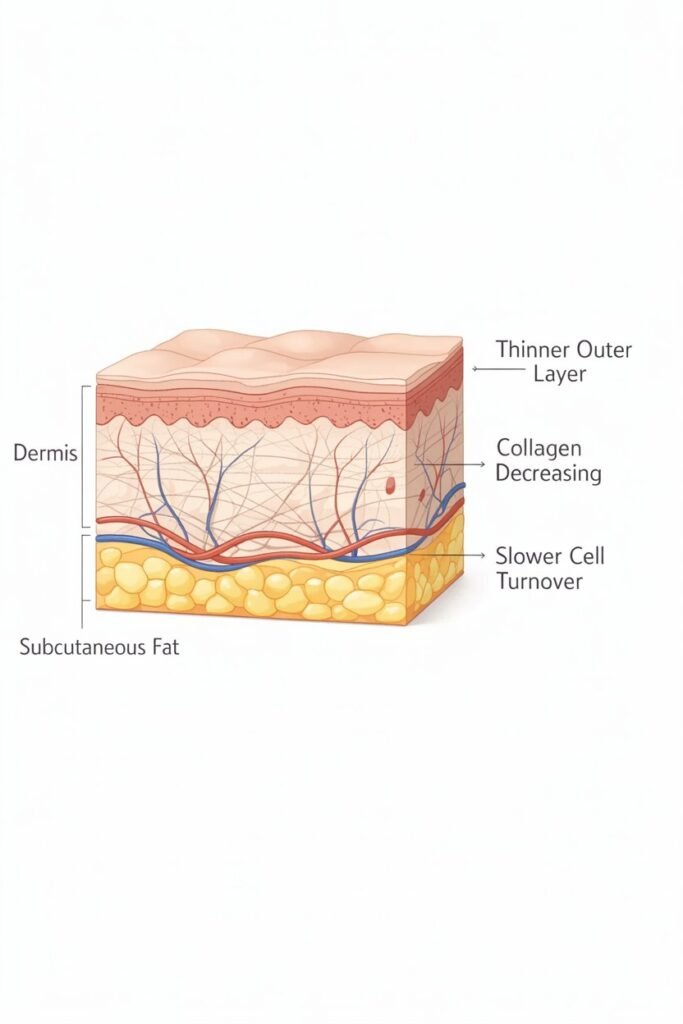
Before I changed my routine, I had to understand something important: aging skin isn’t just about wrinkles.
There are biological shifts happening beneath the surface long before we see visible lines.
Starting in our mid-20s, collagen production naturally begins to slow down.
Collagen is the structural protein that keeps skin firm and resilient.
As levels decline, skin gradually loses elasticity and starts to thin.
This is why areas like the eyes and mouth often show changes first.
Cell turnover also slows with age.
When we’re younger, our skin renews itself quickly, which keeps it smooth and radiant.
As that process decelerates, dead skin cells linger longer on the surface.
The result? Dullness, uneven texture, and makeup that doesn’t sit as seamlessly as it once did.
Another major shift is decreased oil production.
Mature skin often becomes drier because sebaceous glands aren’t as active.
This dryness can exaggerate fine lines, even if those lines are still shallow.
And then there’s cumulative sun exposure.
Even if you weren’t sunbathing daily, years of incidental UV exposure quietly break down collagen and elastin.
This is one of the biggest accelerators of visible aging — and one of the most preventable.
Understanding these changes helped me stop blaming products when something didn’t “work.”
My skin wasn’t failing. It was evolving. And it needed support tailored to that evolution.
Once I understood the biology, building a routine became logical instead of overwhelming.
The Biggest Anti-Aging Mistakes Most People Make at Home
Once I understood what was actually happening beneath my skin, I realized something uncomfortable:
I had been making my skin work harder instead of supporting it.
And I see this pattern everywhere — especially with at-home anti-aging routines.
1. Using Too Many Active Ingredients at Once
When people decide to “get serious” about anti-aging, they often layer everything at once — retinol, exfoliating acids, vitamin C, peptides, brightening serums.
More does not mean better.
Overloading the skin with actives weakens the skin barrier, leading to irritation, dryness, and inflammation — all of which can make skin look older, not younger.
When I simplified my actives and used them strategically instead of aggressively, my skin became calmer and noticeably smoother.
2. Ignoring the Skin Barrier
This is the mistake I made for years.
I focused on correction instead of protection.
If your moisture barrier is compromised, your skin cannot retain hydration properly.
It becomes reactive, flaky, tight, and more prone to visible fine lines.
Anti-aging starts with barrier strength. Not glamour. Not trends. Stability.
3. Skipping Sunscreen Because “I’m Indoors”
I used to think sunscreen was optional on low-activity days.
But cumulative UV exposure — even from quick errands or sitting near windows — quietly breaks down collagen over time.
No anti-aging routine works if daily protection isn’t part of it.
It’s like trying to fill a bucket that has a hole in the bottom.
4. Expecting Immediate Results
This one took patience to accept.
Hydration can improve quickly. Texture can improve within weeks.
But collagen rebuilding and long-term firmness take months.
When we expect instant transformation, we jump from product to product — which disrupts consistency, the very thing that produces real change.
5. Treating Every Sign of Aging the Same Way
Fine lines from dehydration are different from expression lines.
Pigmentation is different from loss of elasticity.
Dullness is different from sagging.
A smart routine identifies the primary concern and targets it properly instead of applying a generic “anti-aging” label to everything.
Once I stopped chasing quick fixes and started thinking in terms of structure and long-term skin support, everything shifted.
The routine became simpler.
My skin became stronger.
And the results became sustainable.
Step 1: Strengthen Your Skin Barrier First
Before I added any “anti-aging” products, I focused on repairing and strengthening my skin barrier.
This was the turning point.
Your skin barrier is the outermost layer of your skin.
Its job is simple but critical: keep moisture in and irritants out.
When it’s compromised, your skin becomes dry, sensitive, dull, and more prone to visible fine lines.
And here’s what I didn’t realize before — many anti-aging products won’t work properly if your barrier is damaged.
So instead of starting with retinol or exfoliating acids, I simplified everything.
What I Did
I reduced my routine to the essentials for a few weeks:
- A gentle, non-stripping cleanser
- A hydrating serum applied on damp skin
- A barrier-supporting moisturizer
- Daily sunscreen
That’s it.
No harsh exfoliants. No layering five actives. No experimenting.
Within two weeks, my skin felt less tight.
Within a month, it looked more even and calm.
Fine lines around my mouth were noticeably softer — not because they disappeared, but because my skin was properly hydrated and supported.
How to Know If Your Barrier Needs Repair
You may need barrier support if your skin:
- Feels tight after cleansing
- Burns when applying products
- Looks dull even after moisturizing
- Becomes oily and dry at the same time
- Breaks out easily when trying new products
These are signs of imbalance, not necessarily aging.
What to Look for in Barrier-Supporting Products
Instead of focusing on “anti-aging” labels, look for ingredients that strengthen and protect:
- Ceramides
- Niacinamide
- Glycerin
- Panthenol
- Fatty acids
These ingredients reinforce the skin’s natural protective layer and improve moisture retention — which immediately improves the appearance of fine lines.
Strength first. Correction second.
Once my barrier was stable, my skin tolerated targeted ingredients much better — and that’s when I moved on to the next step.
Step 2: Introduce Collagen-Supporting Ingredients Strategically
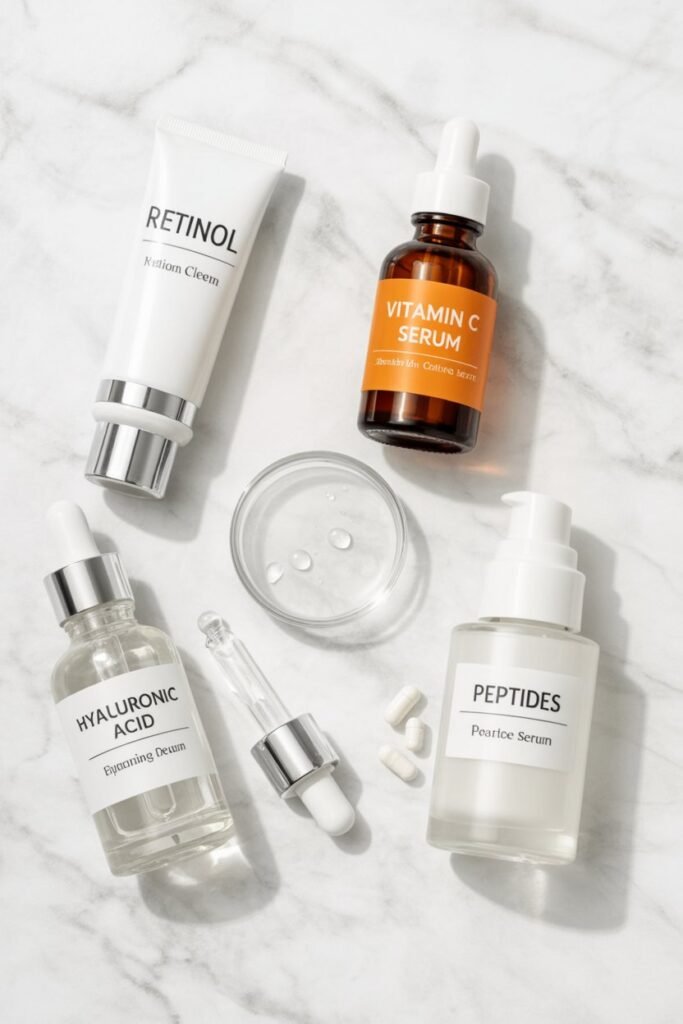
Once my skin barrier felt stable — no tightness, no random irritation, no dryness that wouldn’t go away — I introduced collagen-supporting ingredients.
This is where most people rush.
But collagen stimulation works best when the skin is calm and well-hydrated.
Otherwise, irritation cancels out the benefits.
Instead of adding multiple actives at once, I introduced them one at a time.
Slowly. Intentionally.
The Two Core Ingredients I Focused On
1. Retinoids (Used at Night)
Retinoids are one of the most studied ingredients in skincare for a reason. They help:
- Stimulate collagen production
- Improve skin texture
- Reduce the appearance of fine lines
- Support faster cell turnover
But they must be introduced carefully.
I started using a small amount two nights per week.
No mixing with exfoliating acids.
No layering with multiple treatments.
Just cleanser, retinoid, moisturizer.
For the first few weeks, my focus wasn’t “results.” It was tolerance.
When my skin handled it well, I slowly increased frequency.
That patience made all the difference.
2. Vitamin C (Used in the Morning)
If retinoids support repair, vitamin C supports protection.
Vitamin C helps:
- Brighten dull skin
- Support collagen production
- Reduce the look of uneven tone
- Protect against environmental stress
I apply it in the morning after cleansing and before moisturizer and sunscreen.
One thing I learned: consistency matters more than strength.
A well-formulated vitamin C used daily works better than a high-strength one used inconsistently.
What I Avoided
I avoided combining:
- Retinoids and strong exfoliating acids
- Multiple new actives at the same time
- Increasing strength too quickly
Skin thrives on gradual adaptation.
Timeline Expectations
This part is important.
- Smoother texture: 4–6 weeks
- More even tone: 6–8 weeks
- Firmer appearance: 3+ months
Collagen rebuilding takes time.
When I accepted that, I stopped product-hopping — and that’s when real change started happening.
Step 3: Layer Hydration Properly for Visible Plumpness
One of the biggest mistakes I made early on was underestimating hydration.
I thought anti-aging was all about serums and actives — but the truth is, hydrated skin always looks younger.
Fine lines, dullness, and tired-looking texture often come from dehydration more than age itself.
Once I focused on layering hydration properly, my skin changed almost immediately.
It looked smoother, felt softer, and even my makeup applied better.
My Hydration Routine
Here’s how I do it at home:
- Hydrating Serum on Damp Skin
After cleansing, I apply a serum with hyaluronic acid while my skin is still slightly damp. This helps trap water in the skin, giving it a plump, refreshed look. - Moisturizer That Seals It In
I follow with a moisturizer suited to my skin type — richer at night, lighter in the morning. The goal is to lock in the hydration and support the barrier. - Optional Occlusive Layer at Night
If my skin is feeling extra dry, I add a thin layer of something occlusive, like a balm or cream containing ceramides or squalane. This prevents moisture loss while I sleep.
Why This Works
Hydration does more than just make skin feel soft:
- It reduces the appearance of fine lines immediately
- It helps actives like retinoids and peptides work more effectively
- It supports barrier function, which slows the formation of new wrinkles
I learned the hard way that skipping hydration undermines every other step.
Even the best serums and creams won’t give visible results on dry, dehydrated skin.
Quick Tips for Better Hydration
- Apply serums to slightly damp skin for better absorption
- Don’t over-wash — gentle cleansing preserves natural oils
- Use products with humectants (like glycerin or hyaluronic acid) + emollients (like ceramides or squalane)
- Always seal with a moisturizer
Once hydration was layered properly, my skin felt stronger, plumper, and ready for the next critical step:
Step 4: Sunscreen — The Non-Negotiable Anti-Aging Step
This is the step I can’t stress enough.
No matter how perfect your routine is, skipping sunscreen undermines it all.
For years, I treated sunscreen as optional. “I’m mostly indoors,” I thought.
Or, “I’ll just wear it when I go outside for long periods.”
But here’s the truth: UV exposure is the #1 external factor that accelerates skin aging.
Even brief exposure through windows, driving, or running errands quietly breaks down collagen and elastin over time.
It’s cumulative. Every unprotected minute adds up.
Once I committed to daily sunscreen, the difference in my skin over months was remarkable — fewer new spots, smoother tone, and better protection for all my other products.
How I Make Sunscreen Work at Home
- Choose Broad-Spectrum SPF 30 or Higher
Broad-spectrum protects against both UVA (aging) and UVB (burning). - Apply Every Morning, Even Indoors
I put mine on right after moisturizer. Even if I’m mostly at home, indirect sunlight counts. - Reapply If You’re Outside
For long walks or errands, I reapply every 2–3 hours. - Layer Under Makeup
Lightweight sunscreens work perfectly under foundation without pilling.
Why Sunscreen is the Most Important Step
Think of it like this: all the retinoids, serums, and moisturizers in the world can’t undo daily UV damage.
Sunscreen protects your skin barrier, preserves collagen, and slows the visible signs of aging.
Once I made this non-negotiable, every other part of my routine started showing better results — hydration stayed effective, actives worked with less irritation, and my skin stayed firmer over time.
Step 5: Build a Simple Morning and Night Routine
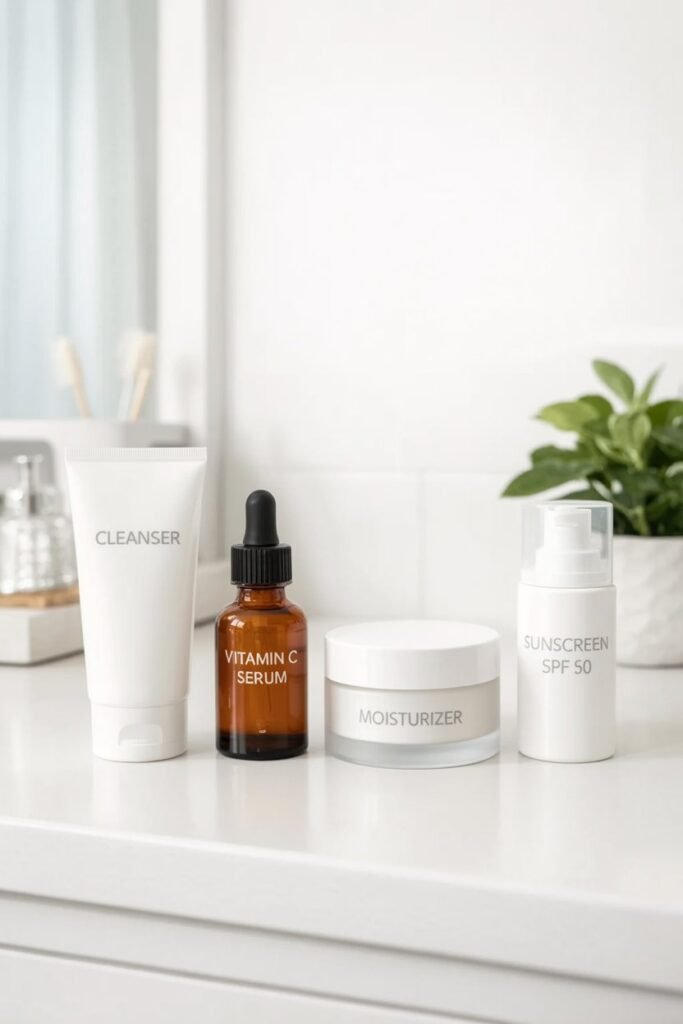
After strengthening my barrier, layering hydration, adding collagen-supporting ingredients, and committing to sunscreen, I finally had a routine that actually worked.
The key is simplicity and consistency.
You don’t need 12 steps, fancy gadgets, or dozens of products.
You need the right steps, in the right order, done consistently.
Here’s what I do at home:
Morning Routine
- Gentle Cleanser
Removes overnight sweat and oil without stripping moisture. - Vitamin C Serum
Brightens, protects, and supports collagen. - Moisturizer
Locks in hydration and strengthens the barrier. - Sunscreen (SPF 30+)
Non-negotiable. Protects everything you’ve built overnight.
Optional: lightweight eye cream if you have dryness around the eyes.
Night Routine
- Cleanser
Removes sunscreen, makeup, and impurities. - Retinoid (2–4 times per week to start)
Stimulates collagen and accelerates cell turnover. - Hydrating Serum
Hyaluronic acid or glycerin for plumpness. - Moisturizer
Seals in hydration and repairs overnight.
Optional: occlusive layer if skin is very dry.
Tips for Success
- Introduce new actives slowly — one at a time.
- Focus on barrier first — everything else works better after.
- Don’t skip sunscreen, even on cloudy days.
- Keep it simple — a streamlined routine is easier to maintain.
Once I committed to this structure, I noticed my skin felt firmer, looked more even, and my makeup applied more smoothly.
It wasn’t dramatic overnight — but the long-term results are real and sustainable.
Step 6: Be Patient — Anti-Aging Is a Long-Term Strategy

One of the hardest lessons I had to learn is that anti-aging doesn’t happen overnight.
When I first started my routine, I expected visible changes within a week.
That didn’t happen — and I almost gave up. But once I understood the biology behind aging,
I realized that consistency and patience are just as important as the products themselves.
What to Expect and When
- Immediate improvements (1–2 weeks):
Hydration and plumpness — your skin feels softer, smoother, and looks fresher. - Short-term changes (4–6 weeks):
Texture and tone begin to even out. Fine lines may start to look less noticeable. - Long-term results (3+ months):
Firmer skin, reduced appearance of wrinkles, and noticeable improvement in overall skin resilience.
Why Patience Matters
Anti-aging is about supporting the skin over time, not chasing a miracle fix.
Collagen rebuilding, barrier repair, and natural cell turnover take weeks to months.
Rushing or switching products too frequently can disrupt progress and even irritate your skin.
I learned that tracking progress in small, consistent steps — taking note of how skin feels, not just how it looks — makes a huge difference.
My Personal Tip
I like to take a quick photo of my skin once a month under natural light.
It’s a simple way to see subtle improvements that aren’t obvious day-to-day.
Seeing progress over time keeps me motivated and consistent with my routine.
Step 7: Smart Extras & Lifestyle Habits That Support Anti-Aging

Anti-aging isn’t just about what you put on your skin — it’s also about how you treat your body and your environment.
I’ve learned that small, consistent lifestyle habits make a big difference.
1. Prioritize Sleep
Quality sleep is a game-changer.
While you sleep, your skin goes into repair mode — cell turnover increases, and collagen production is naturally supported.
I aim for 7–8 hours a night and notice my skin looks noticeably fresher the next day.
2. Stay Hydrated
Drinking enough water supports skin hydration from the inside out.
I keep a reusable bottle at my desk and aim to refill it multiple times a day.
Hydration helps maintain plumpness and prevents fine lines from looking deeper.
3. Eat Skin-Supportive Foods
I focus on foods rich in antioxidants, healthy fats, and collagen-boosting nutrients:
- Berries and leafy greens (antioxidants)
- Salmon, nuts, avocado (healthy fats)
- Bone broth or collagen powders (collagen support)
Even small dietary changes complement your skincare routine.
4. Manage Stress
Chronic stress accelerates skin aging.
I try to include daily stress-reducing habits like short walks, deep breathing, or reading.
I’ve noticed that on high-stress days, my skin reacts faster to dryness and irritation, so stress management is key.
5. Gentle Exfoliation (1–2 Times per Week)
Once your barrier is strong, gentle exfoliation helps remove dead skin cells and improves texture.
I use mild chemical exfoliants like lactic acid or enzyme-based products — not harsh scrubs — to maintain smooth, radiant skin.
6. Protect from Environmental Stressors
- Sunglasses to prevent squint lines
- Hats or scarves in strong sun
- Limiting exposure to pollution when possible
These small steps prevent cumulative damage and preserve your results.
Incorporating these smart habits along with a consistent skincare routine gives you long-term, noticeable improvements without overwhelming your daily life.
Conclusion: Build a Routine That Works for You
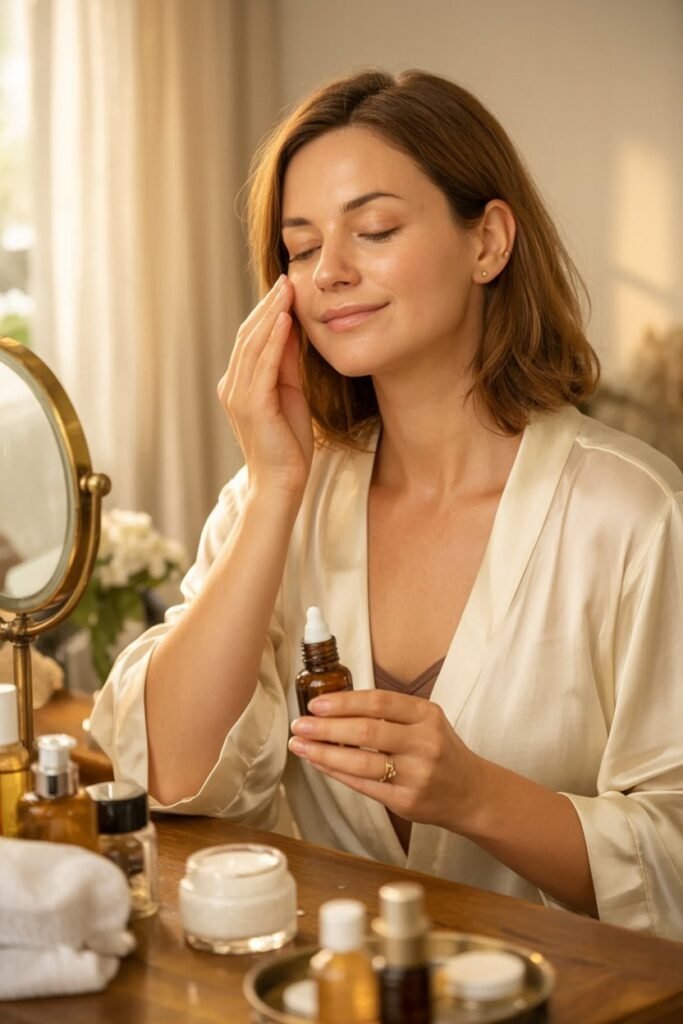
Building an anti-aging skincare routine at home doesn’t have to be complicated or expensive.
It’s not about chasing the latest trends or piling on every serum you see online.
For me, the key was understanding my skin, strengthening the barrier, layering hydration, using collagen-supporting ingredients strategically, and protecting my skin with sunscreen every single day.
Coupled with smart lifestyle habits like sleep, hydration, and stress management, my skin transformed — not overnight, but steadily and sustainably.
The most important lesson? Consistency beats complexity.
A simple, well-structured routine done regularly will always outperform a complicated routine done sporadically.
Start with the basics. Pay attention to what your skin truly needs.
Be patient. And remember: anti-aging isn’t about looking like someone else — it’s about giving your skin the support it needs to look and feel its healthiest, at every age.
Try This Today
Take a moment to assess your current routine.
Identify one area to improve — whether it’s hydration, barrier support, or sunscreen — and commit to it consistently for the next few weeks.
You’ll be surprised how much difference a smart, intentional step can make.