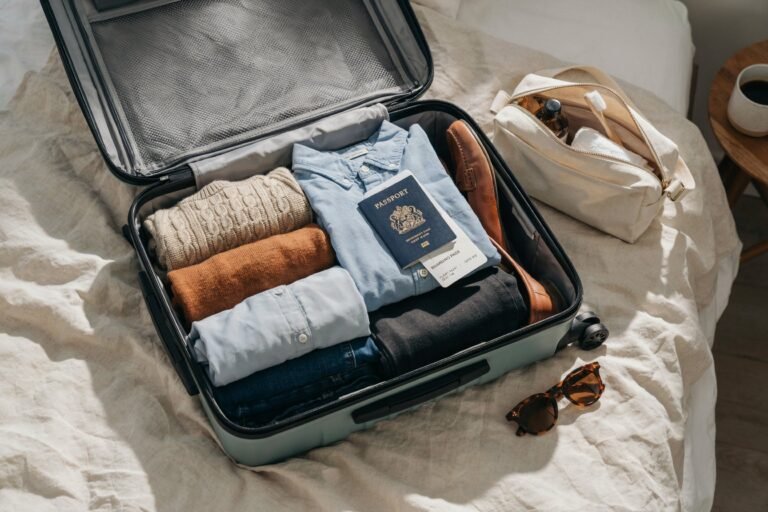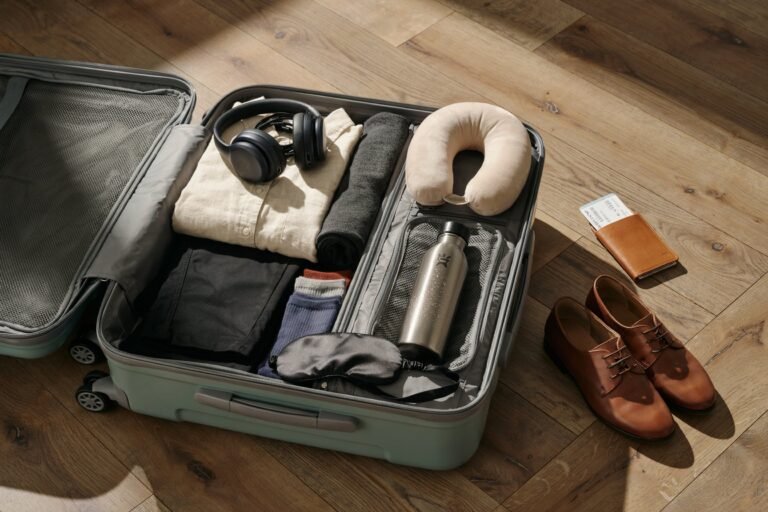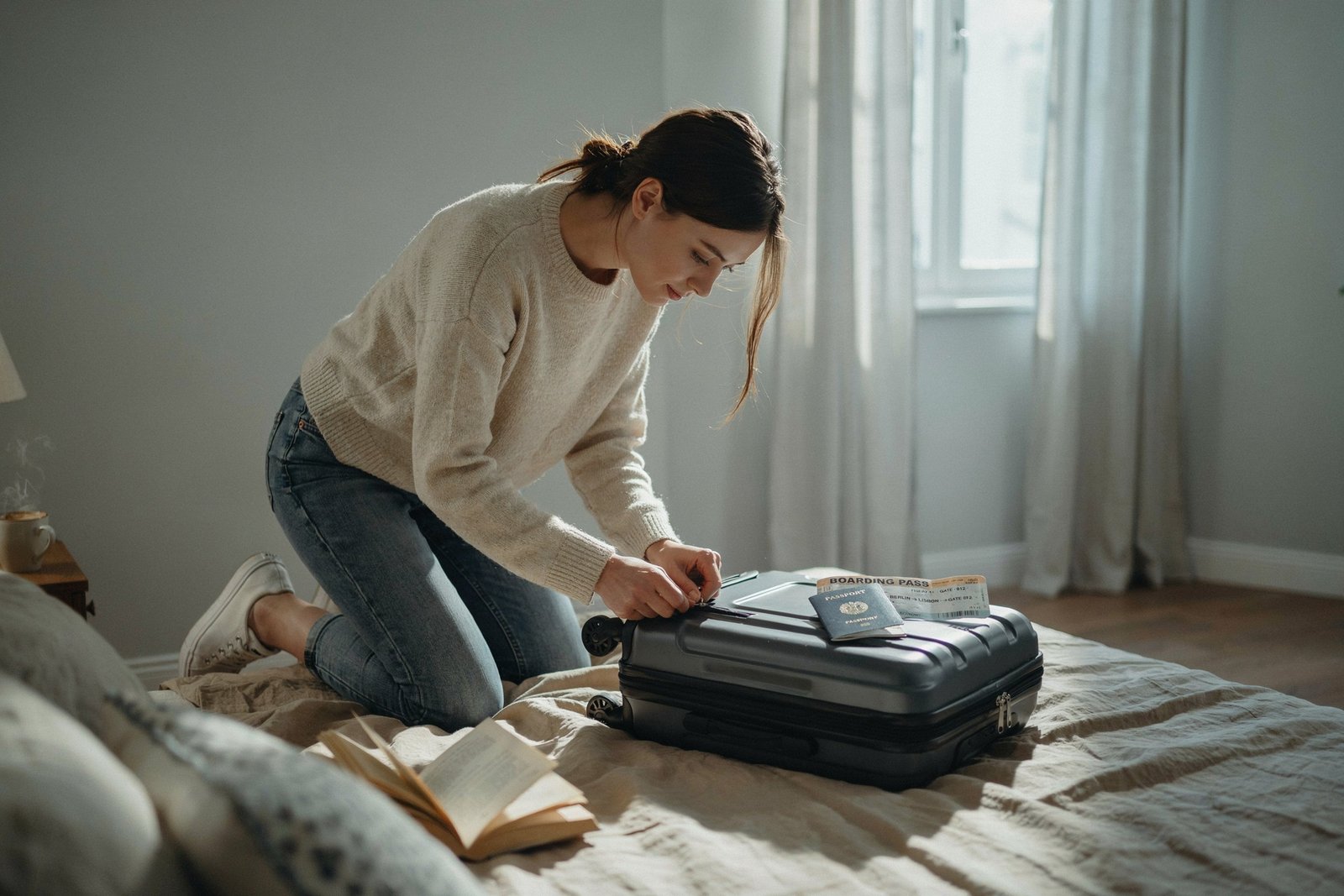

Packing for your first international trip can feel like trying to solve a puzzle with pieces you have never seen before.
You want to be prepared for everything, but you also do not want to lug around a bag that feels like a small suitcase.
This is the kind of information that can save you from standing in a security line panicking, or realizing at 30,000 feet that you forgot something you actually needed.
What you carry with you on that plane can make the difference between a smooth, comfortable journey and a stressful one, so let us walk through exactly what belongs in your bag and why.
Why Your Carry On Bag Deserves Extra Thought
Your checked luggage can get lost, delayed, or damaged.
Your carry on stays with you the entire time, which means it should hold everything you truly cannot function without for at least 24 to 48 hours.
Think medications, chargers, a change of clothes, and important documents.
First time international travelers often overpack the wrong things and underpack the essentials, so this guide is meant to correct that balance and give you a system that actually works.
The Essentials List
1. Travel Documents Organizer
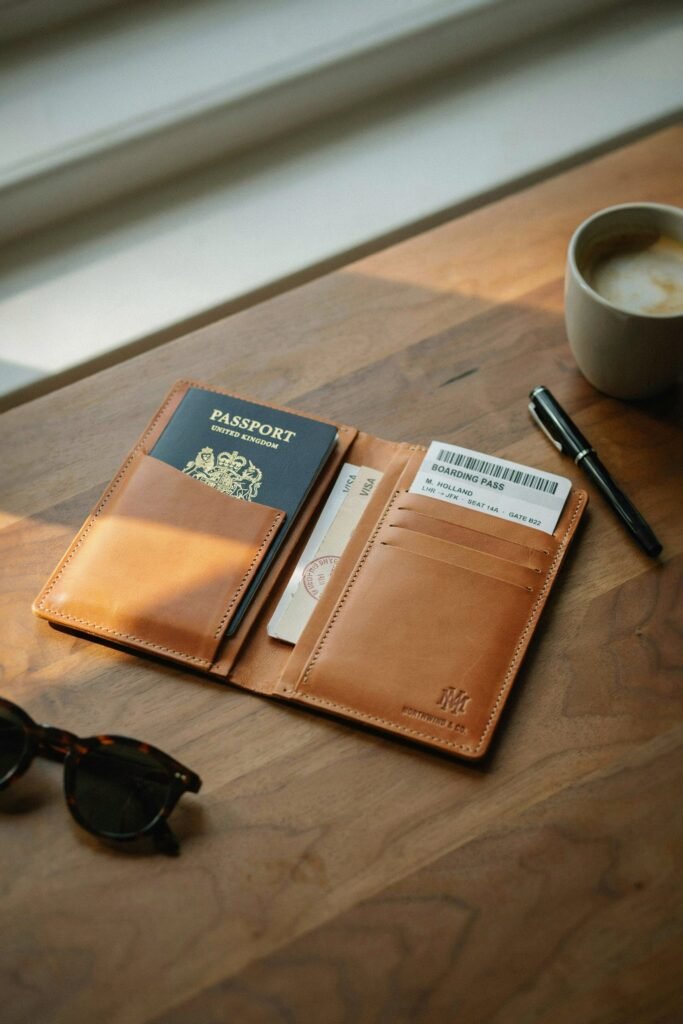
Keeps your passport, boarding pass, and visa papers safe and organized.
Nothing causes more stress at check in than digging through your bag for your passport while a line forms behind you.
A slim document organizer with separate slots for your passport, boarding passes, printed hotel reservations, and any visa paperwork keeps everything in one predictable place.
Many organizers also have a spot for a pen, which comes in handy for filling out customs forms on the plane.
Step one. Before you leave home, make two photocopies of your passport information page.
Keep one copy in your carry on separate from the original and leave the other with someone you trust at home.
Step two. Add digital backups by taking clear photos of every important document and saving them in a secure cloud folder you can access without wifi if needed.
2. A Universal Power Adapter
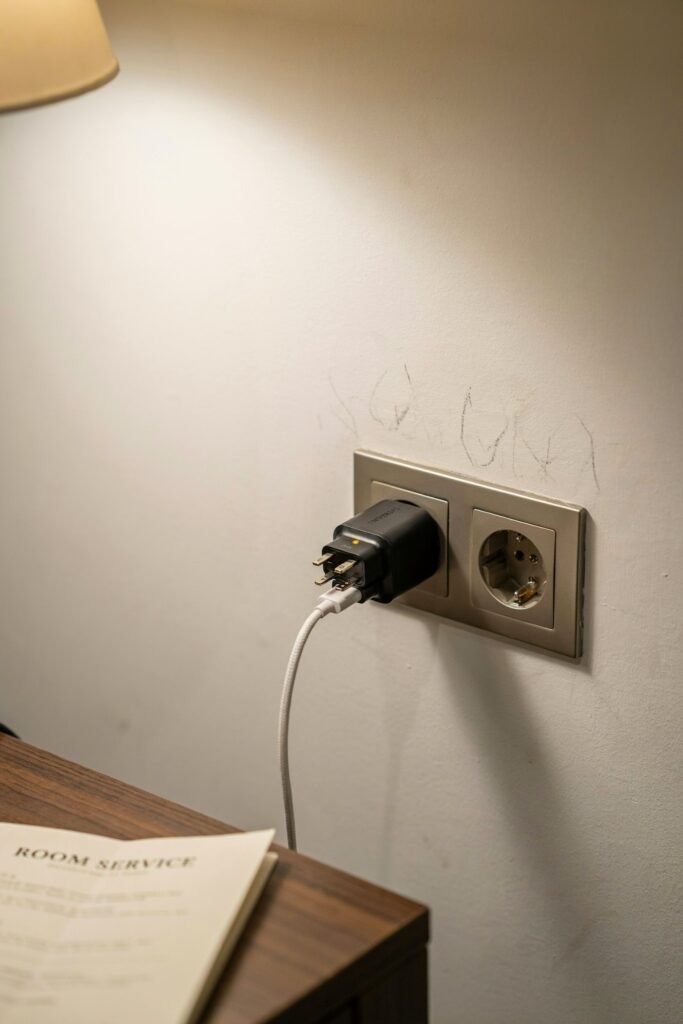
Lets your devices charge properly no matter which country you land in.
Every country seems to have its own idea of what an electrical outlet should look like, and this is one of those details that catches first time travelers off guard.
A universal adapter with multiple plug types built in solves this problem instantly, and many modern versions include USB and USB C ports so you can charge several devices at once without needing extra cables.
Step one. Check the specific plug type used in your destination country before you travel, since adapters vary by region even within the same continent.
Step two. Pack the adapter in an easily accessible pocket of your carry on so you can charge your phone the moment you land if your battery is low.
3. A Reliable Portable Charger
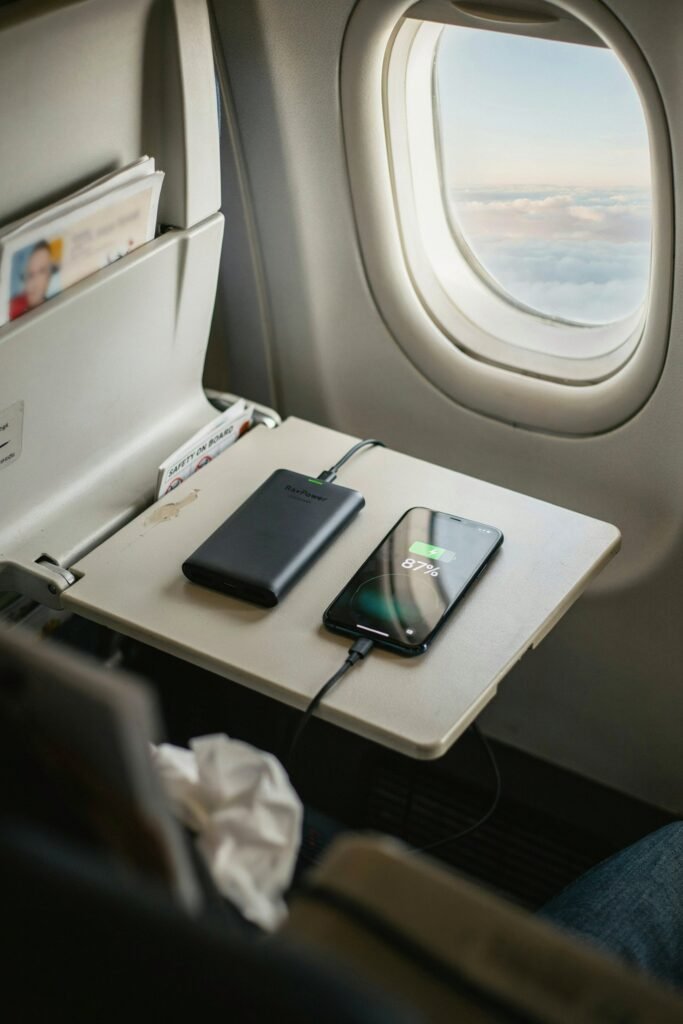
Gives your phone extra battery life during long flights and layovers.
Long international flights, delayed connections, and busy airports drain your phone faster than you expect, especially if you are using it for navigation, translation apps, or staying in touch with family.
A portable charger with enough capacity to fully charge your phone at least once or twice is worth the extra weight in your bag.
Step one. Charge the power bank fully the night before your flight so it is ready to go the moment you need it.
Step two. Keep it in your carry on rather than checked luggage, since most airlines require power banks to travel in the cabin for safety reasons.
4. Noise Cancelling Headphones
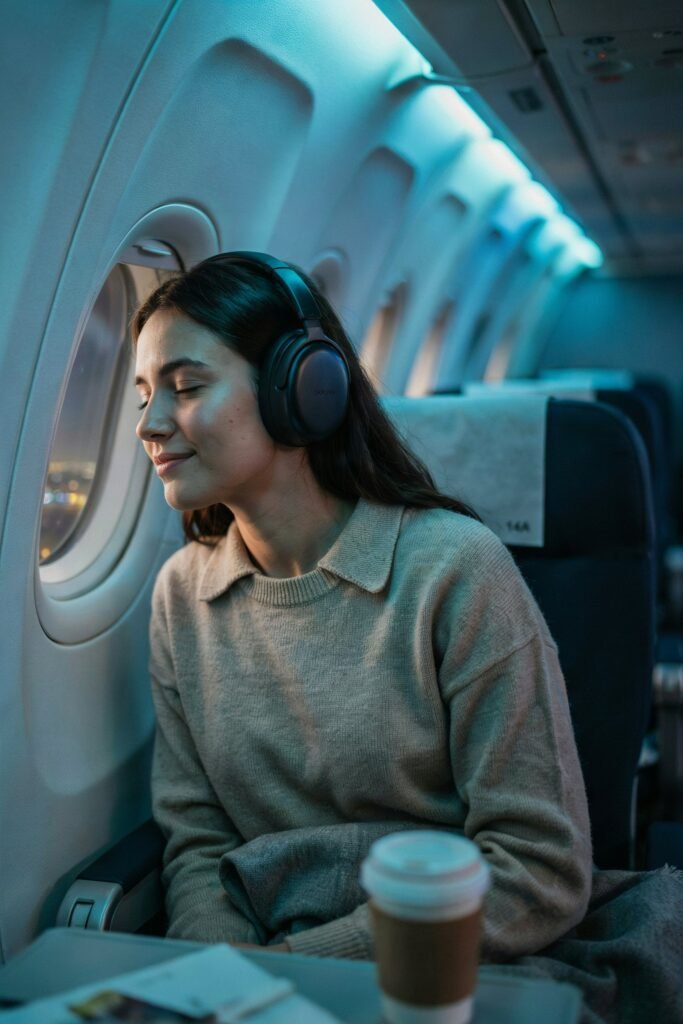
Blocks out engine noise and helps you relax or sleep on long flights.
If you have never taken a long haul international flight, you may not realize just how loud the cabin can be for hours at a time.
Noise cancelling headphones turn that constant hum into a quiet background, making it easier to watch a movie, listen to music, or simply fall asleep without being jolted awake by every announcement.
Step one. Bring the headphones fully charged, and pack the charging cable in an outer pocket so you are not digging through your whole bag mid flight.
Step two. Download a few playlists or podcasts before you leave in case the in flight wifi is unreliable or unavailable.
5. A Comfortable Travel Pillow
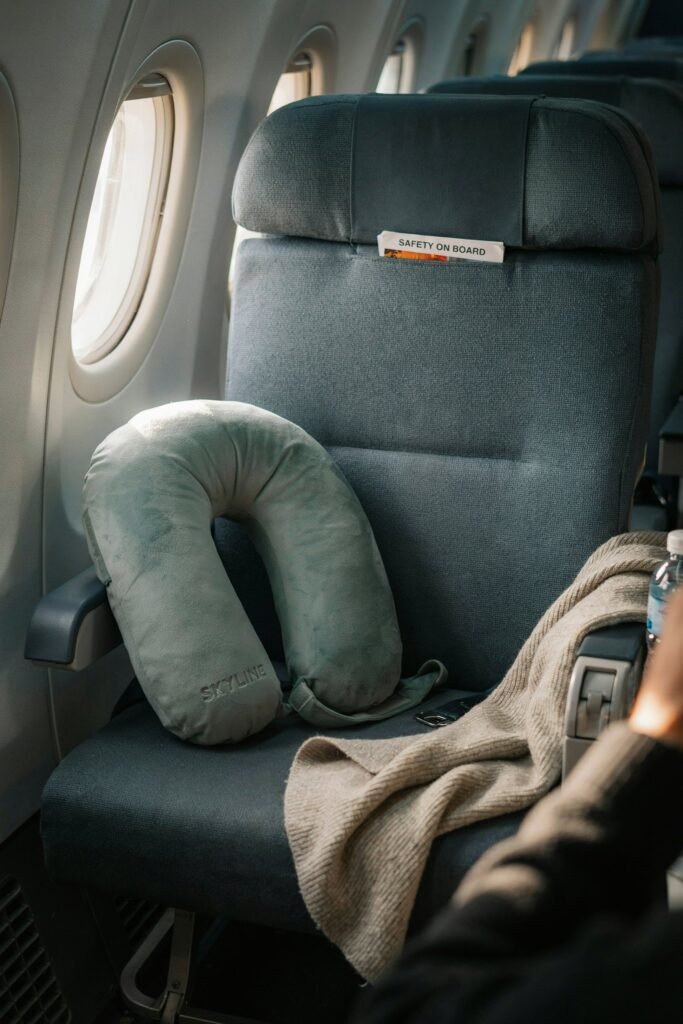
Supports your neck so you can actually rest during a long journey.
Sleep on a plane is already hard to come by, and a stiff neck the next morning makes exploring a new country far less enjoyable.
A compact, memory foam or inflatable travel pillow takes up little space but makes a noticeable difference in how rested you feel after landing.
Step one. Choose an inflatable version if space is tight, since it packs down small and only takes seconds to blow up when you need it.
Step two. Attach it to the outside of your bag with a small clip so it is ready to use as soon as you sit down.
6. A Reusable Water Bottle
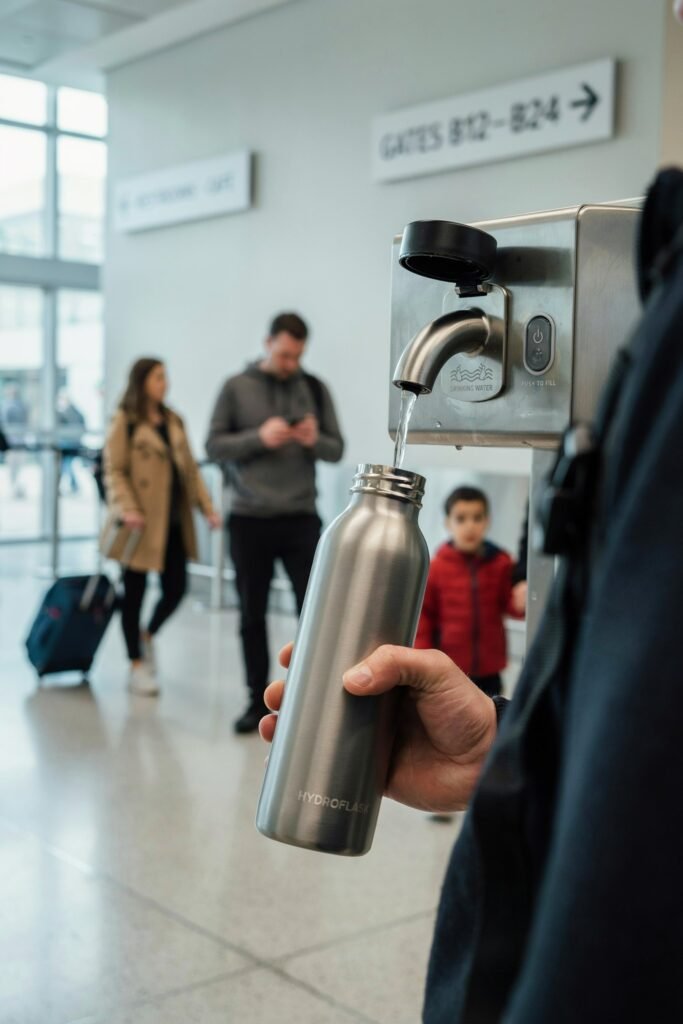
Keeps you hydrated after security without paying airport prices for water.
Staying hydrated during a flight matters more than most people realize, since cabin air is notoriously dry.
An empty, collapsible reusable bottle can pass through security easily and then be filled at a water fountain on the other side, saving you money and reducing plastic waste at the same time.
Step one. Make sure the bottle is completely empty before reaching the security checkpoint, as any liquid inside will need to be discarded.
Step two. Fill it up right after security so you have water ready for boarding and the first hour of your flight.
7. A Small First Aid and Medication Kit
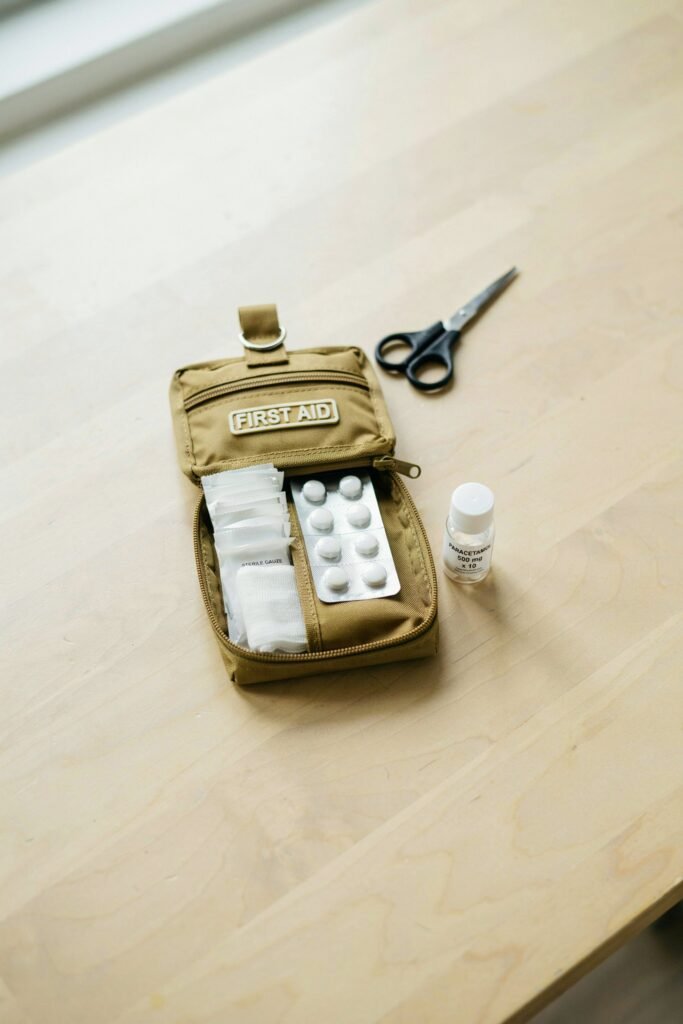
Covers minor headaches, motion sickness, and other unexpected health hiccups abroad.
New foods, new time zones, and long hours of travel can upset even the healthiest traveler.
A small pouch with basic pain relievers, motion sickness tablets, band aids, and any prescription medications you take regularly means you are not scrambling to find a pharmacy in an unfamiliar country where you may not speak the language.
Step one. Keep prescription medications in their original labeled containers to avoid any confusion or issues with customs officials.
Step two. Research whether your destination has restrictions on certain over the counter medications, since some countries regulate items that are common at home.
8. A Change of Clothes and Undergarments

Prepares you in case your checked luggage is delayed or lost.
It happens more often than travelers expect, checked bags occasionally do not make it to the same destination as their owner.
Packing one full change of clothes, including undergarments and a spare pair of socks, means you are not stuck wearing the same outfit for days while waiting for your luggage to catch up with you.
Step one. Choose lightweight, wrinkle resistant fabric so the outfit takes up minimal space and still looks presentable if you need to wear it right away.
Step two. Roll the clothes tightly instead of folding them to save room and reduce creasing inside your bag.
9. Travel Sized Toiletries

Freshens you up before landing and meets airline liquid restrictions easily.
A quick face wash, some deodorant, a travel toothbrush, and toothpaste can make you feel human again after a long flight, especially if you have a connecting flight or meeting shortly after landing.
Keeping these items travel sized also ensures you comply with the standard liquid rules most airlines enforce.
Step one. Place all liquids in containers of 100 milliliters or less and store them together in a clear, resealable plastic bag for easy screening.
Step two. Pack a small travel towel or face wipes for a quick refresh without needing access to a full bathroom.
10. A Lightweight Jacket or Scarf
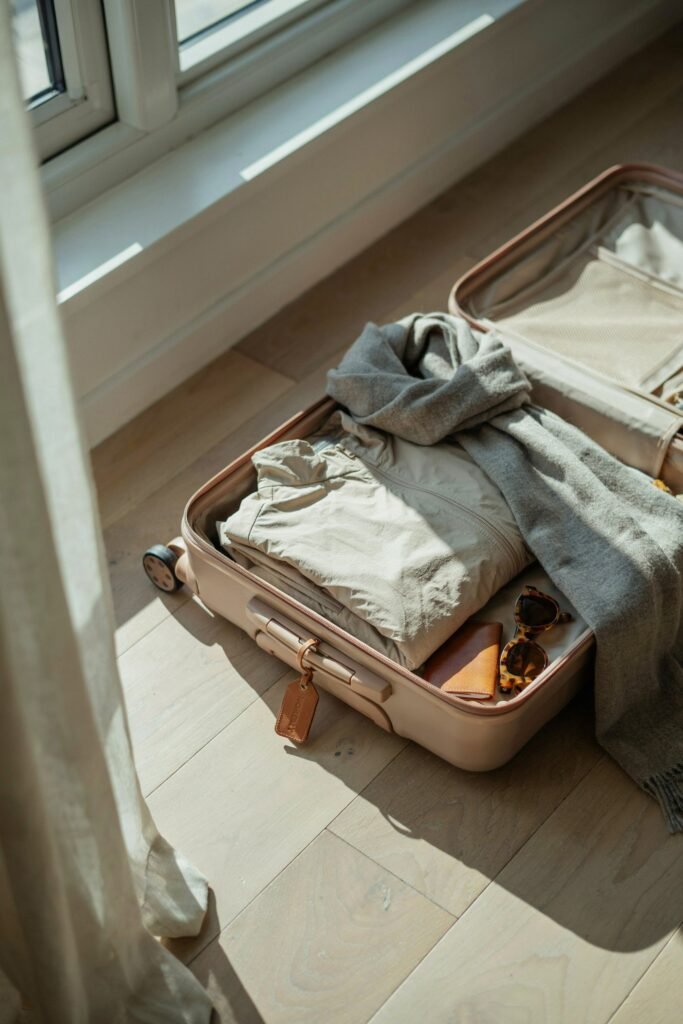
Adjusts to sudden temperature changes between the cabin and your destination.
Airplane cabins can swing between chilly and warm depending on the flight, and stepping off into a completely different climate adds another layer of unpredictability.
A lightweight jacket, cardigan, or large scarf can double as a blanket, a pillow, or simply keep you warm without taking up much space in your bag.
Step one. Choose a piece that can be folded small and stuffed into a side pocket so it does not compete for space with heavier items.
Step two. Pick something versatile enough to wear again during your trip rather than packing it only for the flight itself.
11. Entertainment for Downtime

Keeps you occupied during layovers, delays, and quiet moments in the air.
Long international trips often come with unexpected waiting, whether it is a delayed flight or a long layover in an unfamiliar airport.
A downloaded book, a few offline games, or a journal to jot down your thoughts and plans gives you something meaningful to do that does not rely on internet access.
Step one. Download any movies, shows, books, or games before leaving home so everything is available offline once you are in the air.
Step two. Bring a small notebook if you enjoy writing, since journaling your first international trip is something you will likely want to look back on later.
12. A Sturdy, Well Organized Carry On Bag Itself
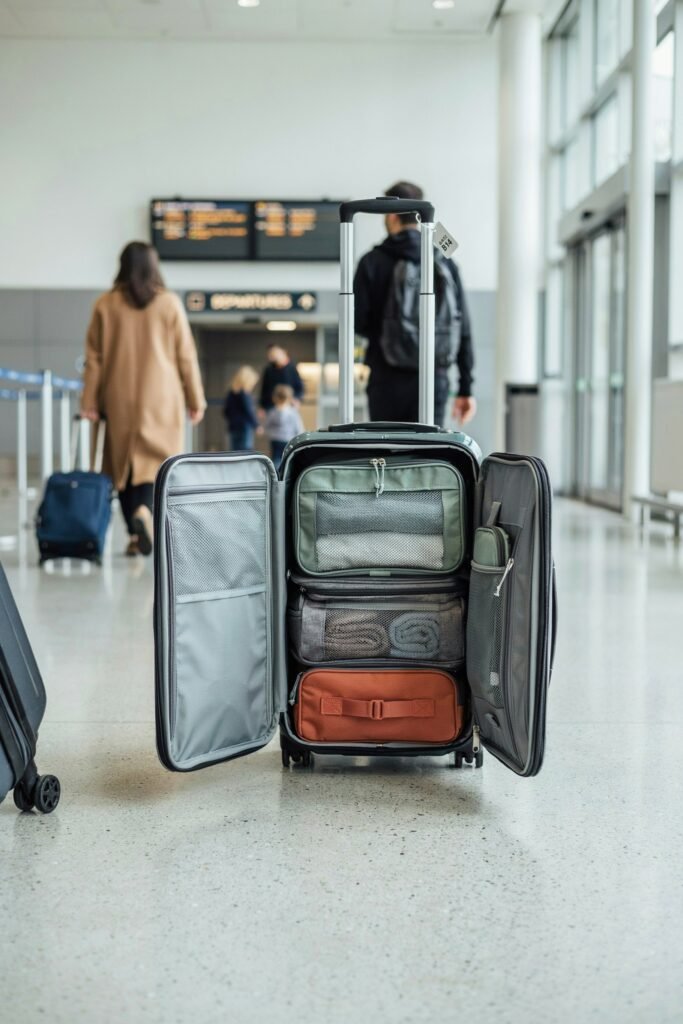
Holds everything above while staying easy to move through airports quickly.
None of the items above matter much if the bag holding them is falling apart or impossible to organize.
A well built carry on with multiple compartments, a comfortable strap or handle, and enough durability to survive being shoved into overhead bins repeatedly will serve you far better than a flimsy option that seemed cheaper at first glance.
Step one. Test how your bag fits under the seat in front of you or in the overhead bin before your trip, since size restrictions vary by airline.
Step two. Use packing cubes inside the bag to separate categories of items, which makes finding things quickly at security or customs much easier.
Your Complete Packing Routine
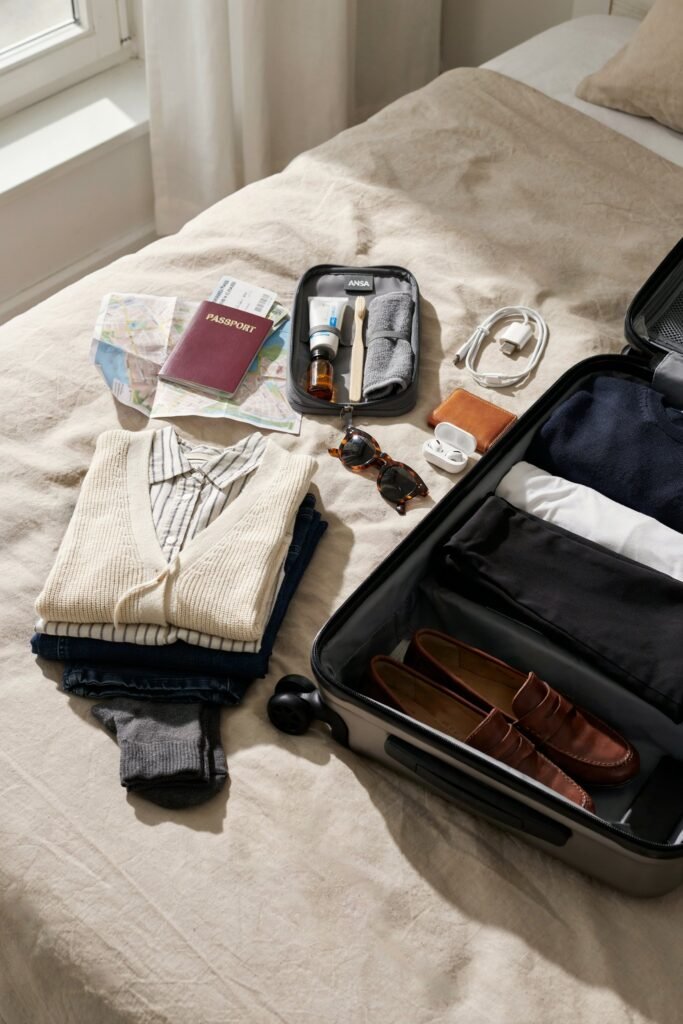
Once you have gathered everything above, following a simple routine helps you pack with confidence instead of last minute stress.
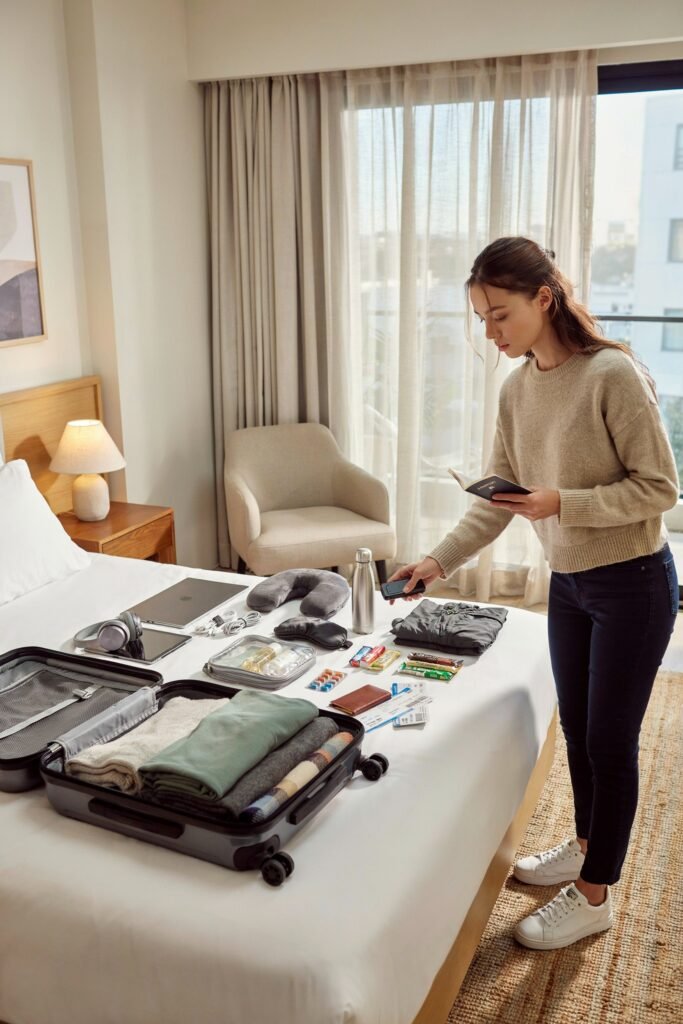
Step one, lay everything out. Spread every item across your bed or a large table before putting anything into your bag.
Seeing everything at once helps you spot duplicates or gaps you might have missed.
Step two, prioritize by need. Place the items you will need first, such as your documents and phone charger, in the most accessible pockets.
Save the bottom of the bag for things you are less likely to need immediately, like your spare change of clothes.
Step three, use packing cubes or pouches. Group similar items together, toiletries in one pouch, electronics in another, documents in their own organizer.
This turns a chaotic bag into something you can navigate with your eyes closed.
Step four, weigh and measure your bag. Check your airline’s specific carry on weight and size limits before you leave home, since these vary widely between airlines and regions, and getting caught off guard at the gate can mean paying unexpected fees.
Step five, do a final walkthrough. Go through your list one more time the night before your flight, checking off documents, chargers, medications, and anything else that would be difficult to replace abroad.
Step six, keep essentials on top. Whatever you are likely to need during security screening or right after boarding, such as your documents, liquids bag, and headphones, should sit at the very top of your bag rather than buried underneath everything else.
A Few Extra Tips Worth Knowing
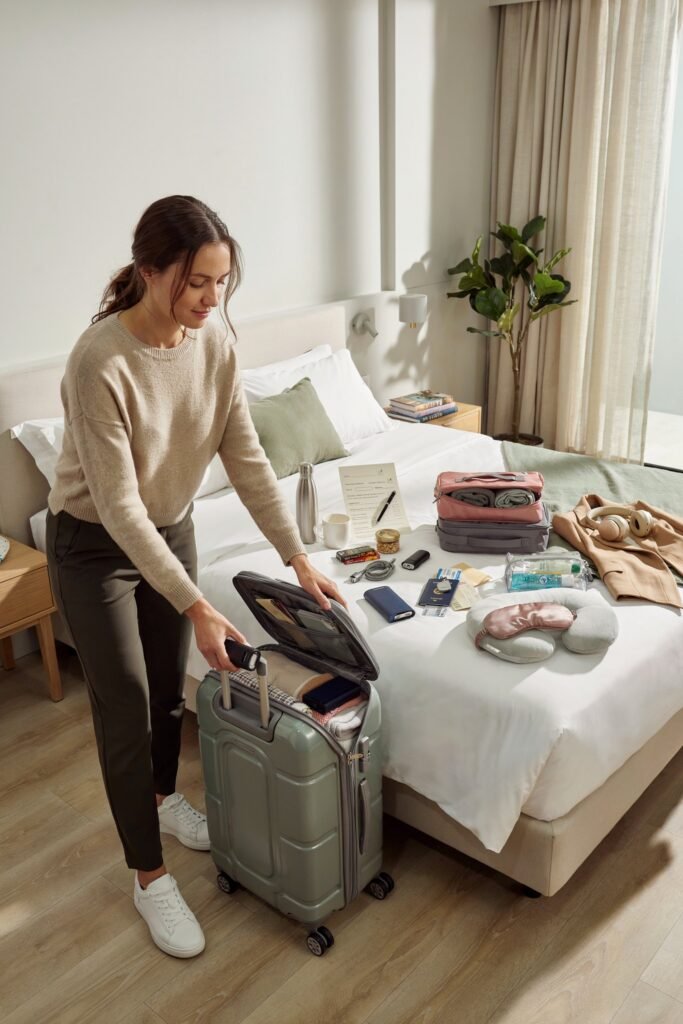
Research your destination’s customs regulations ahead of time, since certain foods, medications, or electronics may be restricted or require declaration.
Keep a small amount of local currency on hand for situations where cards are not accepted, particularly right after landing.
Consider registering with your embassy’s traveler program if one is available for your destination, which can be helpful in case of emergencies.
Label your bag clearly with your name and contact information in case it gets separated from you during a hectic connection.
Here’s an FAQ section you can add to the end of the post, written in the same friendly, personal tone.
Frequently Asked Questions
What should I never pack in my carry on for an international flight?
Avoid packing sharp objects, large liquids over 100 milliliters, and anything flammable, since these items are commonly flagged at security and can slow you down or get confiscated.
It is also smart to avoid packing anything irreplaceable, like expensive jewelry, since carry on bags do get lost occasionally even though it is rare.
How many liquids can I bring in my carry on bag?
Most international airlines follow the standard rule of liquids being 100 milliliters or less per container, all packed together in a single clear, resealable bag.
This applies to things like toothpaste, lotion, and any liquid medications, so it helps to check your specific airline and destination country for any additional restrictions.
Do I need a universal power adapter if my phone charger already has a USB C port?
Yes, because the outlet shape itself changes from country to country even if your charging cable stays the same.
A universal adapter simply lets your existing charger physically plug into the wall, regardless of which country you are in.
Is it really necessary to pack a full change of clothes in my carry on?
It is one of those things that feels unnecessary until you actually need it.
Checked luggage occasionally gets delayed or misrouted, and having a spare outfit means you are not stuck wearing the same clothes for a day or two while your bag catches up with you.
How early should I start packing my carry on before an international flight?
Starting two to three days before your flight gives you enough time to gather everything, check airline specific size and weight limits, and make any last minute adjustments without feeling rushed.
Doing a final walkthrough the night before is also a smart habit to catch anything you may have missed.
What documents should I always keep in my carry on rather than checked luggage?
Your passport, boarding pass, visa paperwork, travel insurance details, and any printed hotel or itinerary confirmations should always stay with you in your carry on.
These are the items you absolutely cannot afford to lose track of during your trip.
Can I bring medication in my carry on bag?
Yes, and it is actually recommended to keep medications with you rather than in checked luggage.
Just make sure prescription medications stay in their original labeled containers, and check whether your destination country has any restrictions on specific medications before you travel.
What is the best way to organize a carry on bag for easy access?
Using packing cubes or small pouches to separate categories like electronics, toiletries, and documents makes a noticeable difference.
Keeping the items you need most immediately, such as your passport and headphones, near the top of your bag also saves you from digging through everything at security or during boarding.
Final Thoughts
Traveling internationally for the first time is exciting, and having the right items in your carry on bag lets you focus on that excitement instead of worrying about what you forgot.
Every item on this list earns its place by solving a real problem, whether that is staying comfortable, staying prepared, or staying connected.
Take the time to pack thoughtfully, follow the routine above, and you will step off that plane ready for whatever your new destination has in store for you. Safe travels, and enjoy every moment of this journey.