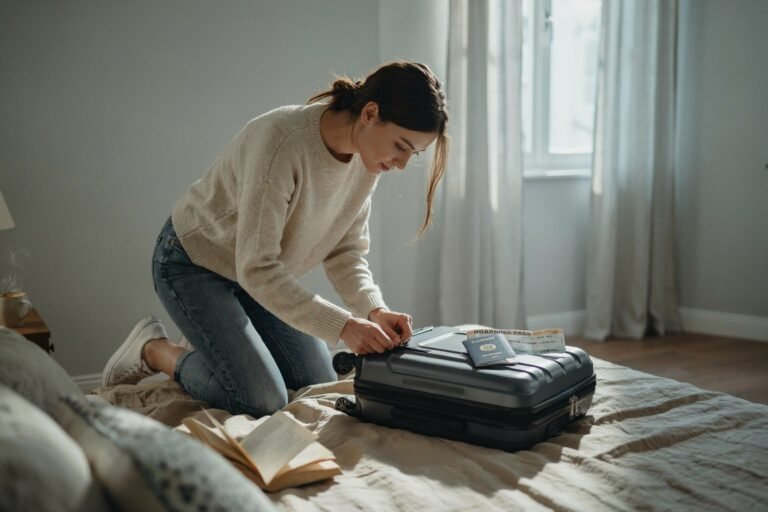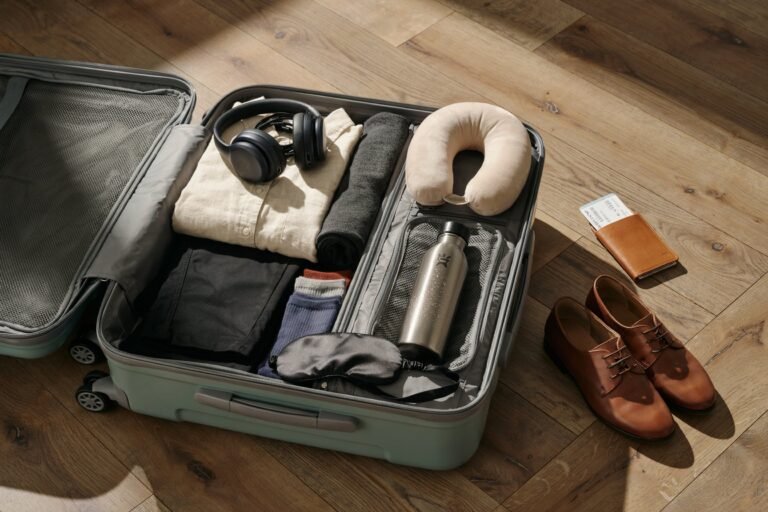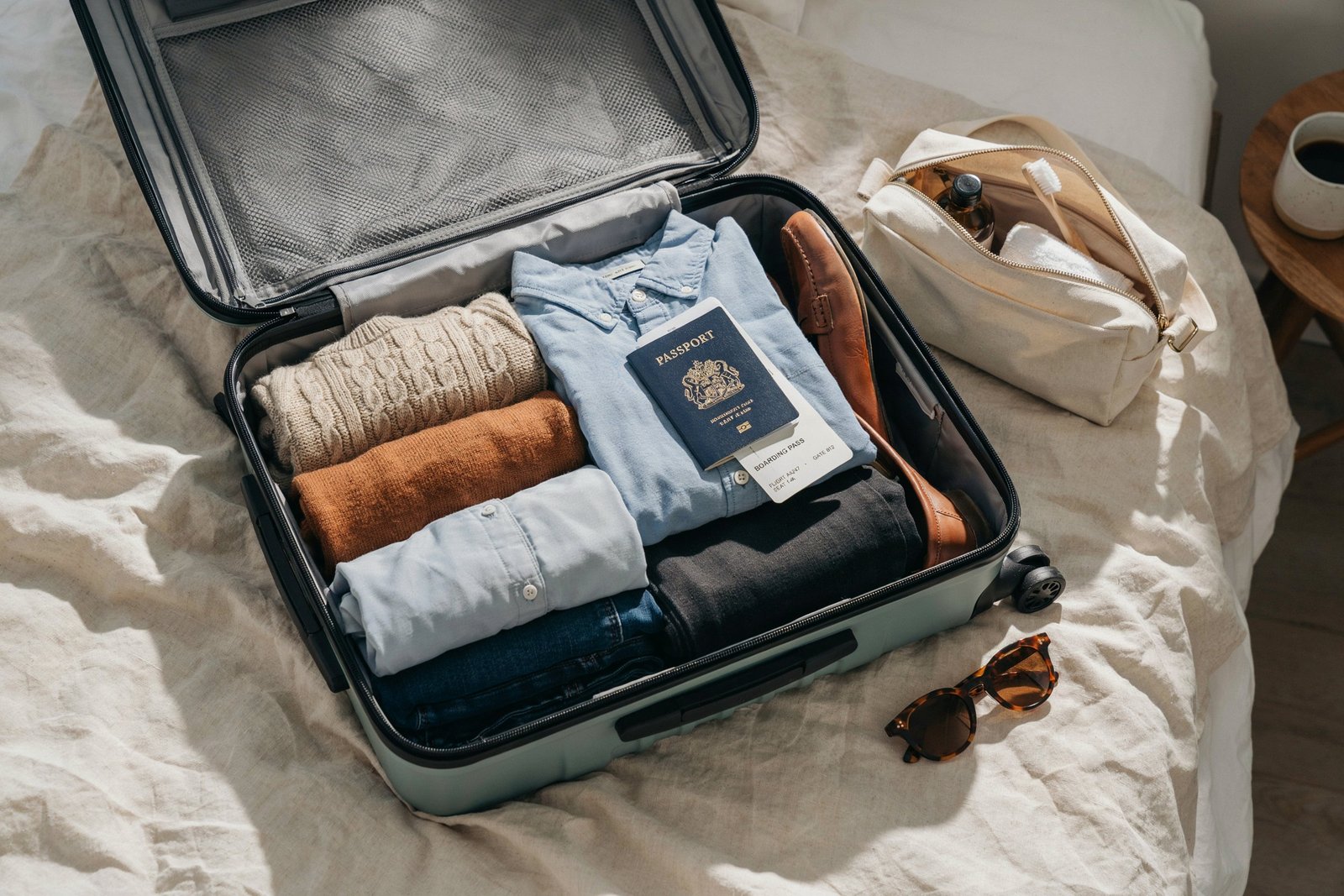

If you have ever landed at your destination only to realize your checked luggage did not make the trip with you, you already know why the carry on bag is the single most important piece of your travel kit. It is not just a backup plan.
It is your safety net, your comfort kit, and sometimes your entire trip saver rolled into one bag that never leaves your side.
After years of flying for both work and pleasure, and after learning more than a few lessons the hard way, including one memorable trip where my checked bag ended up on a different continent for three days, I have put together this list of the eleven things I never board a plane without.
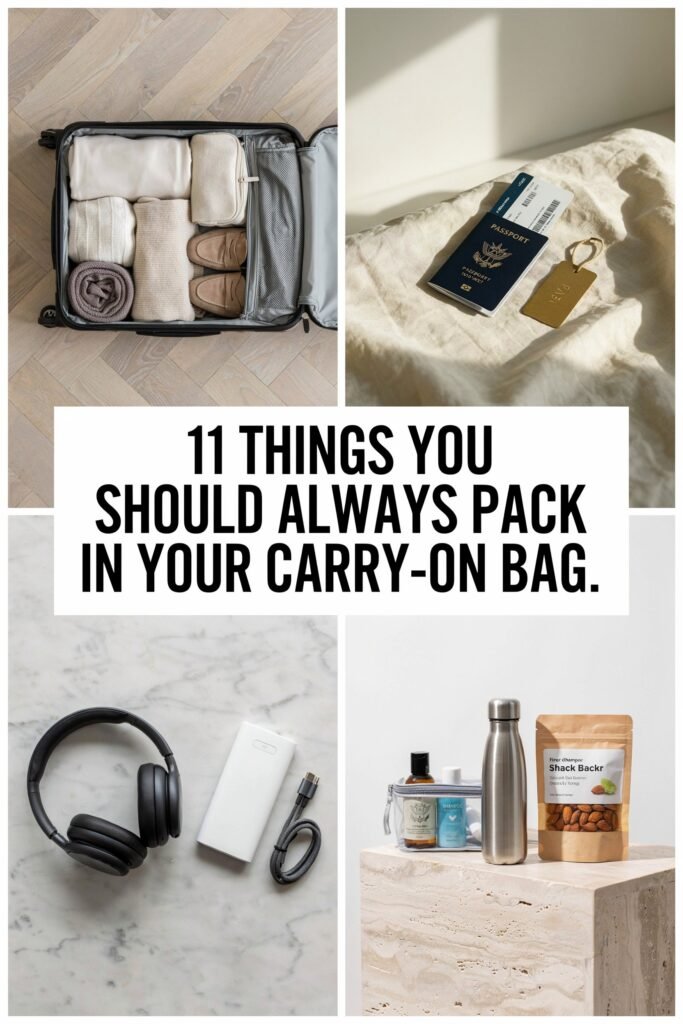
Whether you are a nervous first time flyer or a seasoned road warrior who has racked up a million miles, this guide will help you pack smarter, travel more comfortably, and avoid the kind of stress that turns a fun trip into a frustrating one.
I have also included practical tips under each item, along with a quick reference checklist near the end and answers to the questions I get asked most often about carry on packing.
My goal is for you to walk away from this post with a bag that is not just packed, but packed with intention.
Let’s get into it.
Why Your Carry On Bag Matters More Than You Think
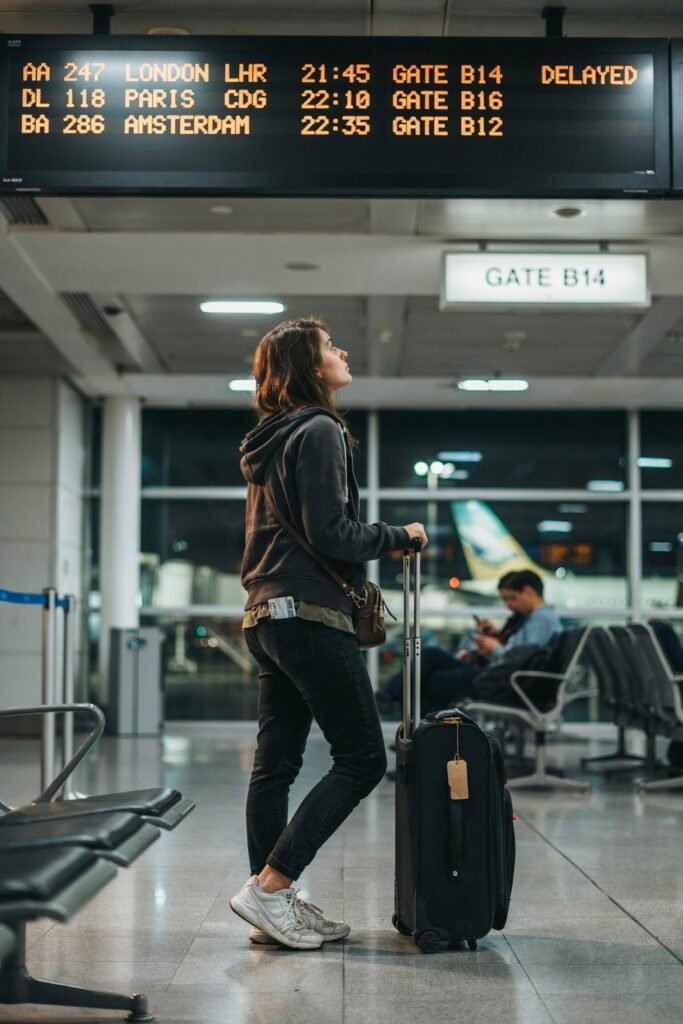
Before we jump into the list, it helps to understand why this bag deserves so much thought.
Checked bags get lost, delayed, or damaged more often than most travelers realize. Flights get cancelled or rebooked at the last minute. Layovers stretch longer than expected.
And sometimes you simply need something within arm’s reach that you cannot dig through the overhead bin to find mid flight.
Your carry on should be able to get you through at least twenty four hours without your checked luggage, keep you comfortable during the flight itself, and give you peace of mind no matter what travel curveballs come your way.
With that mindset, here is exactly what belongs inside.
1. A Change of Clothes and Clean Underwear
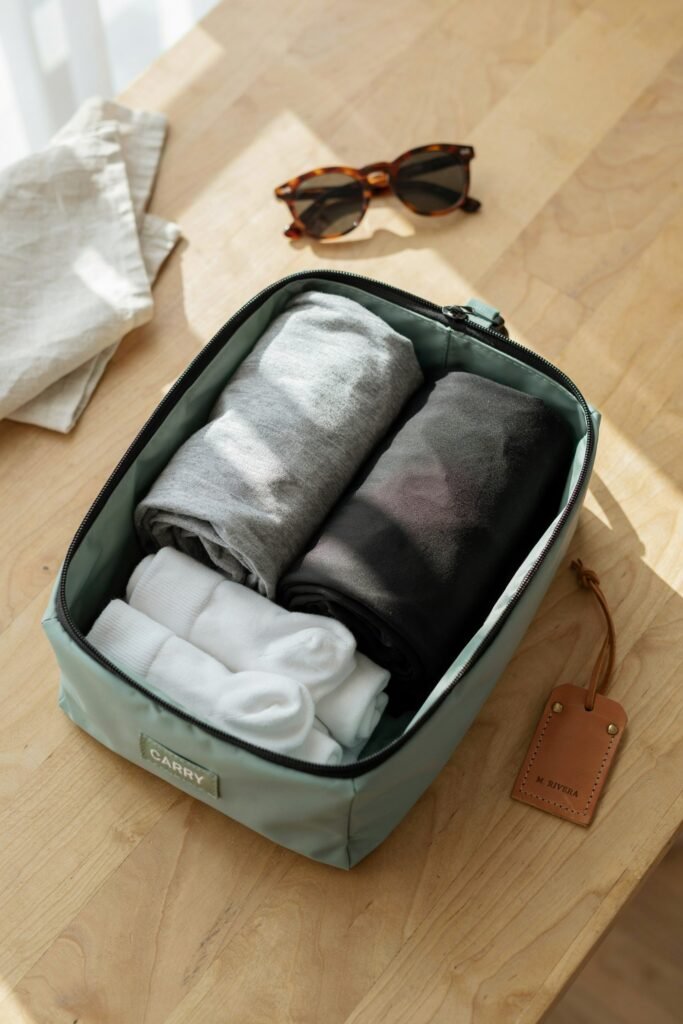
This is the golden rule of carry on packing, and yet it is the one people skip most often.
Pack at least one full change of clothes, including a fresh pair of underwear and socks.
If your checked bag gets delayed or lost, you will be endlessly grateful you can freshen up instead of wearing the same travel worn outfit for another full day.
Choose something lightweight and wrinkle resistant.
A simple t shirt, leggings or joggers, and a pair of socks take up very little space but offer a huge amount of relief if things go sideways with your luggage.
A tip that has saved me more than once is to think about your destination climate specifically, rather than grabbing whatever is on top of the laundry pile.
If you are headed somewhere cold, pack a thermal layer rather than a summer outfit.
If you are headed somewhere formal, like a wedding or a business meeting, this backup outfit should be able to get you through that event respectably, not just get you through the airport.
It only takes a few extra seconds of thought, but it can be the difference between managing a lost bag gracefully and truly panicking.
2. Travel Size Toiletries
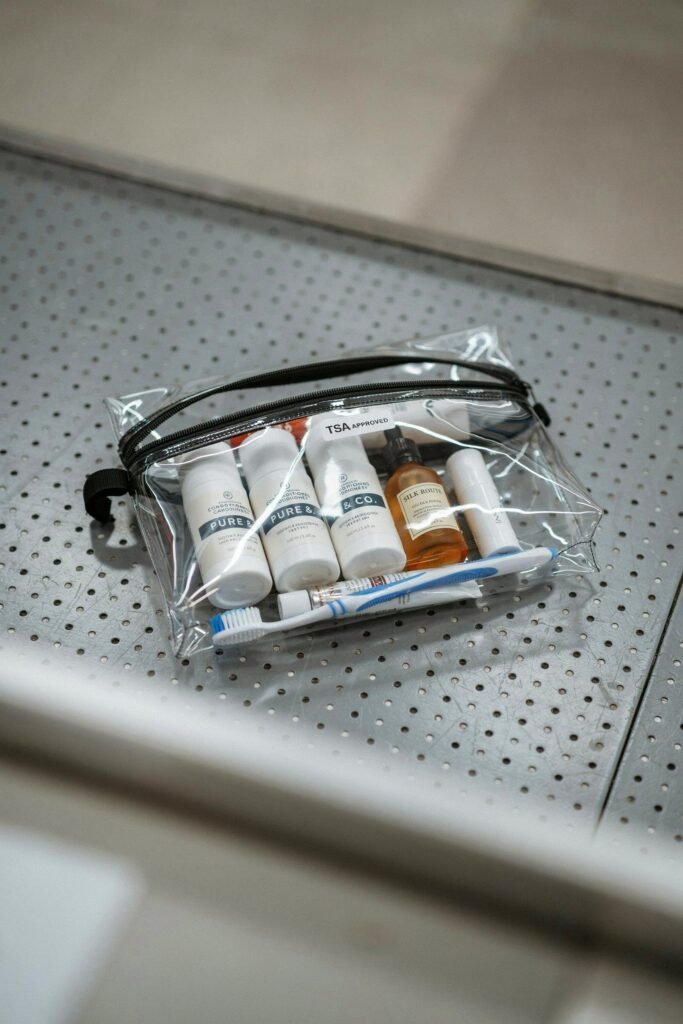
Even if your main toiletry bag is checked, you want a small backup kit in your carry on.
This should include a travel size toothbrush and toothpaste, deodorant, a small bottle of hand sanitizer, and any skincare essentials you cannot go a day without, such as moisturizer or lip balm.
Remember that liquids need to follow the TSA rule of three point four ounces or less per container, all fitting inside a single clear quart size bag.
Keeping this bag easily accessible near the top of your carry on also speeds up the security screening process significantly.
Refillable silicone travel bottles are worth the small investment if you fly often, since they let you bring your actual favorite products instead of settling for whatever travel size version happens to be sold in stores.
I also like tossing in a couple of individually wrapped facial wipes, since they are incredibly refreshing after a long flight and take up almost no room at all.
3. Prescription Medications and a Basic Health Kit
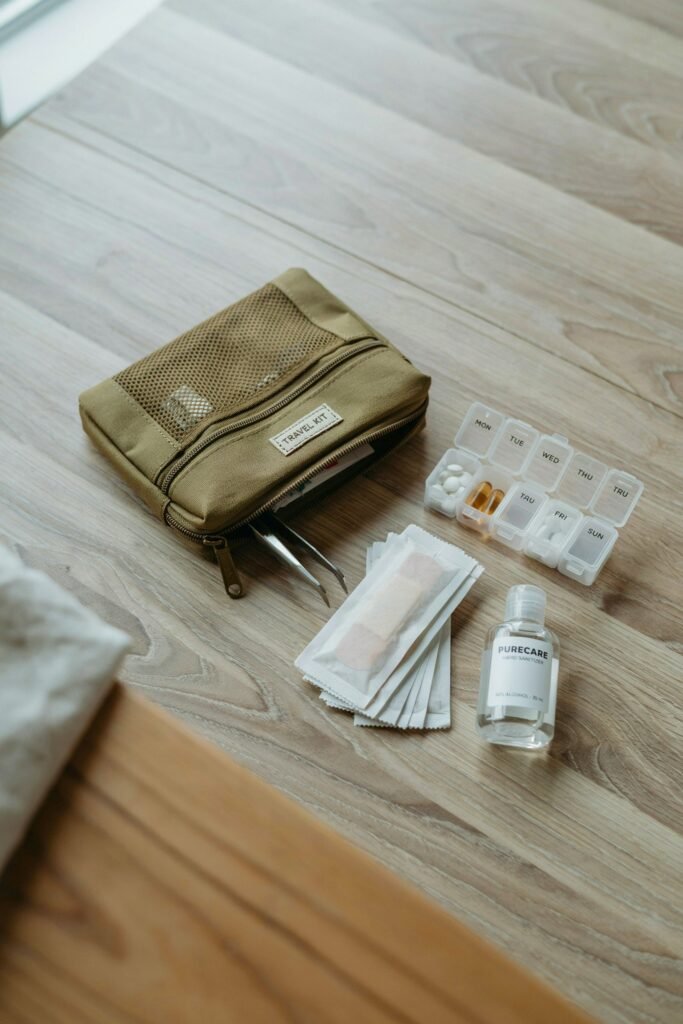
Never, under any circumstances, pack your prescription medications in a checked bag. Keep them with you at all times in their original labeled containers.
Along with your prescriptions, it is smart to pack a few over the counter basics such as pain relievers, allergy medication, and anti nausea tablets.
A handful of adhesive bandages and travel size hand sanitizer wipes round out a simple but effective health kit.
These small items take up almost no space but can save your trip if you experience a headache, upset stomach, or minor cut while away from a pharmacy.
If you are traveling internationally with prescription medication, it is also wise to bring a copy of the prescription itself or a note from your doctor, since some countries have restrictions on certain medications that are perfectly legal at home.
A small pill organizer labeled by day can also help you stay on schedule when you are crossing time zones and your normal routine gets thrown off.
4. A Portable Phone Charger and Charging Cables
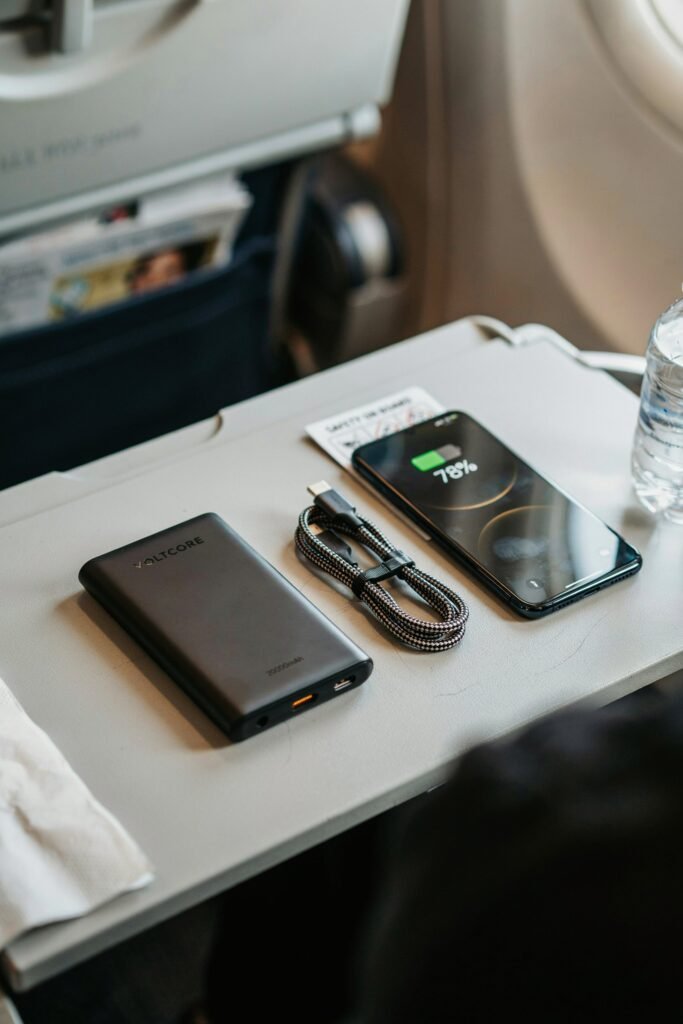
Nothing derails a travel day faster than a dead phone, especially when you are relying on it for boarding passes, hotel confirmations, navigation, or simply staying in touch with loved ones.
Pack a fully charged portable power bank along with your charging cables.
Many airports have limited outlet access, especially near gates, so having your own power source means you are never left scrambling to find a free plug.
If you travel internationally, a compact universal adapter is worth adding here as well.
Look for a power bank with at least ten thousand milliamp hours of capacity, which is generally enough to fully charge a phone two to three times over.
Just double check your airline’s rules first, since most carriers require power banks to be packed in your carry on rather than checked luggage due to battery safety regulations, and many cap the allowed capacity as well.
5. Noise Canceling Headphones or Earplugs

Whether you want to watch a movie in peace, block out a crying baby a few rows back, or simply drown out engine noise so you can nap, a good pair of headphones makes a world of difference.
Noise canceling headphones are ideal, but a comfortable pair of foam earplugs works well too and takes up virtually no space.
This single item can transform a long haul flight from exhausting to genuinely relaxing.
If you tend to fall asleep on flights, look for headphones with a comfortable fit for side sleeping, or consider foam earplugs paired with a sleep mask instead, since bulky headphones can be uncomfortable pressed against a pillow or window.
6. A Reusable Water Bottle
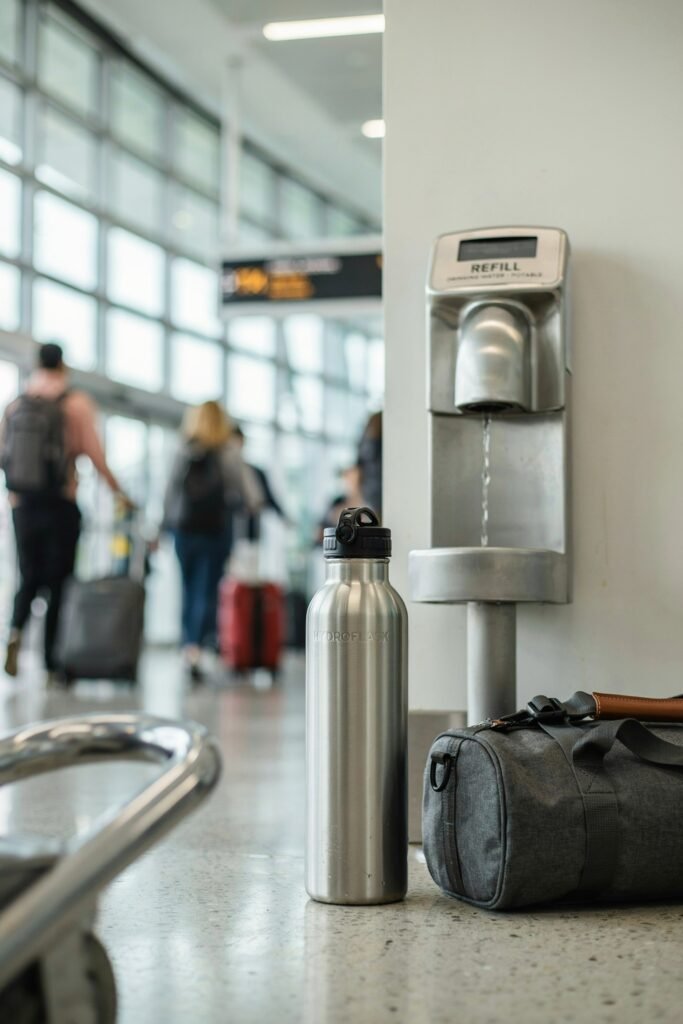
Staying hydrated during air travel is more important than most people realize. Cabin air is notoriously dry, and dehydration can leave you feeling foggy, fatigued, and more prone to headaches by the time you land.
Pack an empty reusable water bottle through security, then fill it up at a water fountain or refill station once you are past the checkpoint.
This small habit saves money on overpriced airport bottled water and helps you feel noticeably better throughout your flight.
A collapsible silicone bottle is a smart choice if you are tight on space, since it folds down flat when empty.
As a general rule of thumb, try to drink about eight ounces of water for every hour you are in the air, and go easy on caffeine and alcohol, both of which will make dehydration worse at altitude.
7. Snacks You Actually Enjoy

Airport food can be expensive, and flight delays happen more often than any of us would like.
Packing a few of your favorite snacks means you are never stuck relying on vending machines or paying premium prices for a bag of chips.
Good options include protein bars, trail mix, dried fruit, crackers, or anything else that travels well and does not require refrigeration.
If you have dietary restrictions, this becomes even more essential since airport options are not always accommodating.
I like to pack a mix of something salty and something with real protein, since sugary snacks alone tend to leave you crashing an hour later.
If you are flying with kids, familiar snacks also do double duty as a comfort item during takeoff, landing, or any unexpected turbulence.
8. Important Documents and Copies
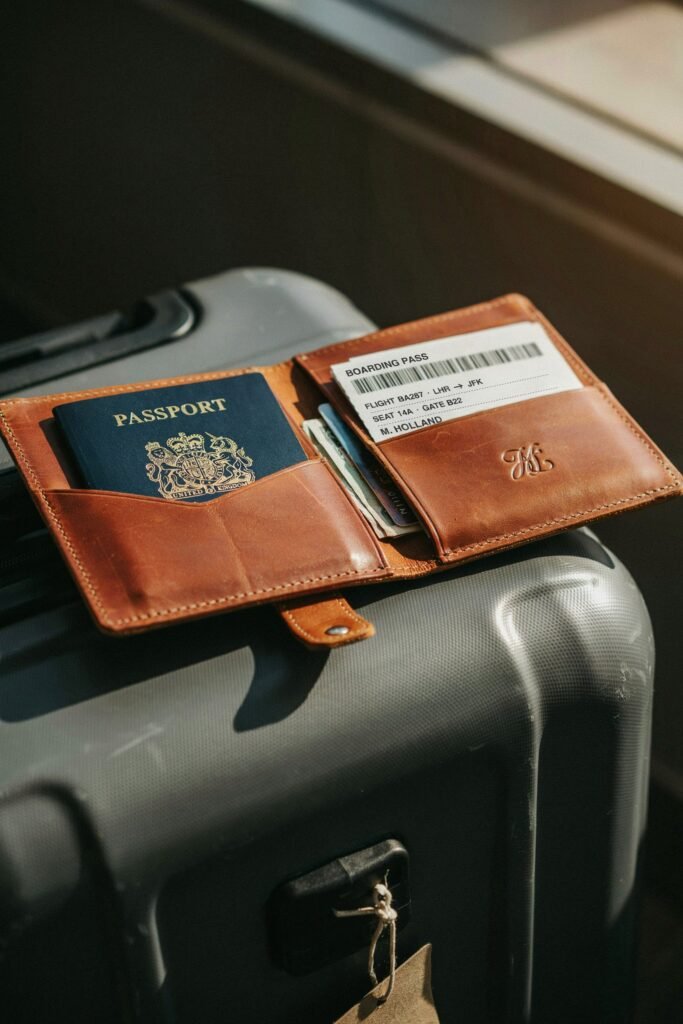
Your passport, ID, boarding passes, and any travel insurance information should always be in your carry on, never in a checked bag.
Beyond the originals, it is smart to keep a digital copy saved on your phone and, if possible, a physical photocopy tucked into a separate pocket.
If you are traveling internationally, add a copy of your hotel confirmation, visa documents if applicable, and emergency contact information.
Having these documents organized and accessible saves precious time at check in counters, security, and customs.
A slim document organizer or a dedicated zip pocket keeps everything in one place instead of loose in the bottom of your bag.
It is also worth emailing yourself scanned copies of your passport and ID before you leave, so you can access them from any device if the physical copies are ever lost or stolen.
9. A Light Jacket or Layer
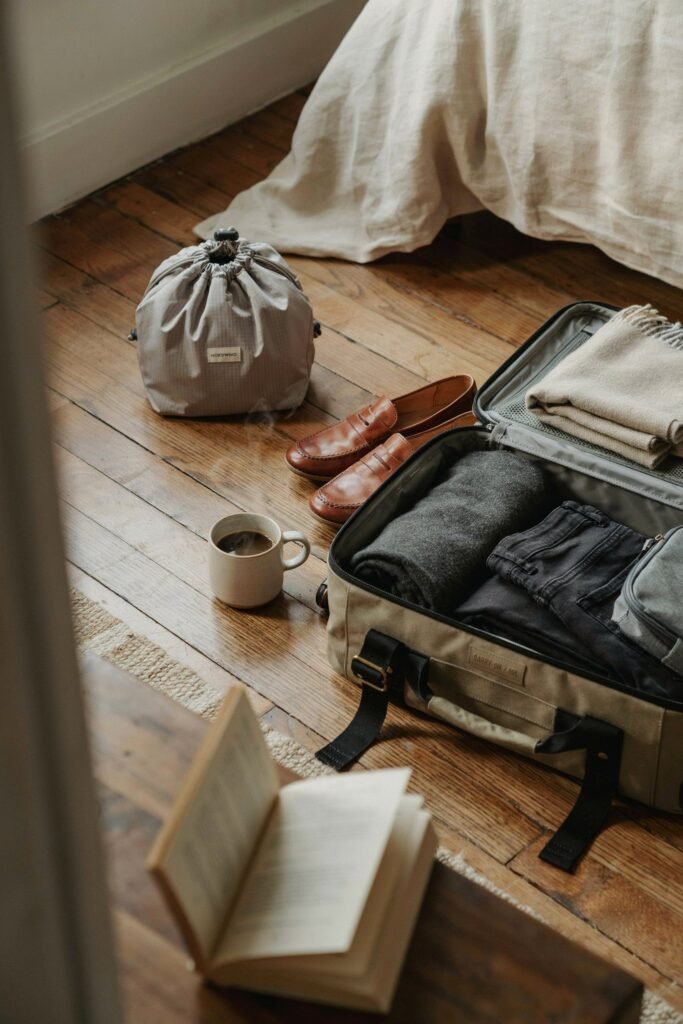
Airplane cabins are notoriously chilly, and airport temperatures can swing dramatically depending on where you are headed.
A lightweight jacket, cardigan, or oversized scarf that doubles as a blanket is one of the most versatile items you can pack.
It folds down small, adds warmth exactly when you need it, and can even serve as a makeshift pillow or eye cover during a long flight.
I have found that cabin temperatures can vary a lot even on the same flight, so layering beats relying on one heavier item.
A thin base layer paired with a packable jacket gives you more flexibility than a single bulky sweater, and it packs down into a much smaller space.
10. Entertainment That Does Not Rely on WiFi
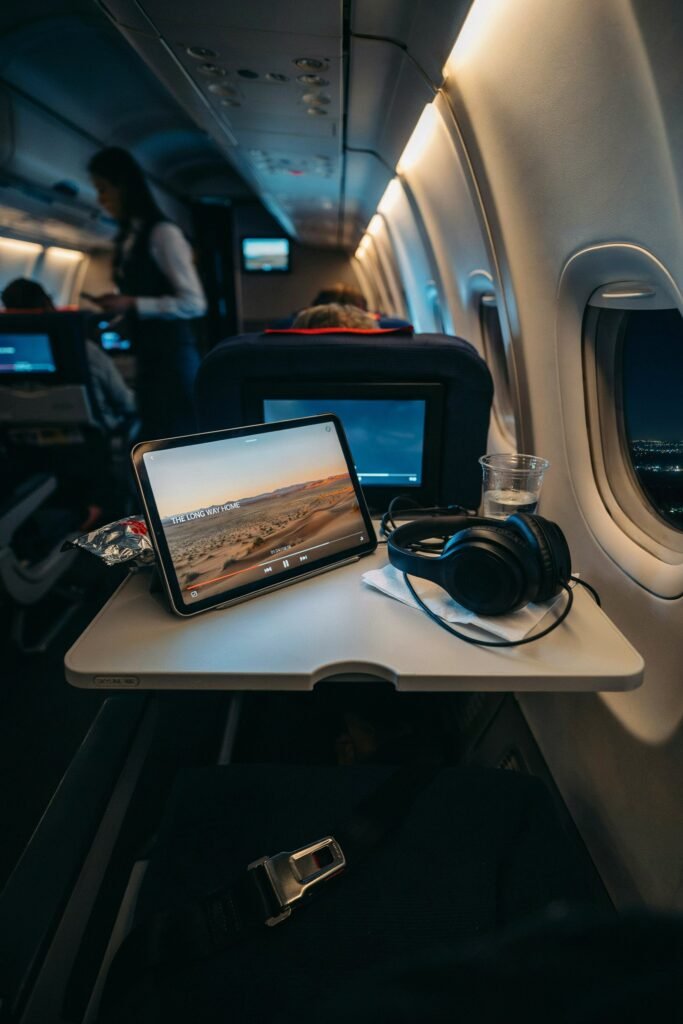
While many flights now offer WiFi, it is not always reliable, and it is not always free.
Download a few movies, TV episodes, podcasts, or audiobooks onto your phone or tablet before you leave home.
Bring a physical book or e reader as a backup as well.
Having entertainment ready to go, without needing an internet connection, means you are never left staring at the seatback in front of you during a delay or a long stretch without service.
Download content the night before your flight rather than at the gate, since airport WiFi tends to slow to a crawl when hundreds of travelers are trying to use it at once.
If you use a tablet, a lightweight stand or a phone case with a built in kickstand also makes hands free viewing far more comfortable during a long flight.
11. A Small Empty Tote or Packable Bag
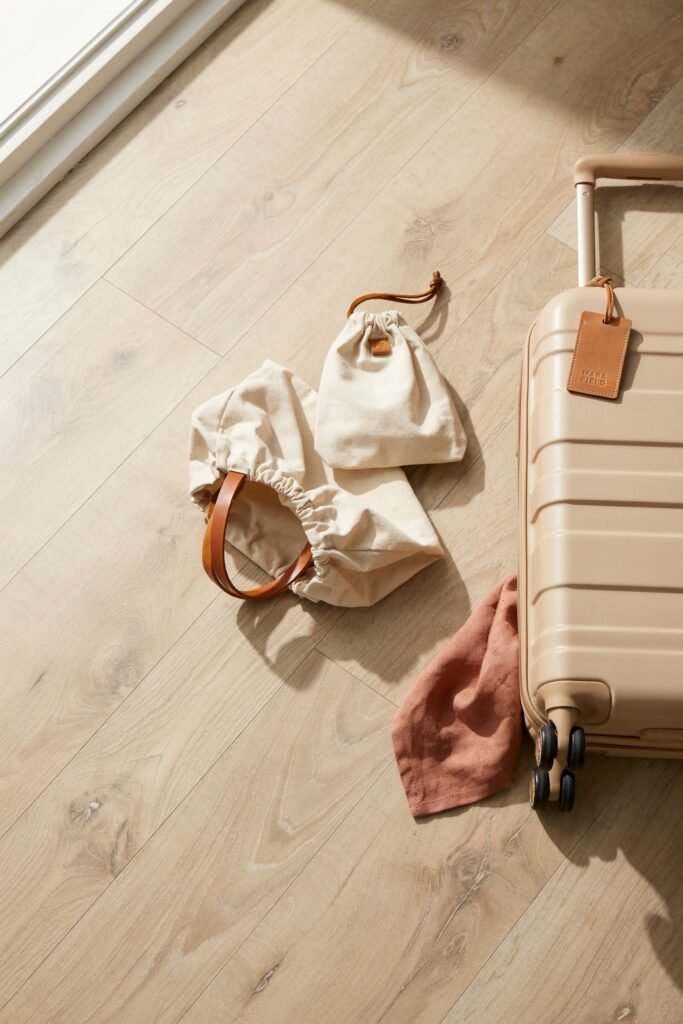
This last item surprises people, but it is a genuine game changer.
A lightweight, foldable tote bag takes up almost no space in your carry on until you need it.
It becomes incredibly useful for duty free purchases, dirty laundry, souvenirs, or simply organizing snacks and items you want easy access to during your flight.
It also comes in handy if your original bag becomes overstuffed on the way home and you need a little extra space to distribute the load.
Look for one that folds into its own small pouch so it truly disappears into your bag until needed.
Many experienced travelers also use this bag as their designated personal item on the way home if souvenirs push their main bag past the size limit, giving them a bit of breathing room without paying an extra baggage fee.
A Few Bonus Tips for Smarter Carry On Packing
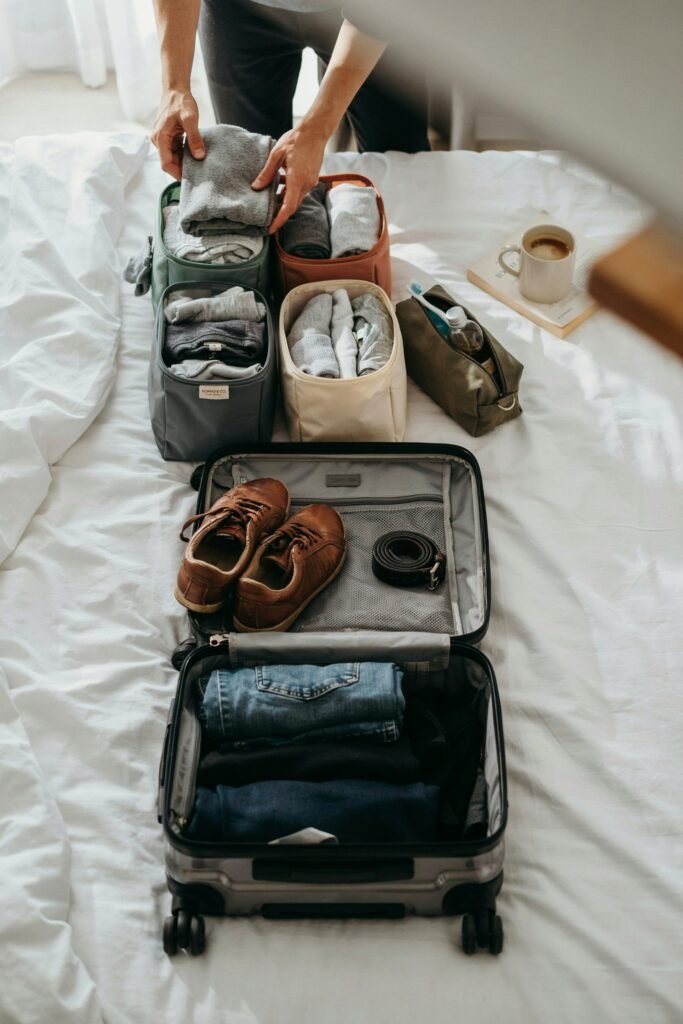
Once you have the essentials covered, a few extra habits can make your carry on experience even smoother.
Pack strategically by placing heavier items near the bottom and closer to the wheels or straps, which keeps your bag balanced and easier to carry.
Use packing cubes to compress clothing and keep everything organized, especially if you are trying to fit a few days worth of essentials into a single bag.
Keep your most frequently needed items, such as your phone charger, snacks, and documents, in the most accessible pockets so you are not digging through your entire bag mid flight.
Finally, always check your airline’s specific size and weight restrictions before you pack, since these vary from carrier to carrier and can result in unexpected gate check fees if your bag does not comply.
Frequently Asked Questions
How big can my carry on bag be? Most airlines allow a carry on bag around twenty two by fourteen by nine inches, though this varies by carrier and by whether you are flying a budget airline, which often has stricter limits.
Always check your specific airline’s website before you fly, especially if you are connecting between two different carriers on the same trip.
What should I never pack in my carry on? Sharp objects like scissors and pocket knives, most liquids over three point four ounces, and certain sporting goods are generally not allowed in carry on bags and will need to go in checked luggage instead.
When in doubt, check the TSA website or your departure country’s equivalent security agency before you pack.
How do I fit everything without going over the size limit? Packing cubes are the single biggest space saver, since they compress clothing and prevent items from shifting around and eating up extra room.
Rolling clothes instead of folding them also helps, and wearing your bulkiest items, like a jacket or boots, onto the plane instead of packing them frees up a surprising amount of space.
Is it worth packing snacks if I am only on a short flight? Yes, especially since short flights are often the ones most likely to face gate delays, and you may spend more time waiting at the airport than actually in the air.
A couple of small snacks cost far less than anything you would buy at an airport kiosk.
Final Thoughts
Packing a thoughtful carry on bag is one of those small habits that pays off again and again, whether you are dealing with a lost checked bag, a long delay, or simply want to feel more comfortable during your flight.
The eleven items above cover the essentials for health, comfort, entertainment, and peace of mind, no matter where your travels take you.
The next time you are prepping for a trip, run through this list before you zip up your bag.
Future you, sitting comfortably at thirty five thousand feet with everything you need close at hand, will be very thankful you did.
Safe travels, and happy packing.