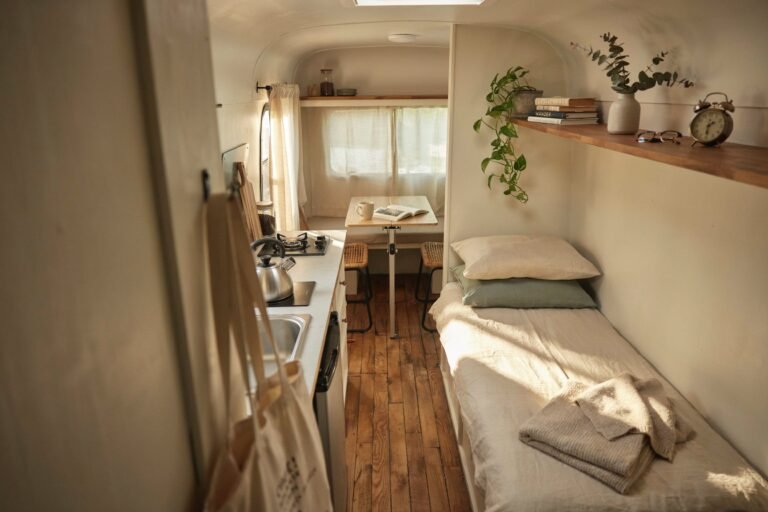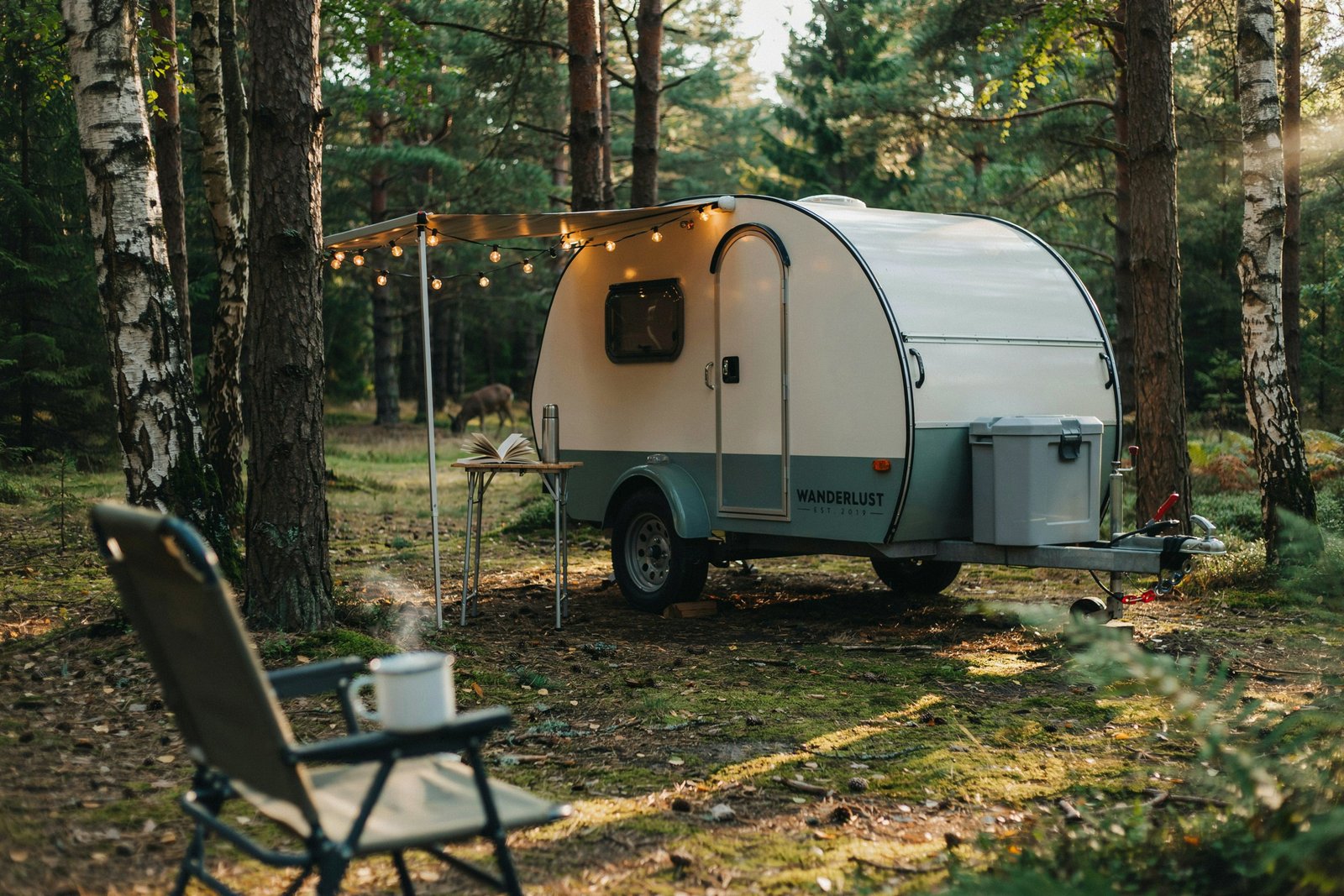

Living full time in a tiny camper changes the way you think about every single item you own.
Space becomes currency, weight becomes a decision, and every object you bring on board has to earn its place.
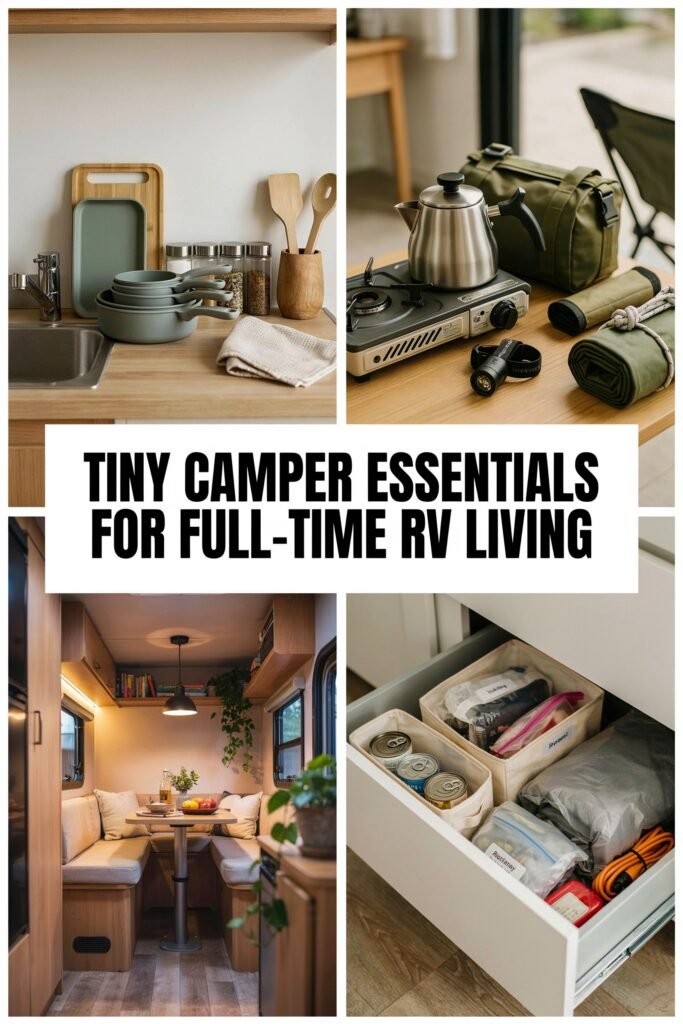
Whether you are days away from your first trip or you have already been on the road for months, having the right essentials on hand can turn a stressful, cramped experience into a smooth and comfortable lifestyle.
This guide breaks down the must have items for full time RV living, explains what each one is used for, and walks you through the steps to actually set your tiny camper up for long term success.
Why Choosing the Right Essentials Matters So Much
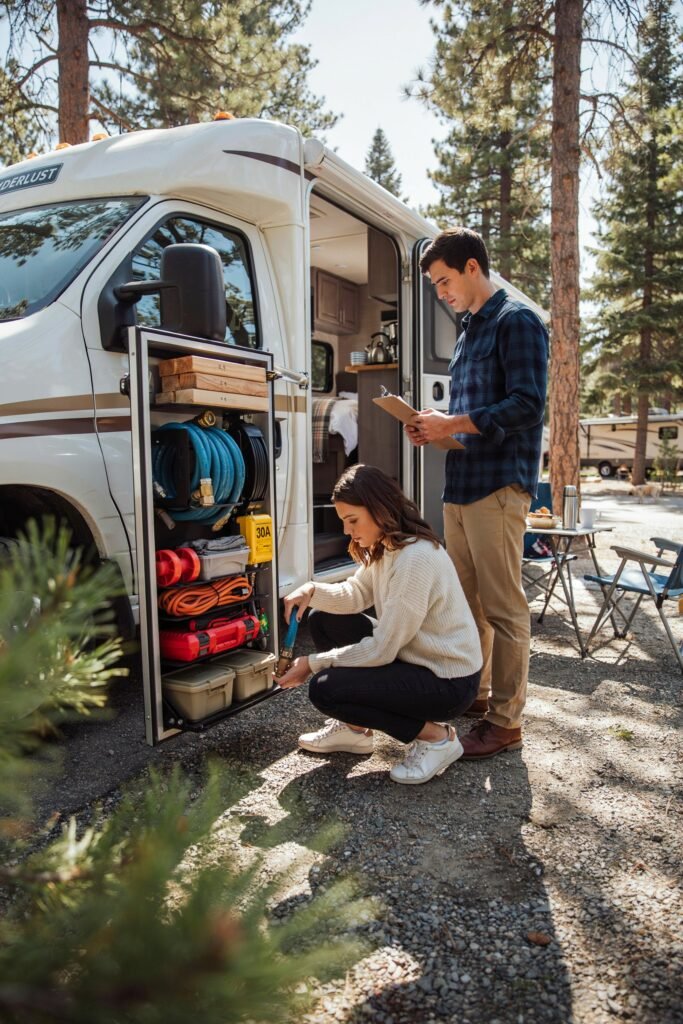
In a house, a cluttered drawer is an inconvenience. In a camper that might only give you 100 to 300 square feet of living space, clutter can mean the difference between a functional home and a frustrating box on wheels.
Every item you pack should serve at least one clear purpose, and ideally more than one.
Multi use tools, compact storage, and reliable systems for power, water, and safety are what separate a comfortable full time rig from one that constantly leaves you improvising.
The biggest mistake new full timers make is packing a camper the same way they packed a closet at home, grabbing whatever feels familiar instead of asking whether it truly earns its spot. A tiny camper rewards intention.
Every square foot you have needs to work harder than it ever did in a traditional house, and that means thinking about weight, function, and placement before a single item comes on board.
Once you shift your mindset toward efficiency, the whole experience of living on the road starts to feel less like camping and more like genuinely living somewhere you chose on purpose.
Below you will find the core categories every tiny camper needs, along with a short, personal style intro for each item explaining exactly what it does for you on the road.
Kitchen Essentials
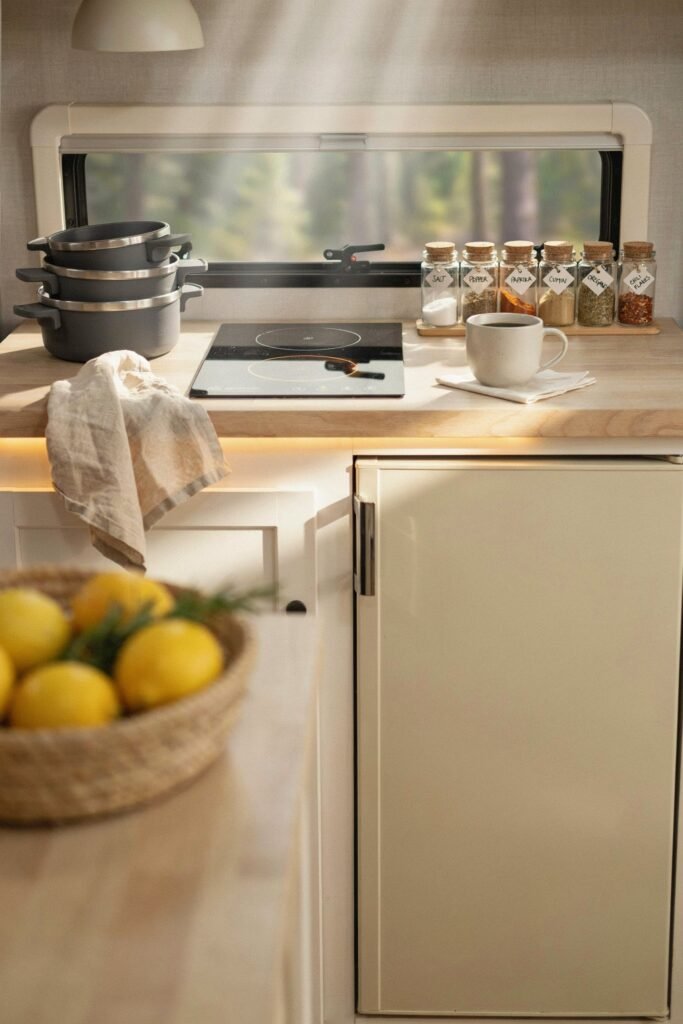
Your kitchen in a tiny camper has to do the same job as a full size one, just in a fraction of the space.
Compact induction cooktop. This little unit gives you real cooking power without needing propane at all.
Collapsible cookware set. These pots and pans fold flat so your cabinet space stays completely open.
Magnetic spice rack. It sticks right to the fridge so seasonings never roll around while driving.
Over sink cutting board. This board sits above your sink and instantly doubles as extra counter space.
Compact French press. Mornings feel normal again when good coffee only takes a few quiet minutes.
Vacuum sealer. Sealed food lasts longer and takes up far less room than bulky containers.
Silicone stretch lids. These reusable lids replace plastic wrap and fit almost any bowl or jar.
Mini dish rack. A slim rack lets dishes dry without hogging your only counter surface.
Storage and Organization Essentials
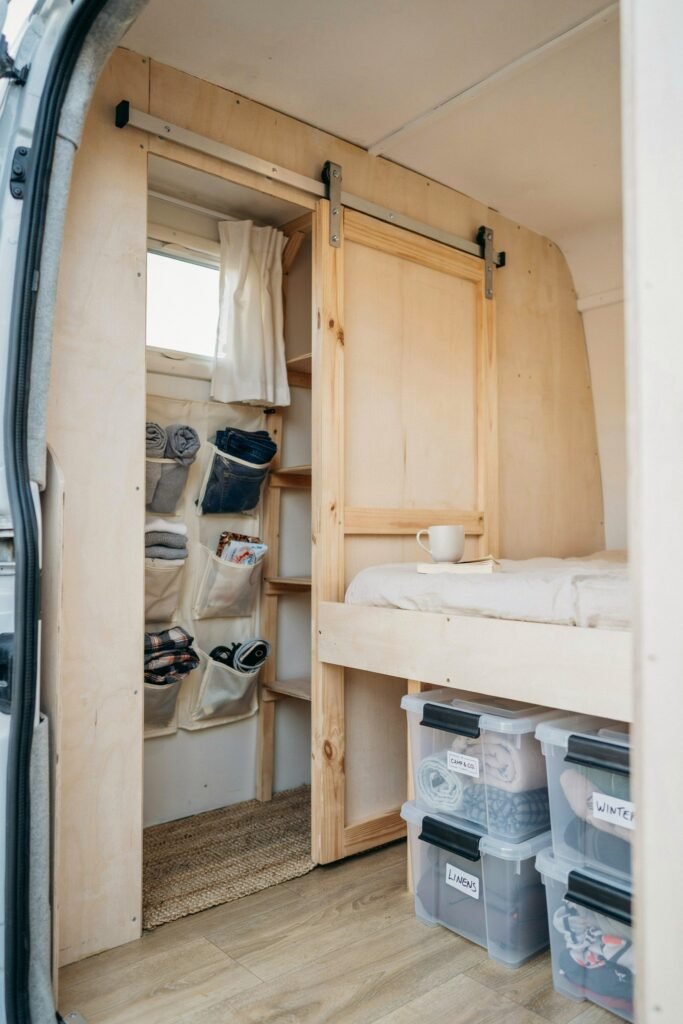
Storage is where most first time RVers underestimate how much planning a tiny space really needs.
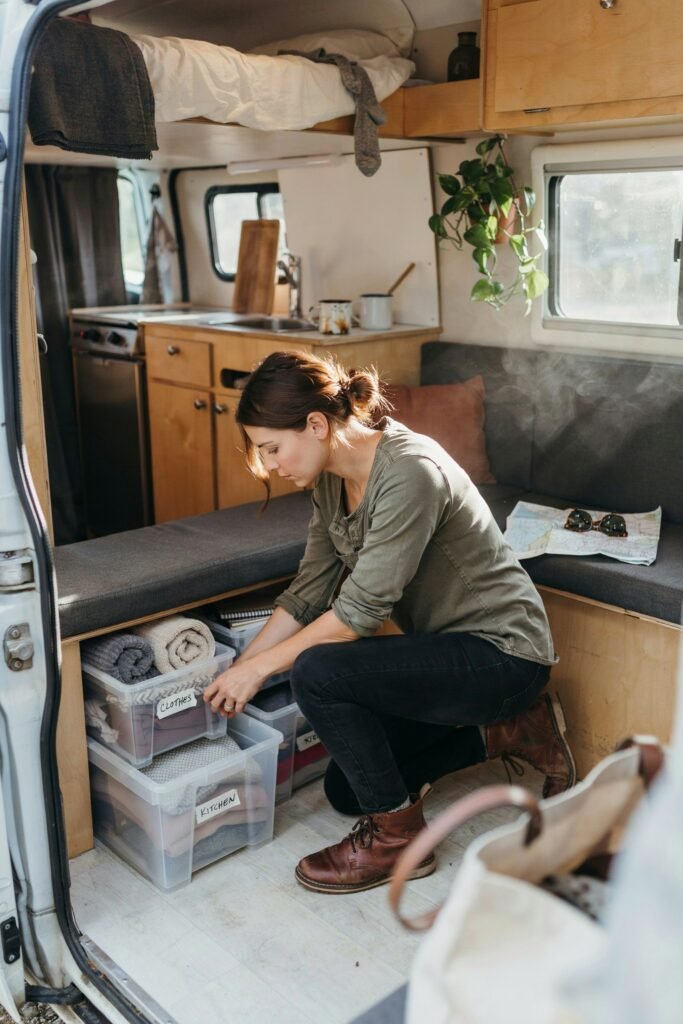
Under bed storage bins. These clear bins turn wasted mattress space into serious organized storage room.
Over the door organizer. Every closet or pantry door becomes extra storage the moment you hang this.
Vacuum storage bags. Bulky blankets and jackets shrink down small enough to tuck almost anywhere.
Stackable drawer organizers. These keep small items separated so nothing shifts around while you are driving.
Tension rods. A few well placed rods keep cabinet contents from sliding and crashing during travel.
Command hooks. These removable hooks add hanging storage without damaging a single interior wall.
Slim rolling cart. This narrow cart slides into tight gaps and holds anything from tools to snacks.
Power and Electrical Essentials
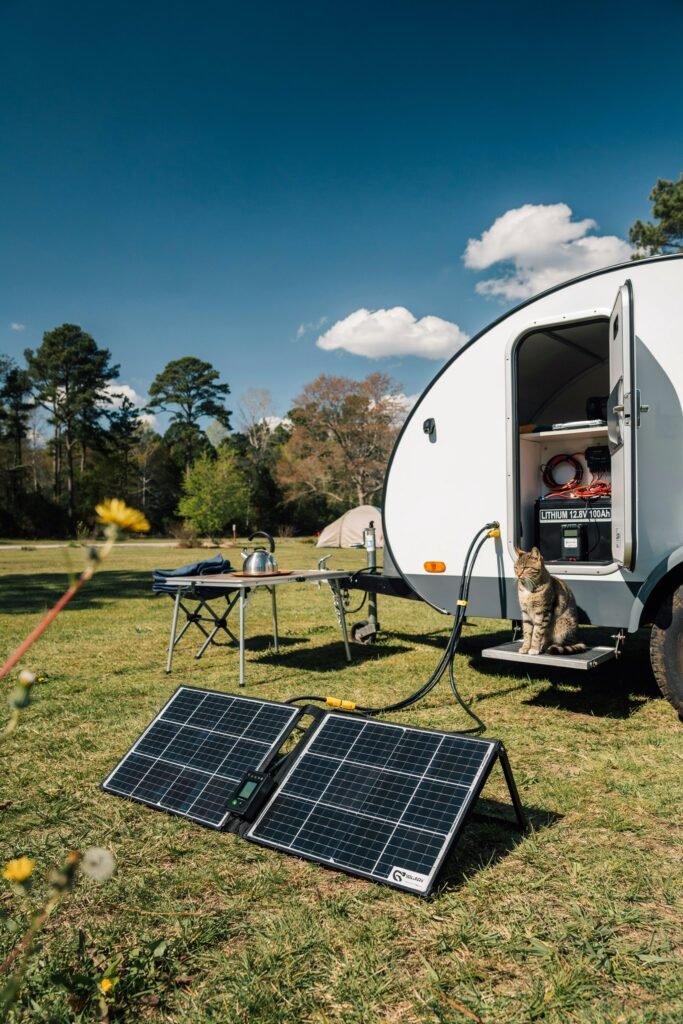
Reliable power is the backbone of full time RV living, especially if you spend time off grid.
Portable solar panels. These fold out flat and keep your battery charged even while boondocking remotely.
Deep cycle battery bank. This stores solar or shore power so appliances still run after sundown.
Pure sine wave inverter. It converts battery power into clean electricity safe for sensitive electronics.
Surge protector. This small device shields your entire system from unpredictable campground power spikes.
12 volt fan. A quiet fan keeps airflow moving without draining your battery bank quickly.
LED string lights. These use very little power while making the whole camper feel warm and welcoming.
Battery monitor. This tells you exactly how much power you have left before it runs out.
Water and Plumbing Essentials
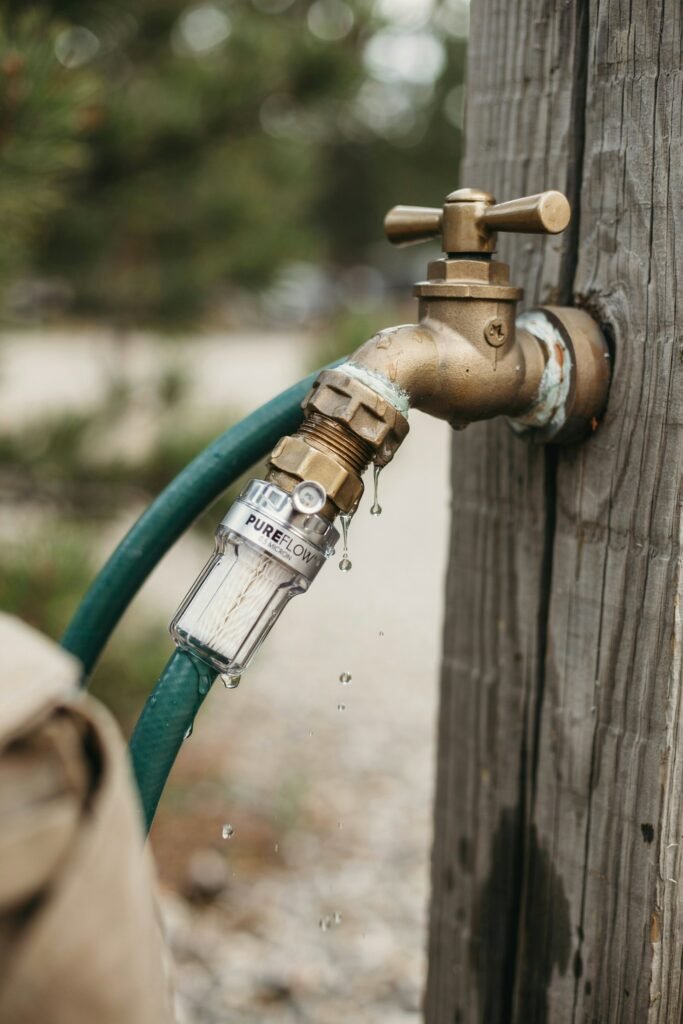
Water management in a tiny camper takes a bit of routine, but the right gear makes it simple.
Fresh water hose. This hose is rated safe for drinking water and connects you to campground spigots.
Inline water filter. It attaches right to your hose and removes sediment before water enters your tank.
Water pressure regulator. This prevents high campground pressure from bursting your camper’s internal water lines.
Portable waste tank. This lets you dump gray or black water without moving the entire rig.
Water heater blanket. This wraps your heater to keep water warm using noticeably less energy.
Low flow shower head. It conserves tank water while still giving you a genuinely satisfying shower.
Safety Essentials
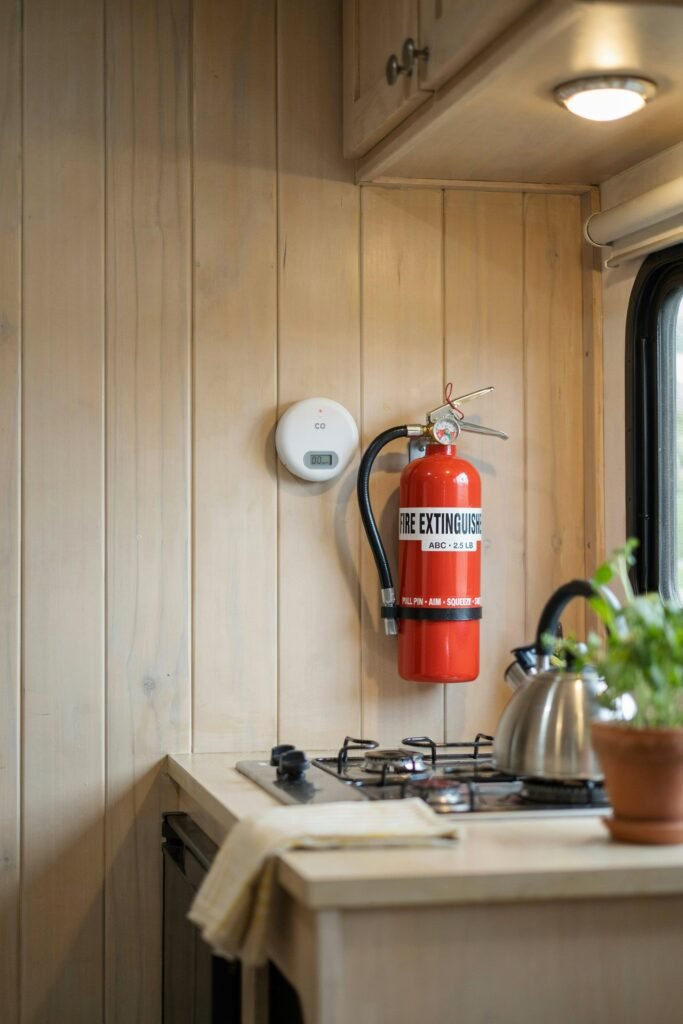
Safety gear is easy to overlook until the moment you actually need it, so pack it early.
Carbon monoxide detector. This alerts you instantly if gas appliances ever leak inside your sealed camper.
Fire extinguisher. A small extinguisher mounted near the kitchen can stop a fire before it spreads.
Tire pressure monitoring system. This tracks tire health live and warns you before a blowout happens.
First aid kit. This handles small cuts, burns, and aches without needing a trip to town.
Wheel chocks. These keep your camper from rolling while parked on uneven or sloped ground.
Emergency roadside kit. This includes flares, jumper cables, and tools for unexpected roadside breakdowns.
Comfort and Sleep Essentials
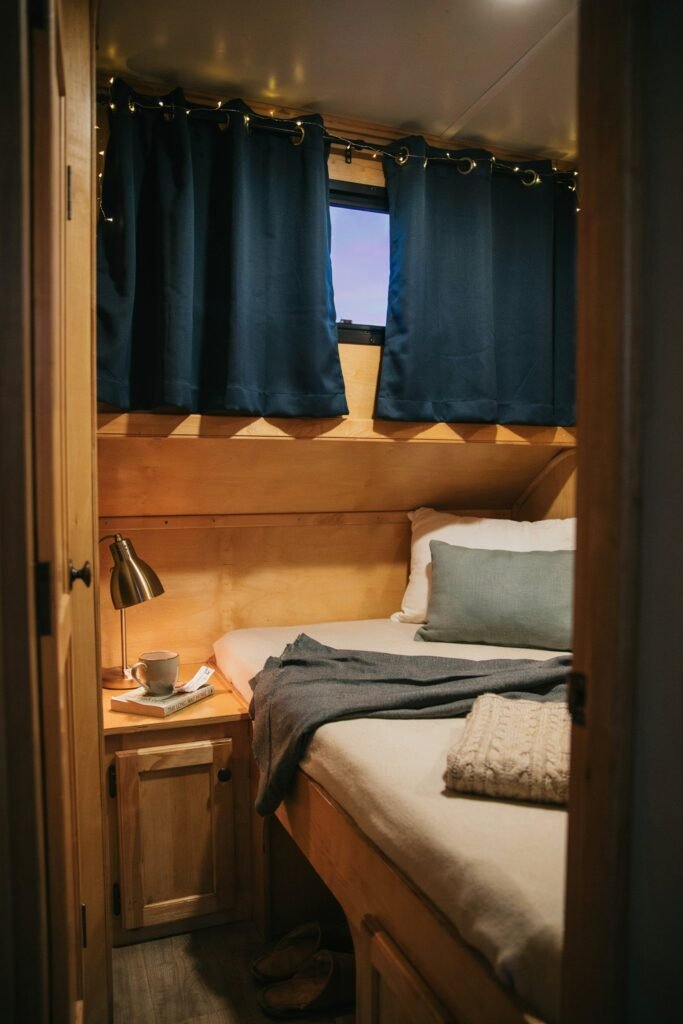
Full time living means your camper is not just a vehicle, it is genuinely your everyday home.
Memory foam mattress topper. This turns a stiff factory mattress into something you actually look forward to.
Blackout curtains. These block outside light completely so you can sleep well past sunrise.
Weighted blanket. This adds a comforting sense of calm after a long day of driving.
Compact space heater. It keeps the whole camper warm on cold nights without wasting propane.
Noise machine. This masks outside campground noise so light sleepers can finally rest properly.
Personal air purifier. This keeps the small enclosed air inside your camper cleaner and fresher.
Steps to Set Up Your Tiny Camper for Full Time Living
Gathering the right gear is only half the job.
How you set everything up determines whether your tiny camper actually functions well day to day.
Follow these steps in order for the smoothest transition into full time living.
Step 1: Audit your space before you buy anything.
Walk through every cabinet, drawer, and storage compartment in your camper and take notes on exact measurements.
Many people buy organizers first and try to force them into spaces that were never built for them.
Measuring first saves you money and prevents you from ending up with bins and racks that simply do not fit.
Step 2: Build your power system around your actual habits.
Think honestly about how much power you use in a normal day, including charging devices, running fans, and using small appliances.
Choose your solar panel size and battery bank capacity based on that real usage instead of guessing.
A slightly larger battery bank now saves you from constant power anxiety later on.
Step 3: Set up your water system before your first long trip.
Install your inline filter, attach your pressure regulator, and test your full water line from hose to faucet while still near home.
Doing this test run early means any leaks or faulty connections get caught before you are hours away from a hardware store.
Step 4: Organize storage by frequency of use, not by category.
Instead of grouping items only by type, place daily essentials like utensils, chargers, and toiletries in the easiest to reach spots.
Store seasonal or rarely used items, such as extra blankets or tools, in the deepest or highest storage areas.
This single habit saves an enormous amount of daily frustration.
Step 5: Secure everything for travel, not just for storage.
Anything that can slide, tip, or roll needs tension rods, non slip mats, or bungee cords before you ever start driving.
Open your cabinets and drawers after your first short test drive to see what shifted, then adjust your setup accordingly.
Step 6: Install your safety devices immediately, not eventually.
Mount your carbon monoxide detector, smoke alarm, and fire extinguisher in their permanent spots before you spend a single night off grid.
These are the items people put off buying, yet they matter the very first night you are parked somewhere remote.
Step 7: Create a dedicated space for daily routines.
Set aside a specific spot for your coffee setup, your work laptop, or your evening wind down items.
Having consistent spots for daily rituals makes a tiny camper feel like an actual home rather than a temporary stop.
Step 8: Test your full setup on a short trip first.
Before committing to a long stretch of full time travel, take your camper out for a weekend to see what works and what does not.
Use this trip to fine tune your storage, test your water and power systems, and adjust anything that felt awkward or inconvenient.
Step 9: Build a simple maintenance routine.
Check your tire pressure, battery levels, and water tank levels on a regular schedule so small issues never turn into major ones.
A five minute weekly check can prevent expensive repairs and uncomfortable surprises down the road.
Step 10: Personalize the space once the essentials are handled.
Once your power, water, storage, and safety systems are dialed in, add personal touches like string lights, artwork, or a favorite blanket.
This final step is what truly turns a functional tiny camper into a home you genuinely enjoy living in every single day.
Common Questions First Time Full Timers Ask
How much should I spend on essentials before my first trip?
Most full timers find that a solid power system, a basic water filtration setup, and a handful of safety devices cover the priorities without requiring a huge upfront budget.
You can always add comfort items later once you know how you actually live in the space.
Do I really need solar panels if I mostly stay at campgrounds?
Shore power covers most campground stays, but solar gives you freedom to park somewhere quiet and scenic without worrying about your battery dying overnight.
Even a small panel setup adds a meaningful layer of flexibility to your travel plans.
What is the single most overlooked essential?
Safety devices consistently rank as the most skipped item, mainly because they feel unnecessary until the one night they are not.
A carbon monoxide detector and a properly mounted fire extinguisher cost very little compared to the peace of mind they provide.
Final Thoughts
Full time RV living in a tiny camper is absolutely achievable, and it becomes far more enjoyable once you have the right essentials paired with a thoughtful setup.
Focus first on power, water, storage, and safety, since these systems form the backbone of daily comfort. From there, layer in the smaller comfort items that make the space feel like your own.
Give yourself permission to adjust as you go.
The first few weeks on the road will teach you more about your actual habits than any checklist ever could, and it is completely normal to swap items out once you learn what you really reach for on a daily basis.
With the right gear in place and a setup process that respects how small your space truly is, your tiny camper can support a full, comfortable, and genuinely enjoyable life on the road, one that feels less like camping and more like simply living somewhere new every time you park.