
I used to think surviving a long flight just came down to luck.
Some flights I’d land feeling almost human, and others I’d stumble off the plane with a pounding headache, dry eyes, and a neck that felt like it had been in a vice for ten hours.
After enough trial and error, and a few very uncomfortable overnight flights, I realized comfort in the air isn’t luck at all.
It comes down to what’s in your carry-on.
I’ve put together this list from years of long haul trips, missed connections, and lessons learned the hard way.
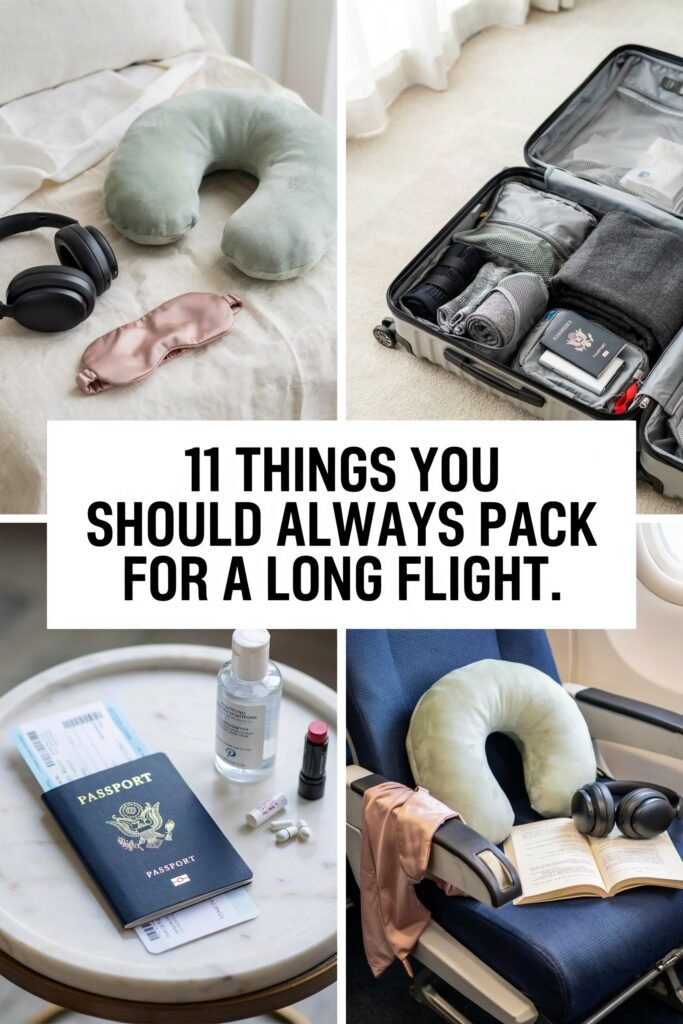
These are the 11 items I personally never fly without, along with the reasons they actually make a difference, not just the reasons that sound good on paper.
I’ve also added some extra tips, a quick packing checklist, and answers to a few questions people ask me most often.
Why Packing the Right Way Actually Matters
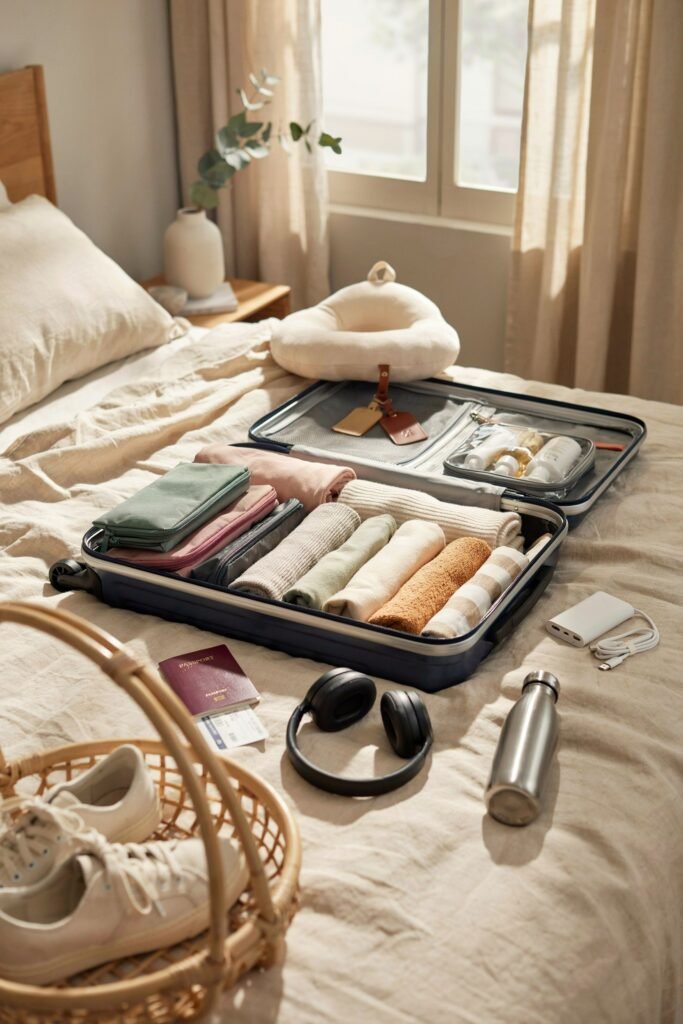
It’s easy to treat packing as an afterthought, something you rush through the night before a flight.
But on a long haul trip, what’s in your carry-on has a direct effect on how your body handles hours of sitting still, dry air, and disrupted sleep.
Dehydration, poor circulation, and lack of rest don’t just make you uncomfortable in the moment.
They’re a big part of why people land feeling foggy, sore, or completely wiped out, sometimes taking a full day just to recover before they can enjoy their trip or get back to work.
The right items in your bag address these problems directly instead of leaving you to just push through them. There’s also the practical side.
Lost luggage, dead phone batteries, and unexpected delays happen more often than most people expect, and having a few backup essentials on hand can be the difference between a minor inconvenience and a genuinely stressful travel day.
None of this requires overpacking or spending a lot of money.
It just means being intentional about a handful of items that solve the specific problems long flights create. That’s really what this list is about.
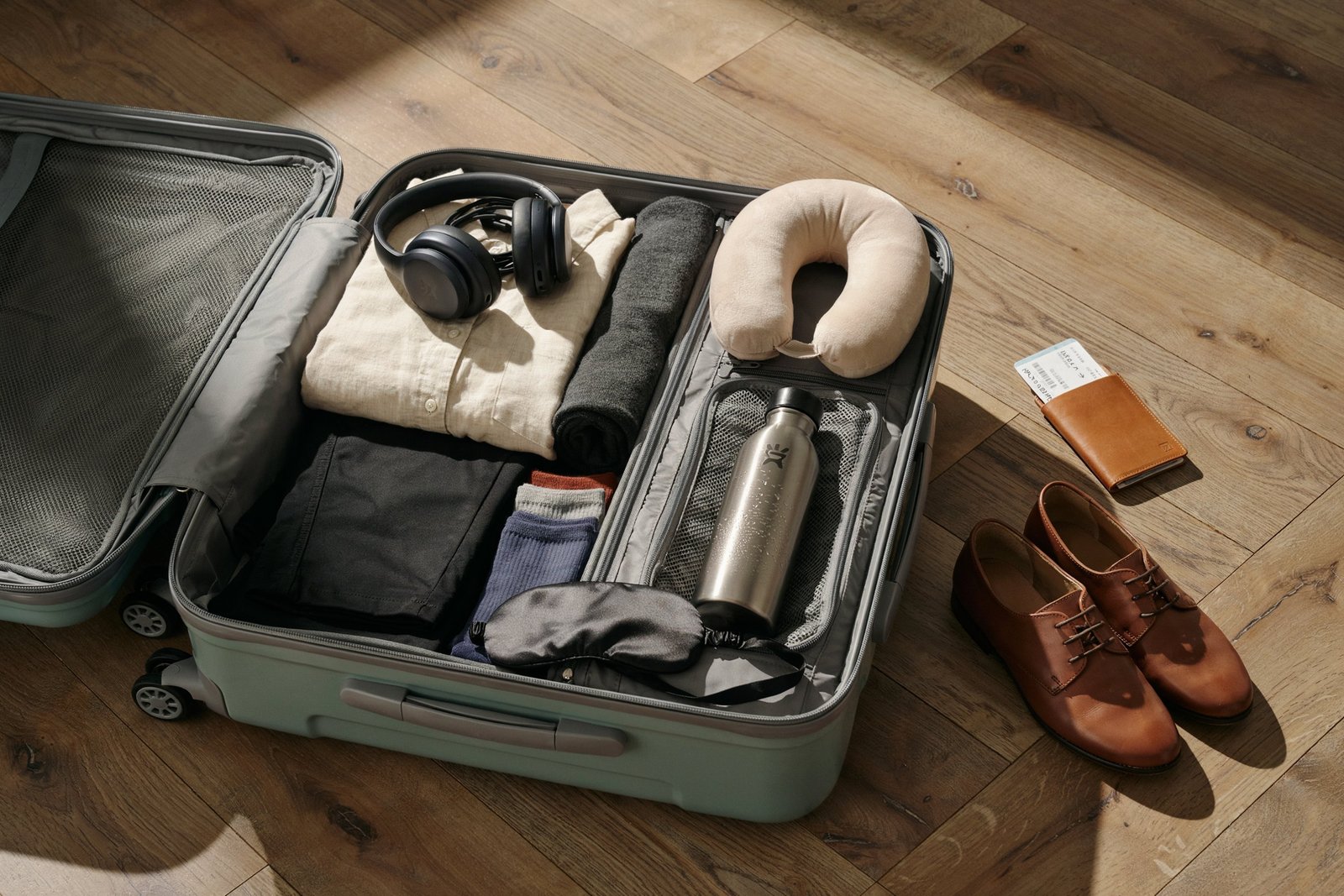
1. A Quality Neck Pillow
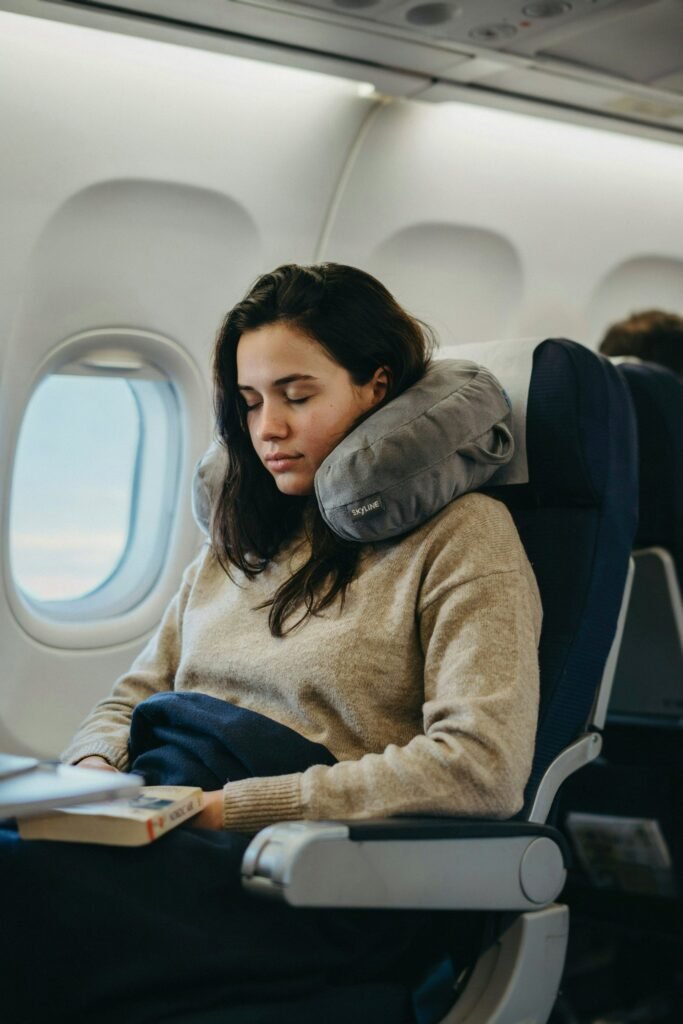
I resisted buying a “real” travel pillow for years because I assumed they were all the same. They’re not.
The inflatable ones you get free on some flights barely hold their shape and tend to squash flat within an hour.
Once I switched to a memory foam or hybrid pillow, sleeping upright actually became possible.
When you’re shopping for one, look for a design with a slight forward lean.
It keeps your head from snapping backward and forward every time you start to doze off, which is usually what wakes people up mid nap.
If you fly often, it’s also worth choosing one that straps to your bag rather than clips on, since clips tend to snap off after a few trips through overhead bins.
A few styles worth knowing about, so you can pick what suits how you actually sleep:
- Traditional U shaped pillows work well if you tend to lean side to side.
- Wraparound pillows that also support your chin are better if your head tends to drop forward.
- Inflatable versions are a fine backup for occasional flyers, since they pack down small even if they’re less supportive.
2. Noise Canceling Headphones
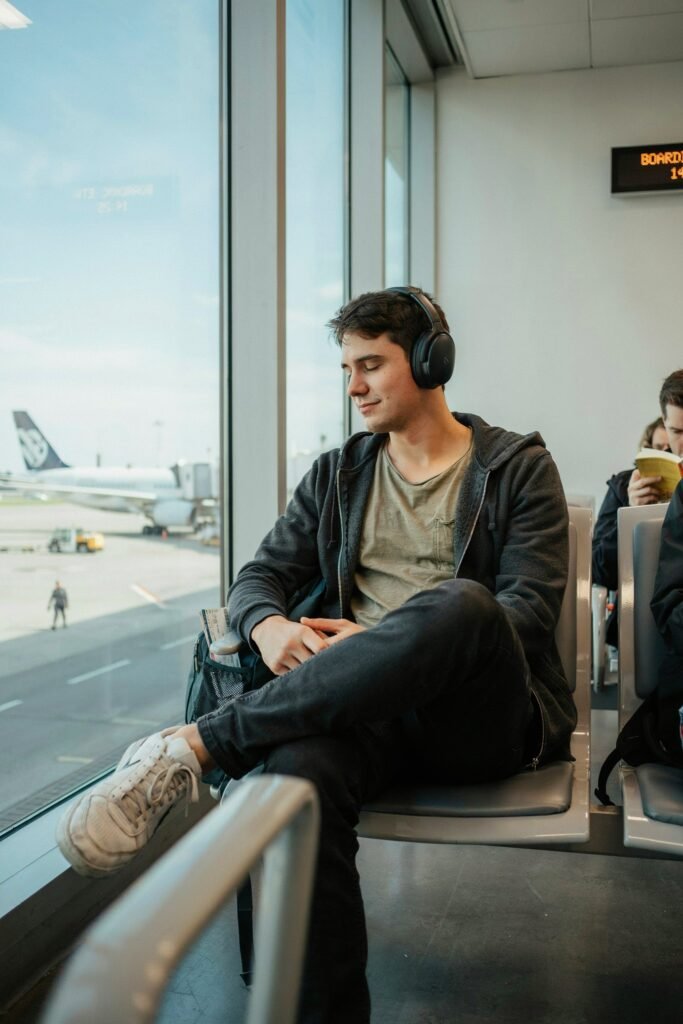
This is the one item I’d genuinely never fly without again.
Engine hum alone is exhausting over several hours, and add in a crying baby or a chatty seatmate and it becomes hard to relax at all.
A good pair of noise canceling headphones creates a kind of personal bubble.
You can actually hear a podcast at a low volume, fall asleep without a wall of surrounding noise, or just enjoy a bit of silence.
If a nice pair isn’t in the budget right now, foam earplugs combined with any pair of over ear headphones get you most of the benefit for a fraction of the price.
Over ear styles also tend to be more comfortable than earbuds for long stretches, since they don’t put pressure directly inside your ear canal for hours at a time.
One more thing worth remembering: charge your headphones fully before you leave for the airport, and pack a backup set of wired earbuds.
If your battery dies mid flight, most seatback entertainment systems still require a wired connection anyway.
3. A Reusable Water Bottle You Fill After Security
Cabin air is drier than most deserts, often sitting around 10 to 20 percent humidity, compared to the 30 to 65 percent most homes are kept at.
That dryness is a major reason people land with headaches, dry eyes, or just feel wiped out in general.
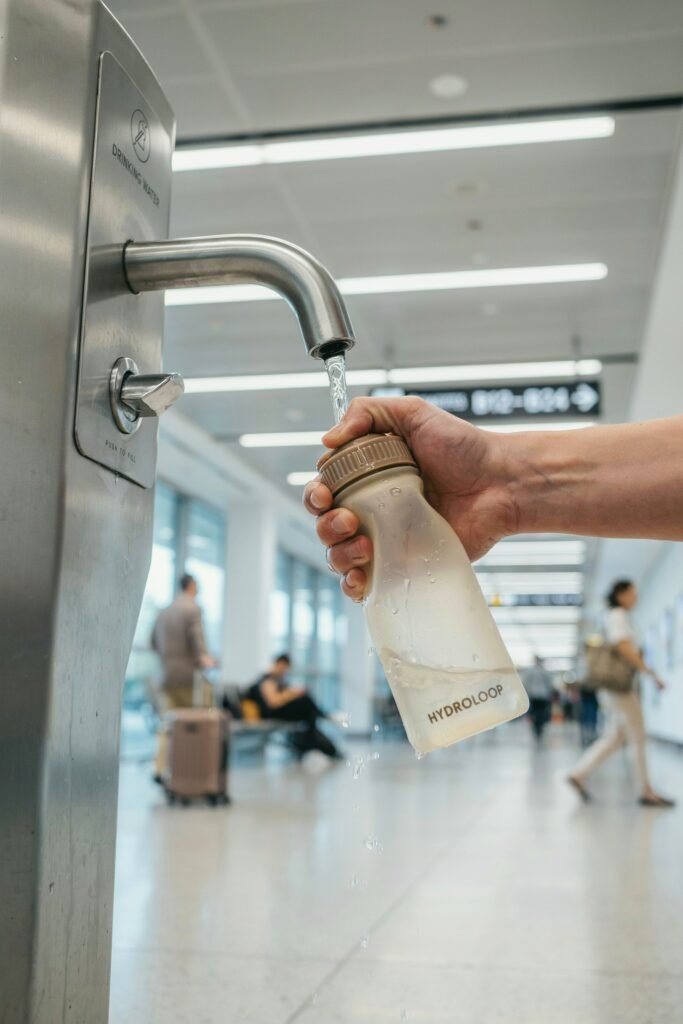
I always bring an empty collapsible bottle through security and fill it at a fountain before boarding.
It means I’m not relying on tiny plastic cups from the beverage cart, and I end up drinking noticeably more water throughout the flight simply because it’s sitting right there in the seat pocket.
A good rule of thumb is to aim for about eight ounces of water for every hour you’re in the air.
If you’re on a red eye or an overnight international flight, it also helps to sip water steadily rather than all at once, so you’re not making constant trips to the bathroom right as you’re trying to fall asleep.
4. Compression Socks
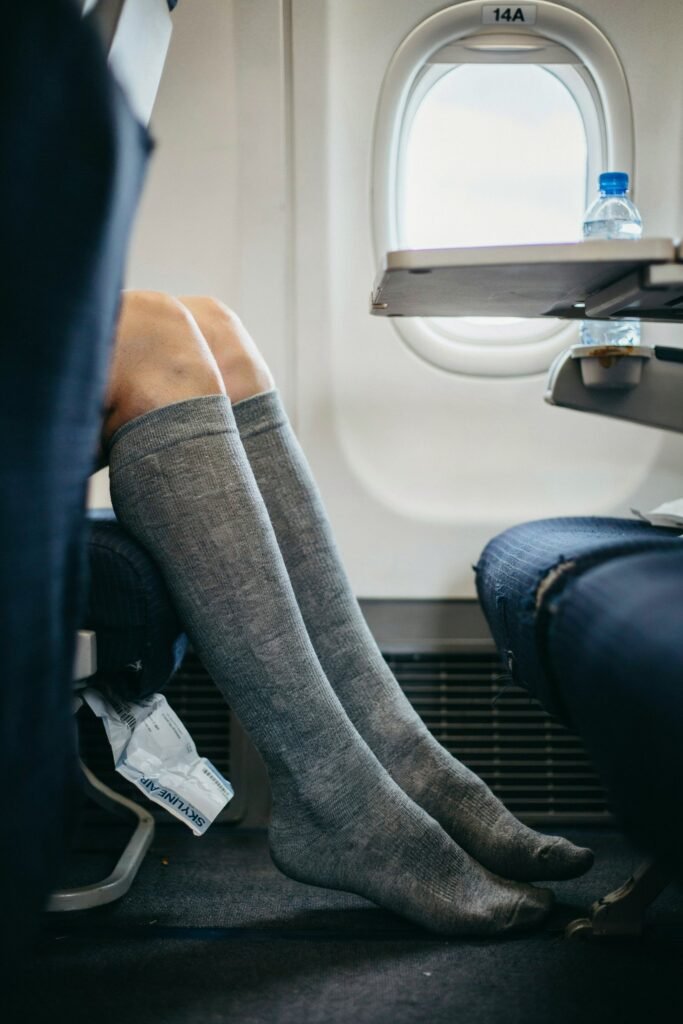
I’ll admit these felt unnecessary the first time a friend recommended them, but after one long flight where my ankles swelled up more than I expected, I became a believer.
Sitting still for hours slows circulation in your legs, and compression socks help keep blood flowing properly.
Most people notice they simply feel less stiff and heavy when they stand up to deplane.
They’re worth packing for any flight longer than about five hours, and they’re especially important if you have a history of circulation issues, are pregnant, or are on a very long international route.
Look for a compression level in the 15 to 20 mmHg range for general travel use, which is enough to help circulation without feeling overly tight.
Put them on before you board rather than after takeoff, since it’s easier to get them on comfortably before any swelling starts.
5. A Full Change of Clothes in Your Carry-On
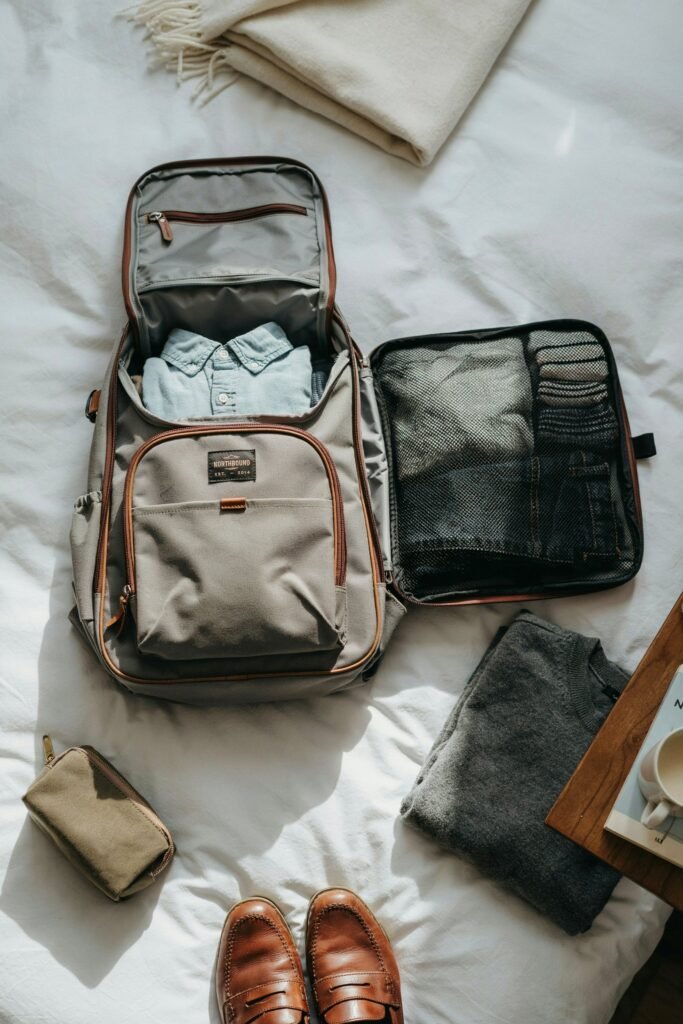
This lesson came from a trip where my checked bag didn’t make it onto my connecting flight.
I ended up wearing the same outfit for almost two days while my suitcase caught up with me.
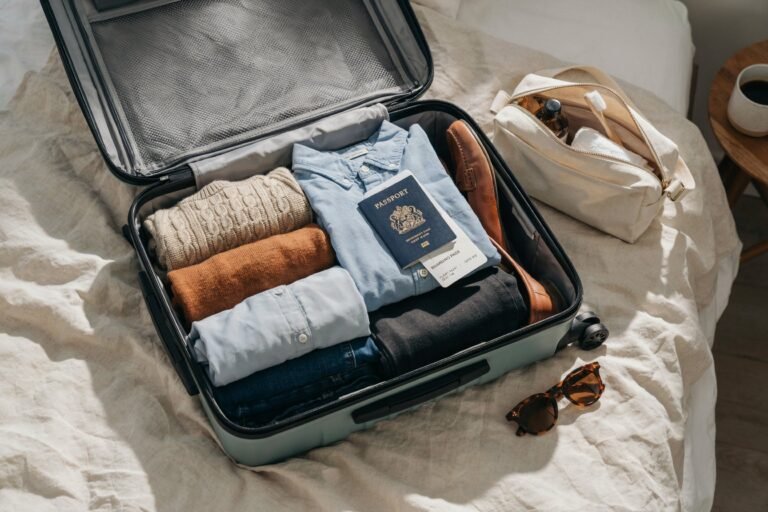
Now I always pack a spare shirt, underwear, and a pair of socks in my carry-on, no matter how short the trip is supposed to be.
It takes up very little space and it’s the kind of thing you’re grateful for exactly when you need it.
If you’re traveling somewhere with a very different climate than home, it’s also worth packing a lightweight layer, like a scarf or a packable jacket, in case you land somewhere colder or warmer than expected before your checked bag arrives.
6. Skincare Essentials and Lip Balm
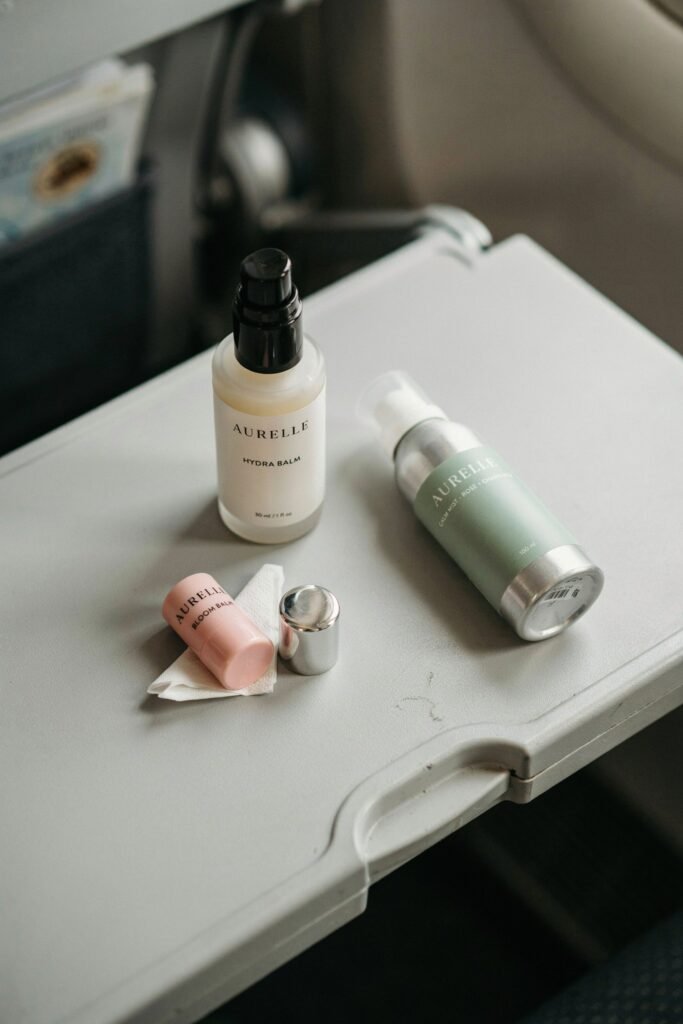
Nobody warns you how rough cabin air is on your skin.
Between the low humidity and the recycled air, it’s common to land with dry, tight, flaky skin, even if your skin is normally fine.
I keep a small travel size moisturizer, a hydrating face mist, and lip balm in my bag for every flight.
On overnight flights I’ll sometimes wear a hydrating sheet mask for part of the trip. It looks a little unusual next to other passengers, but my skin genuinely feels better when I land.
A few extras that make a real difference: saline nasal spray, since dry cabin air can irritate your sinuses, and rewetting drops if you wear contacts, since your eyes dry out faster in the air than on the ground.
If you wear contacts for more than a few hours, consider swapping to glasses for very long flights to avoid irritation altogether.
7. Snacks You Actually Enjoy
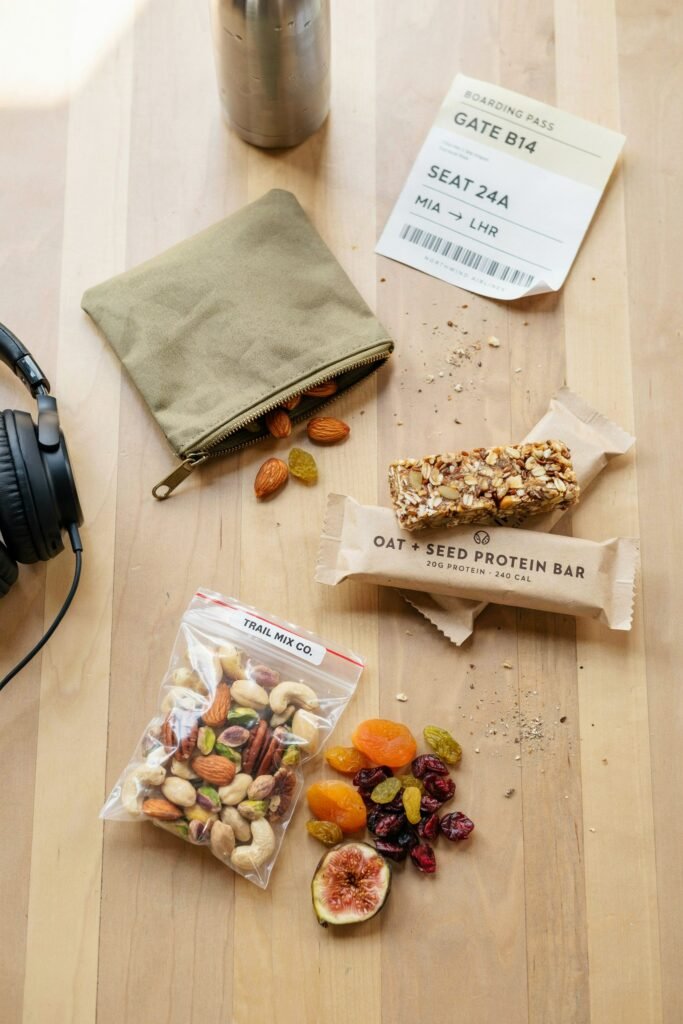
Meal service on flights rarely lines up with when you’re actually hungry, and in economy, options can be limited or run out before the cart reaches your row.
I like to pack one snack that’s filling, like a protein bar, nuts, or jerky, and one that’s just comforting, like my favorite crackers or dried fruit.
This has saved me more than once during long layovers too, when every restaurant near the gate has a line out the door.
Keep in mind that most solid snacks pass through security without issue, but liquids and gels, including things like yogurt pouches or certain spreads, are subject to the same 3.4 ounce liquid rule as other carry-on items.
If you’re flying internationally, some countries also restrict bringing in fresh fruit, meat, or dairy, so it’s worth checking the customs rules for your destination before you pack food for the way home.
8. A Portable Charger
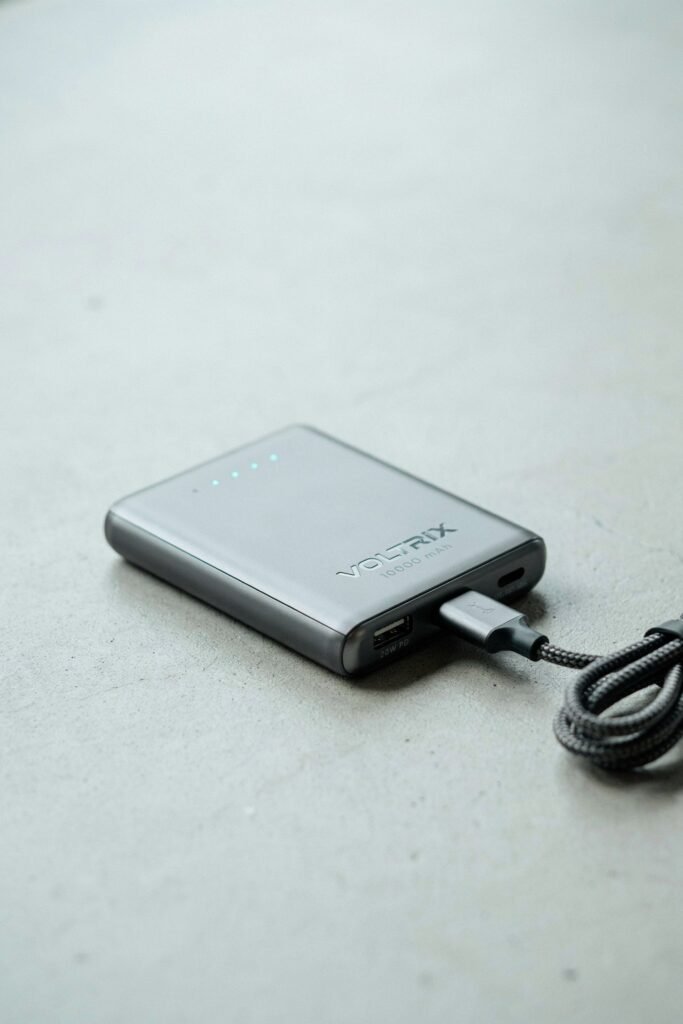
Not every seat has a working outlet, and even when they do, a single charger cable serving multiple devices takes forever.
I keep a compact power bank in my personal item at all times.
It’s saved me during long layovers when I needed my phone for a boarding pass, directions, or checking in with family, and there wasn’t an outlet in sight.
One important note: power banks need to go in your carry-on, not your checked bag.
Most airlines require this for safety reasons, and there are usually limits on battery capacity, typically capped around 100 watt hours without special airline approval.
It’s worth checking your specific airline’s policy if you’re traveling with a larger battery pack.
9. A Small Medication Kit
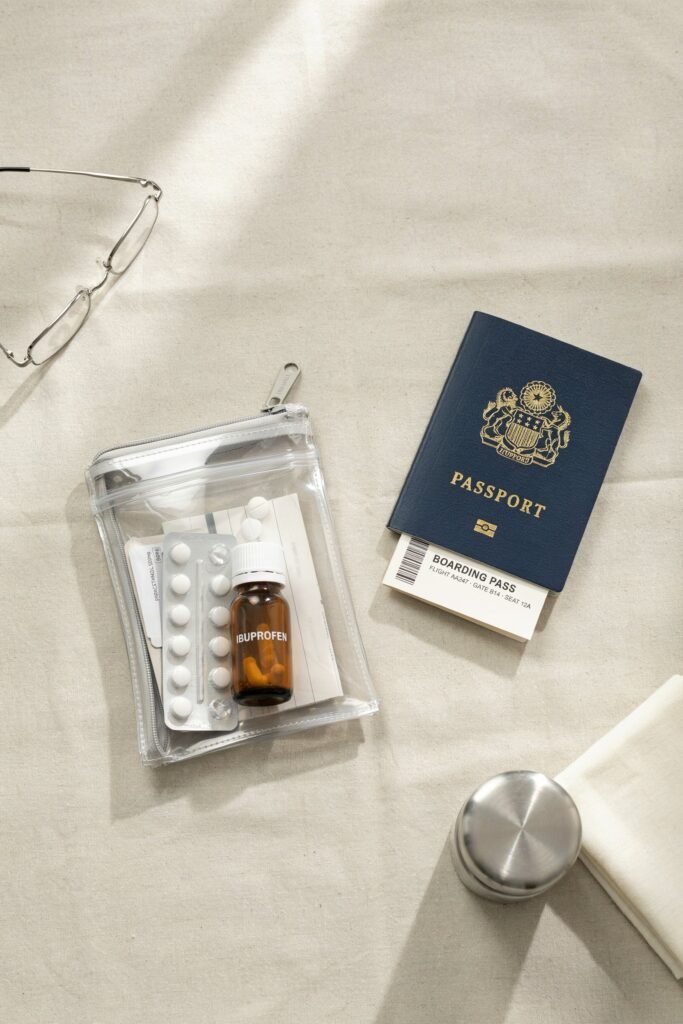
Even people who never get motion sick can be caught off guard by turbulence on a long flight.
I keep a small pouch with basic pain relievers, antacids, and motion sickness tablets in my bag.
Having them on hand means I’m not stuck asking a flight attendant for help or trying to push through hours of discomfort.
It’s a small thing to pack, but it’s made a real difference on rough flights.
If you take prescription medication, keep it in your carry-on rather than checked luggage, ideally in its original labeled packaging, especially if you’re crossing international borders.
It’s also smart to pack a day or two of extra doses in case of a delay or missed connection.
10. An Eye Mask
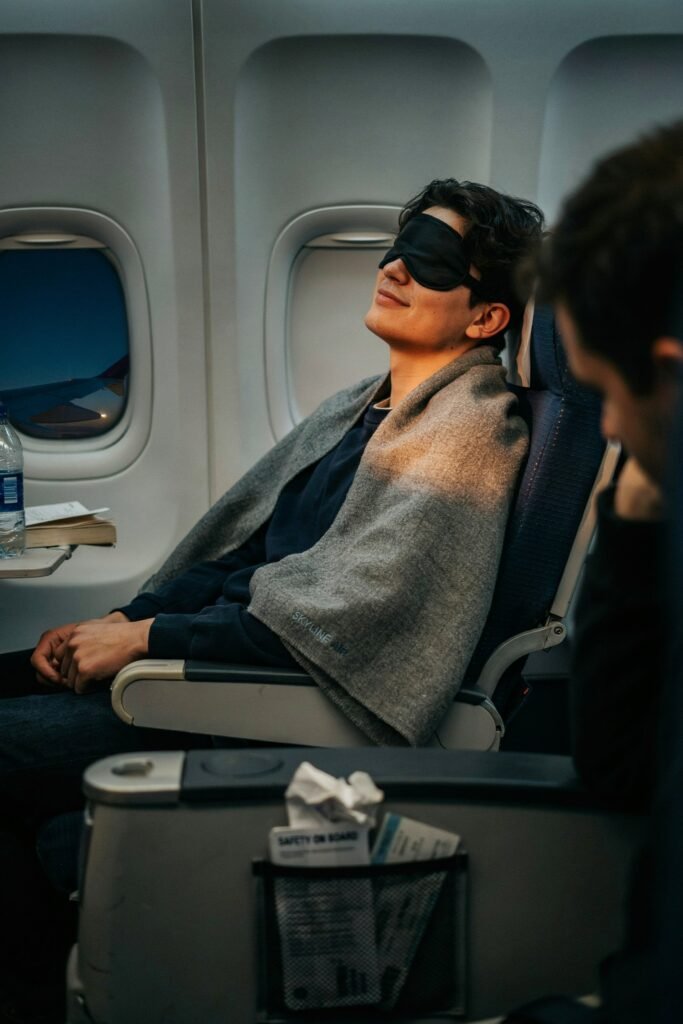
Cabin lighting doesn’t always match your body’s idea of bedtime, especially on red eye or long international flights where the crew keeps the lights on for meal service.
A contoured, lightweight eye mask blocks out far more light than trying to use a blanket or a jacket, and it signals to your brain that it’s actually time to sleep.
I found this made a bigger difference to my sleep quality than almost anything else on this list.
Look for a contoured design that curves away from your eyes rather than a flat mask.
It keeps pressure off your eyelids and doesn’t smudge makeup or press against eyelashes, which matters more than you’d think on a ten hour flight.
11. Entertainment That Doesn’t Need Wi-Fi
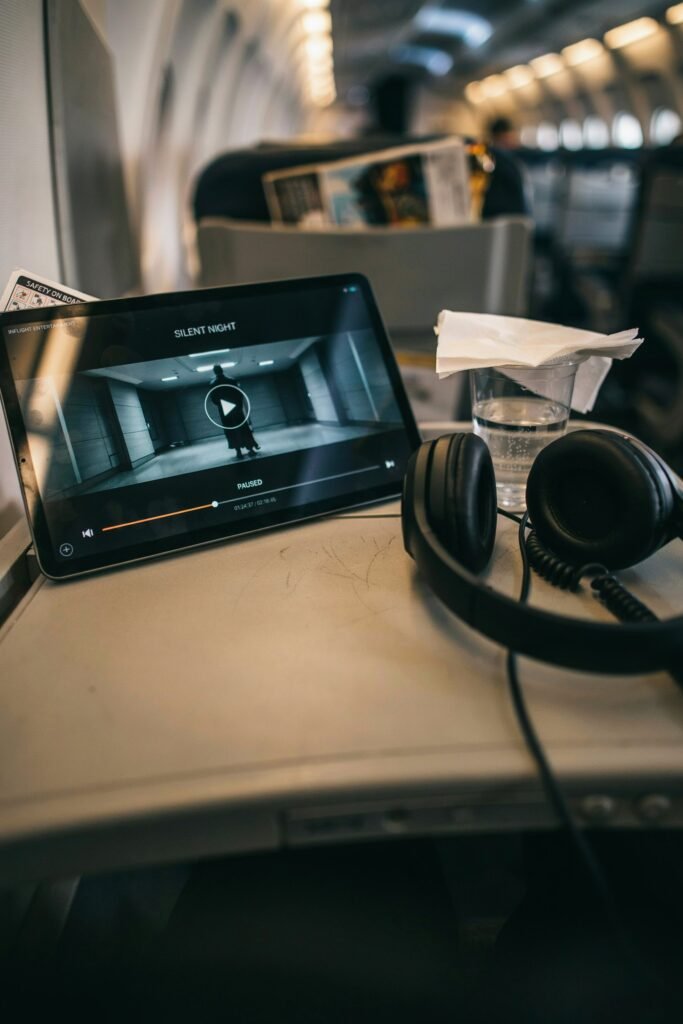
In flight Wi-Fi is often slow, expensive, or simply not available, and plenty of budget carriers don’t even offer seatback screens anymore.
I always download a few shows, movies, podcasts, or audiobooks before heading to the airport, so I’m not depending on the plane for entertainment.
A physical book is also a great backup for takeoff and landing, since devices sometimes need to be stowed during those times.
If you’re flying with a tablet, download content through your streaming apps directly rather than relying on browser based streaming, since most airlines block or heavily throttle streaming sites even when Wi-Fi is available.
A Few Extra Tips That Have Helped Me
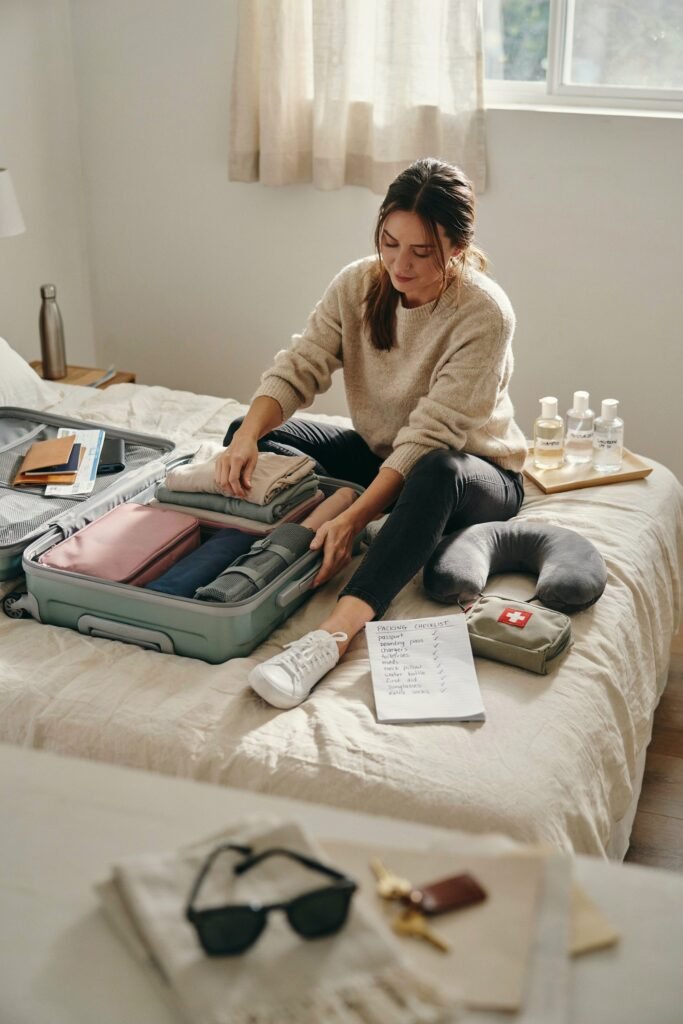
Beyond the 11 items above, a few small habits have made a real difference on long flights.
- I try to get up and walk the aisle at least once every couple of hours to keep my circulation moving, especially on flights over six hours.
- I avoid alcohol and limit caffeine in the air, since both make dehydration worse and can disrupt sleep even more than usual at altitude.
- I set my watch or phone to my destination’s time zone as soon as I board, which helps me start adjusting mentally before I even land.
- I keep my most essential items, like medication, chargers, and my change of clothes, in the top pocket of my bag rather than buried at the bottom, so I’m not digging through everything mid flight.
- I pack a small foldable tote bag inside my carry-on. It barely takes up any space, but it’s useful for organizing items at security or carrying souvenirs home.
Quick Packing Checklist
Here’s a simple checklist you can run through before you head to the airport:
- Neck pillow
- Noise canceling headphones or earplugs
- Empty reusable water bottle
- Compression socks
- Change of clothes
- Travel size skincare and lip balm
- Snacks
- Portable charger and cables
- Small medication kit
- Eye mask
- Downloaded entertainment
Frequently Asked Questions
How early should I start hydrating before a long flight? It helps to start drinking extra water the day before your flight rather than waiting until you’re in the air, since it’s hard to make up for dehydration once you’re already airborne.
Is it worth paying extra for a better seat on a long flight? If it’s within your budget, aisle seats near the front of the cabin tend to make it easier to get up and move around, and bulkhead or exit row seats offer more legroom, which can meaningfully improve comfort on flights over six hours.
Should I bring my own blanket? Airline blankets are often thin and not always freshly laundered between flights.
A compact travel blanket or a large scarf that doubles as a wrap can be more comfortable and more hygienic.
What’s the single most helpful item on this list? For me personally, it’s the noise canceling headphones.
They have the biggest impact on how rested I feel after landing, since quality sleep on the plane depends so much on blocking out noise.
Final Thoughts
Packing well for a long flight isn’t about bringing everything you own.
It’s about bringing the right things. I like to think of it in three categories.
Comfort, like your pillow, socks, and eye mask.
Health, like water, snacks, and medication. And backup plans, like a change of clothes, offline entertainment, and a charged power bank.
Once I started packing with those three categories in mind, long flights stopped feeling like something to dread and started feeling like something I could actually handle well.
Safe travels, and I hope your next long flight is a smooth one.